Why are Muslim voices missing from national conversations?
The voice of the Muslim leadership has often been conspicuously silent on matters of national significance.
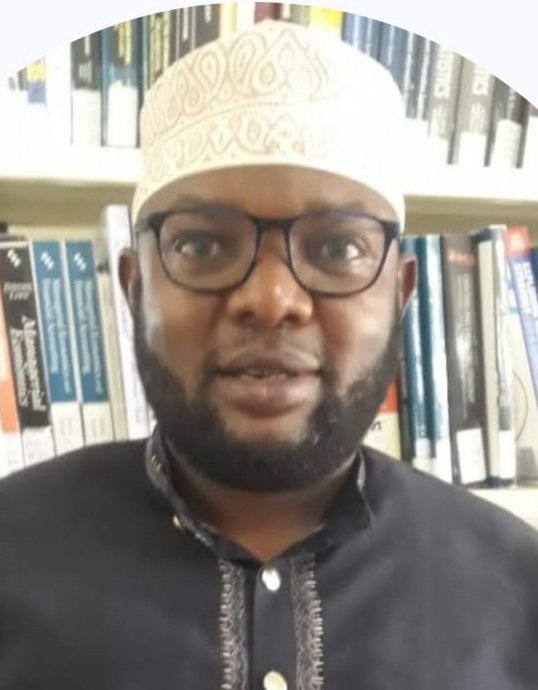
By Dr. Adam Khamis Mwamburi
As Kenya gradually enters another critical electoral season, an important question deserves serious reflection: Why are Muslim voices largely absent from national discussions on issues that directly affect both the Muslim community and the broader Kenyan population?
Islam is a comprehensive way of life that encompasses religious, social, political, and economic dimensions. It provides principles of governance and justice aimed at promoting human dignity, equity, and the common good. Given these foundations, one would expect Muslim scholars, leaders, and institutions to play a more visible role in shaping national discourse and advocating for justice.
In contemporary Kenya, numerous issues continue to affect Muslims specifically and citizens generally. While Christian clergy have remained active and influential in public affairs, Muslim leadership—including scholars, leaders, and community institutions—has often been conspicuously silent on matters of national significance.
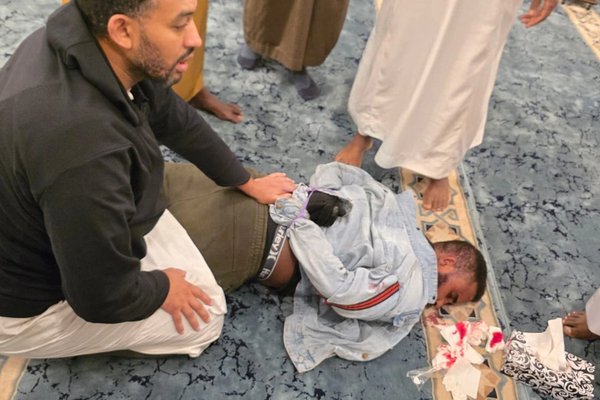
One of the most pressing concerns relates to the legacy of the post-9/11 era. For many years, Muslim communities, particularly along the Coast and in North Eastern Kenya, experienced extrajudicial killings, enforced disappearances, arbitrary arrests, and other human rights violations under the banner of counterterrorism and the prevention of violent extremism. Numerous young Muslims lost their lives or disappeared under circumstances that remain unresolved to this day.
Yet, despite the scale of these violations-arguably the most state sanctioned human rights abuses since independence- there has been no sustained and coordinated national campaign demanding a comprehensive inquiry, truth-seeking process, or compensation for affected families. Where are the collective voices of Muslim leaders on this matter?
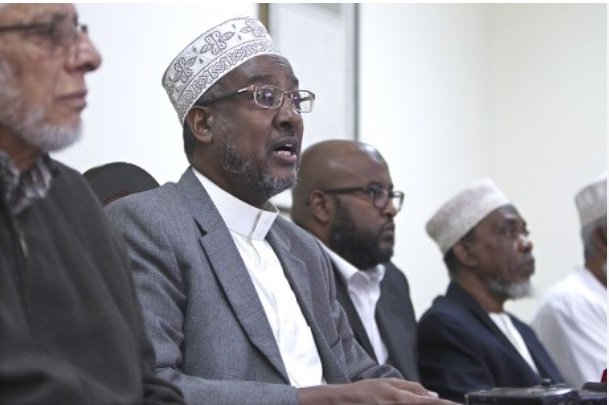
Former Young Muslim Association (YMA) secretary general Abdulhamid Slatch, NAMLEF chairman Abdullahi Abdi, the late Jamia mosque assistant secretary general Ibrahim Ahmed Yusuf 'Johnny' and CIPK organising secretary Sheikh Muhammad Khalifa address a press conference
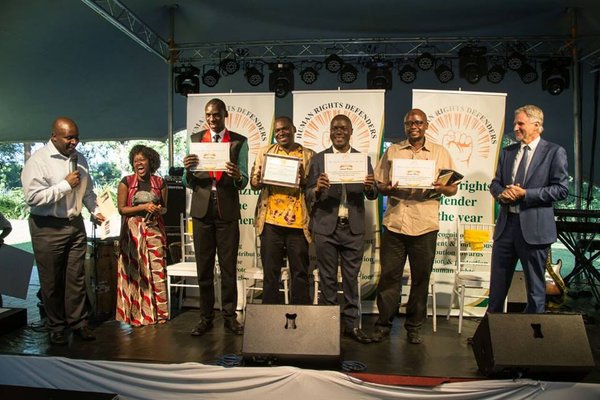
By contrast, recent incidents involving the deaths and injuries of Gen Z protesters have generated significant public attention, with civil society organisations and human rights groups actively pursuing justice, accountability, compensation, and institutional reforms. This demonstrates what can be achieved when communities organise and speak with one voice.
Who, then, will champion justice for the Muslim victims of the post-9/11 period? Who will advocate for the families that continue to seek answers? When will the Muslim community collectively demand accountability for violations of the fundamental right to life?
Another case that deserves reflection is the Lamu curfew. For nearly fifteen years, residents of an entire county lived under a dusk-to-dawn curfew. During this period, other regions of Kenya such as Baringo, Turkana and Samburu also experienced insecurity, banditry, and loss of life, yet no similar restrictions were imposed on entire counties for such an extended duration.
Related
It was only recently that the courts declared the curfew unconstitutional. Even after the ruling, concerns continue to persist regarding compliance with the court's decision. The question remains: Why did it take so long for Muslim leaders and institutions to challenge what many viewed as a serious infringement on constitutional rights? Where were the voices of Muslim leadership during this prolonged period?
The issue of discrimination in the acquisition of national identity cards and passports presents another troubling chapter. For decades, many Muslims from North Eastern Kenya, the Coast region, and the Nubian community were subjected to extraordinary vetting procedures before obtaining documents that are fundamental to citizenship. Such practices effectively limited access to education, employment, travel, and political participation.
While recent reforms under the current administration have provided relief, granting Kenyans who have been discriminated against for years their inalienable rights, it is difficult to justify why such barriers persisted for more than two decades. Kenya is home to many communities living along international borders, yet not all have been subjected to the same levels of scrutiny. The perception among many affected communities has been that these practices amounted to profiling and discrimination.
Education remains another area of concern. For years, some Muslim students have faced challenges in accessing their constitutional rights within educational institutions. Complaints have included restrictions on Islamic dress, inadequate accommodation during Ramadhan, limited provision of prayer facilities, and difficulties in accessing Islamic Religious Education (IRE) in certain schools.
These concerns raise an important question: Why have such issues persisted despite the existence of professional Muslim institutions, including legal associations and advocacy organisations capable of pursuing constitutional remedies and policy reforms?
More broadly, one must ask when will the Muslim leadership attain the same level of national influence and public visibility enjoyed by church leaders. Because of their weighty voice in the national discourse, the Christian clergy are frequently consulted on matters of governance, national cohesion, ethics, and public policy. Muslim scholars and institutions should aspire to play a similarly constructive role in advancing justice, accountability, national unity, and constitutionalism.
This is not a call for sectarian politics. Rather, it is a call for responsible civic engagement. Muslims are an integral part of Kenya's social, economic, and political fabric. Their concerns are national concerns, and their participation in public discourse strengthens rather than weakens the country's democratic foundations.
As the country approaches the next election cycle, political leaders will become increasingly attentive to the concerns of citizens. Elections provide a strategic opportunity for communities to articulate their priorities and seek commitments from those aspiring to leadership. Politics, after all, is fundamentally about interests, representation, and accountability.
The time has come for Muslim leaders, scholars, professionals, civil society organisations, and community institutions to unite around issues of justice, equality, and constitutional rights. Speaking with one voice does not mean uniformity of opinion; it means developing the collective courage to advocate for legitimate grievances and contribute meaningfully to Kenya's national conversation.
Only then can the Muslim community fully assume its rightful place as a respected and influential stakeholder in shaping the country's future.
Dr. Adam Khamis Mwamburi is a researcher, academician, and Member of Majlis Al Ulamaa (Council of Scholars), Jamia Mosque, Nairobi.