The role of Muslim leaders in addressing social media misuse
The sensitisation of our youth on the dangers of racial discrimination and irresponsible social media use is not just important—it is paramount.
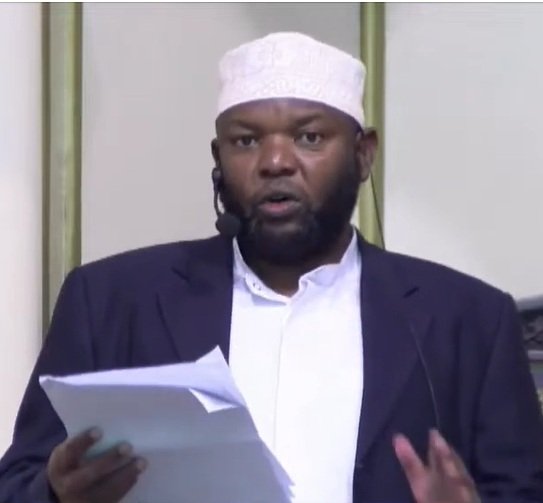
Dr Adam Khamis Mwamburi
In their various capacities across different parts of Kenya, Muslim leaders carry a profound moral and religious responsibility to guide the youth toward the responsible, ethical, and constructive use of social media. This duty is not merely social—it is an amanah (trust) before Allah. It has become particularly urgent in light of the recent incident in Garissa and the subsequent unrest and looting witnessed in Mwingi town.
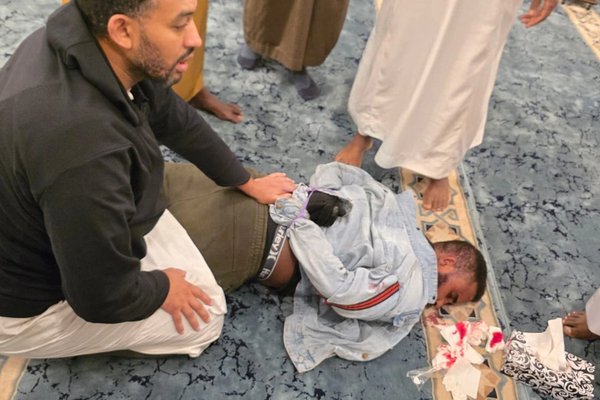
There is no doubt that a grave injustice was committed against a young taxi driver from Garissa who was killed by a police officer as he was helping a friend. This act that appears to reflect a troubling pattern of extrajudicial actions which has affected our communities. Islam stands firmly against injustice in all its forms. Allah states: “O you who believe! Stand out firmly for justice, as witnesses to Allah, even if it be against yourselves or your parents and relatives…” (Qur’an 4:135)
The demand for justice, therefore, is not optional—it is a religious obligation. Even more concerning is that the perpetrator has yet to be apprehended, which deepens the pain and frustration felt by the community.
However, it is equally important to acknowledge that the manner in which such incidents are shared and discussed on social media can either uphold justice or derail it. The dissemination of this incident—particularly through emotionally charged and divisive language—has had unintended but serious consequences. The use of expressions such as “nywele ngumu” shifted the discourse from a legitimate pursuit of justice into a dangerous racial narrative. This not only deepens divisions within society but also provokes reactions, even among fellow Muslims, who feel targeted and offended.
Islam strictly prohibits mockery, insults, and all forms of verbal abuse. Allah warns clearly:
“O you who believe! Let not one group ridicule another group; perhaps they may be better than them… Nor defame one another, nor call each other by offensive nicknames…” (Qur’an 49:11)
A careful review of social media commentary reveals that many young people have unfortunately escalated tensions through insults, racial undertones, and inflammatory remarks. This behavior contradicts the اخلاق (character) taught by the Prophet ﷺ, who said: “A Muslim is the one from whose tongue and hand other Muslims are safe.” (Sahih al-Bukhari, Sahih Muslim)
And in another narration: “Whoever believes in Allah and the Last Day should speak good or remain silent.” (Sahih al-Bukhari, Sahih Muslim)
In this context, it is important to ask: what is the role of leaders during such critical moments?
Islam unequivocally rejects all forms of discrimination and racism. It teaches that no human being should be judged or demeaned based on physical appearance, ethnicity, or background. Human diversity is not a flaw—it is a sign of Allah’s wisdom and creative power. Allah says:
“And among His signs is the creation of the heavens and the earth and the diversity of your languages and your colors. Indeed in that are signs for those of knowledge.” (Qur’an 30:22)
Related

When one mocks another based on their appearance—be it skin colour, hair texture, or any other trait—one must reflect deeply: is such ridicule directed merely at the creation, or does it in essence question the wisdom of the Creator?
Allah further reminds us: “Indeed, the most honourable of you in the sight of Allah is the most righteous among you.” (Qur’an 49:13)
This principle was powerfully reinforced by the Prophet peace be upon him in his Farewell Sermon: “All mankind is from Adam and Eve. An Arab has no superiority over a non-Arab, nor a non-Arab over an Arab; a white has no superiority over a black, nor a black over a white—except by piety and good action.”
This leaves absolutely no room for racial prejudice or superiority in Islam.
It is therefore crucial that leaders take an active, visible, and courageous role in addressing this crisis. Imams and religious scholars must speak out clearly and firmly against injustice, discrimination, and irresponsible speech. Silence in such moments can be misunderstood as approval. The Prophet ﷺ said: “Whoever among you sees an evil, let him change it with his hand; if he cannot, then with his tongue; and if he cannot, then with his heart—and that is the weakest of faith.” (Sahih Muslim)
Their voices are essential in restoring balance, calming tensions, and reminding communities of the core values of Islam—justice (‘adl), mercy (rahmah), and unity (ummah).
Furthermore, the sensitisation of our youth on the dangers of racial discrimination and irresponsible social media use is not just important—it is paramount. Social media is a powerful tool that can either build or destroy. Allah cautions: “Not a word does a person utter except that there is an observer ready to record it.” (Qur’an 50:18)
This verse alone should make every believer pause before posting, sharing, or commenting online.
As we approach the election period, the potential for heightened tensions is real. History has shown how quickly words can ignite conflict. Failure to act proactively—through education, guidance, and strong moral leadership—may result in consequences that are far more serious and far-reaching.
Let us rise to this responsibility with wisdom, sincerity, and unity. Let us uphold justice without fueling division, and let us embody the teachings of Islam not only in our worship, but in our speech, our conduct, and our engagement with society.
Above all, let us remember that accountability before Allah is inevitable—and that every word, every action, and every intention will be brought forth on the Day of Judgment.
The author is a member of the Majlis Ulamaa (Council of Scholars) Jamia Mosque, Nairobi