
Why Mombasa cannot afford the politics of ethnic division
The rise of Arabophobia and Somaliphobia within certain political discussions is being used as a tool to weaken Muslim unity
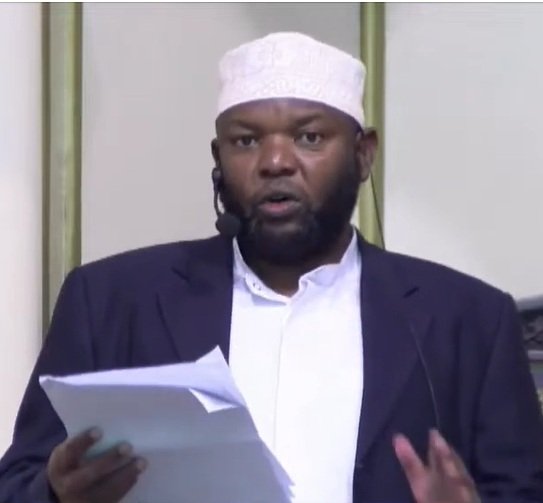
By Dr Adam Khamis Mwamburi
As Muslim leaders, we have both the moral authority and the responsibility to clearly understand the political dynamics shaping Mombasa County ahead of the 2027 General Election. At a time when political rhetoric is becoming increasingly charged and communities are being encouraged to view one another through ethnic lenses, it is imperative that we carefully examine the emerging narratives and ask ourselves who stands to benefit from division.
There appears to be a growing narrative aimed at creating divisions under the guise of “liberating” the Mijikenda community from the so-called “hegemony” of Arabs and, to some extent, Somalis. While this narrative is being presented as a struggle for political empowerment and representation, the broader objective appears to be the isolation and marginalisation of the Muslim community from the leadership of Mombasa County—a county that has historically been predominantly Muslim and home to diverse ethnic communities that have lived together peacefully for generations.
Mombasa's unique identity has always been shaped by its diversity. Arabs, Mijikenda, Swahilis, Somalis, Asians and many other communities have collectively contributed to the county's social, economic and cultural development. For centuries, these communities have interacted through trade, education, intermarriage and shared religious values. The county's success has never been built on the dominance of one group over another but rather on coexistence, cooperation and mutual respect.
The history of Mombasa demonstrates that Arabs, Mijikenda and other communities have not existed in isolation from one another. Intermarriage has created strong family ties that cut across ethnic identities. Many families today proudly trace their heritage to multiple communities. Mosques, schools, businesses and community organisations have served people from all backgrounds without discrimination. These realities challenge the simplistic narrative that one community has exclusively benefited at the expense of another.
Recently, we have witnessed political leaders from different sides responding to remarks made by the ruling party’s Secretary General Omar Hassan by advancing claims that the Mijikenda community has long been marginalised by Arabs and that it is now their turn to assume the leadership mantle of Mombasa County. Such arguments may resonate emotionally with some audiences, but they overlook the complex realities of Mombasa's history and social fabric.
In essence, the rise of Arabophobia and Somaliphobia within certain political discussions risks being used as a tool to weaken Muslim unity and undermine Islam under the cover of ethnic mobilisation. While these narratives are outwardly presented as efforts to empower certain communities, there may be deeper political calculations behind them that require careful reflection and vigilance. History teaches us that politicians often exploit identity politics when they lack compelling solutions to the challenges facing ordinary citizens.
These machinations did not begin recently. Similar efforts have surfaced periodically over the years with the objective of creating divisions among Muslims and weakening the collective political influence of coastal communities.
In the 1990s, Emmanuel Karisa Maitha was used by the KANU regime to introduce discord among coastal communities when he teamed up with Omar Masumbuko to form the United Muslims of Africa (UMA), a political movement that was presented as representing Muslims of African descent. The argument at the time was that Arabs and Swahilis had dominated African Muslims and that it was time for indigenous African Muslims to reclaim their rights and political space.
The same ideas appear to be resurfacing in a different form. Machakos Governor Wavinya Ndeti, recently spoke about what she describes as the need to liberate the Mijikenda from what she considers longstanding political domination by Arabs in Mombasa.
As Muslims, we must resist attempts to divide us along ethnic lines. Our shared faith teaches us that human beings are equal and that the most honourable among us are those who demonstrate righteousness, justice and good character. Islam rejects tribalism and prejudice, and it encourages unity, consultation and mutual respect.
This moment should therefore serve as a wake-up call for all of us. We must remain united, promote peaceful coexistence, reject divisive politics and avoid falling into carefully calculated conspiracies designed to divide our communities. We must focus on the issues that genuinely matter to the people of Mombasa: economic empowerment, quality education, better healthcare, youth employment, security and sustainable development.
As the 2027 General election approaches, the people of Mombasa should reject narratives that seek to pit neighbour against neighbour and community against community. The future of the county depends not on ethnic competition but on inclusive leadership that recognises the contributions of all communities and works for the benefit of every resident. Unity, not division, has always been Mombasa's greatest strength, and it must remain so if the county is to continue prospering for generations to come.
Dr. Adam Khamis is an academician and a member of the Majlis Ulamaa (Council of Islamic Scholars) Jamia Mosque, Nairobi