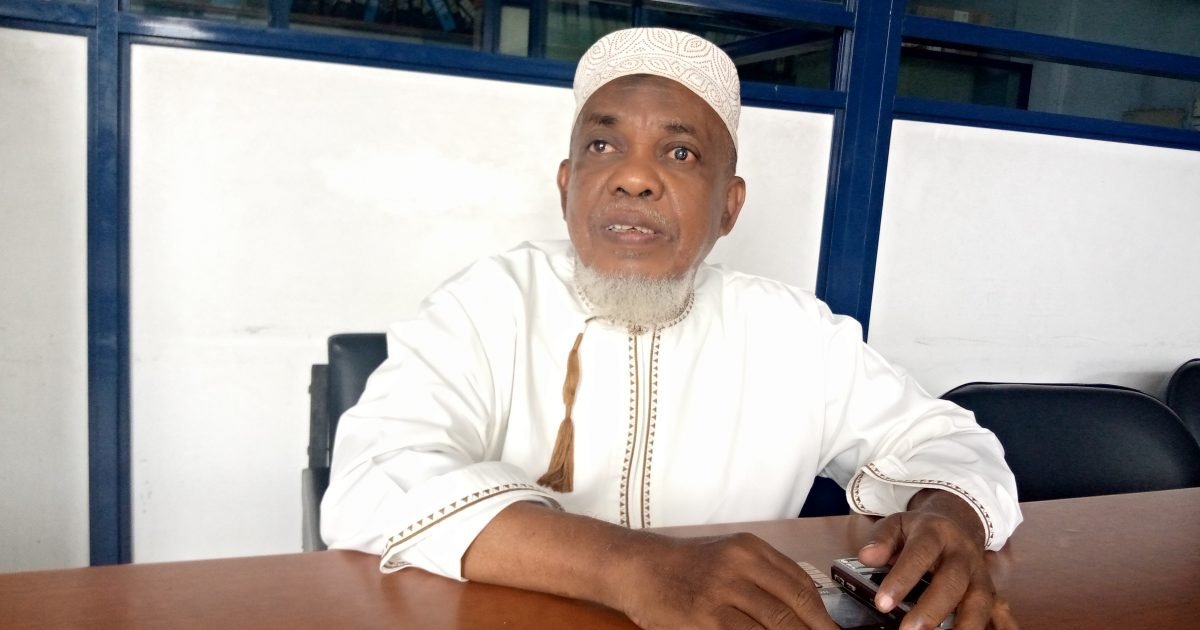
OUR UNSUNG HEROES: Blind but Unbowed – Sheikh Khalifa's Lifelong Fight for Muslim Rights
He lost his eyesight after he developed glaucoma and his repeated requests for specialised treatment were deliberately denied, leading to irreversible blindness
As Kenya prepared for its first multiparty elections in the early 1990s, a wave of political awakening swept across the country. After decades of one-party rule under President Daniel arap Moi, demands for constitutional reforms, democracy and human rights were growing louder. Amid this changing political landscape, a group of intellectuals sought to give Kenya's Muslim community a direct political voice by founding the Islamic Party of Kenya (IPK).
The party envisioned a constitutional government founded on democracy, justice, human rights and equality before the law. It sought official registration like any other political party to enable it to participate in elections while championing the political, social and economic interests of Muslims.
Beyond advocating for constitutional reforms, IPK called for an end to the marginalisation of Muslims, greater political participation, equal treatment by the state and stronger protection of religious freedoms.
Among the party's founders and leading figures were Abdullahi Abdi—now chairman of the National Muslim Leaders Forum (NAMLEF), Said Athman, Sheikh Khalifa Mohamed Ali, Omar Mwinyi, Khalid Balala and Abdulrahman Wandati.
Rise of a fearless activist
Sheikh Khalifa quickly emerged as one of the most outspoken faces of the movement. Appointed IPK chairman, he became a leading voice in the struggle for political pluralism and the recognition of Muslim rights at a time when dissent against the Moi administration carried enormous personal risks.
Reflecting on those years in an earlier interview, Sheikh Khalifa recalled: "As Muslims, we had been marginalised for a long period by the Moi government. That is why we decided to form IPK—to fight for the rights of Muslims."
The government, however, viewed the new political movement with suspicion. Authorities refused to register the party, arguing that it was a religious party and discriminatory. Its activities were repeatedly disrupted, while members were subjected to arrests, harassment and prolonged detention.
Years of persecution
One of the most defining moments came in 1991 during an IPK rally at Mwembe Tayari in Mombasa.
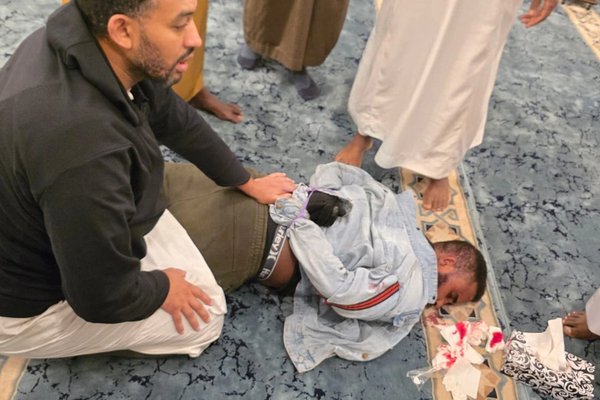
As Sheikh Khalifa addressed supporters, officers from the General Service Unit descended on the gathering, violently dispersing the crowd. Scores of supporters were arrested, while others were shot as they sought refuge inside the nearby Kwa Shubu Mosque.
Sheikh Khalifa was arrested and taken to Shimo la Tewa Prison, where he spent four days in detention before being released without charge.
The arrest marked the beginning of years of persecution. Between 1991 and 1995, Sheikh Khalifa was repeatedly detained by security agencies. Whenever President Moi visited the Coast, he was routinely arrested, held in police cells throughout the visit and released only after the President had left the region.
It was during one of these periods of detention that his life changed permanently.
While in custody, Sheikh Khalifa developed glaucoma, a progressive eye disease requiring urgent and continuous medical treatment. His repeated requests for specialised treatment were deliberately denied, leading to irreversible blindness.
The loss of his eyesight became one of the most enduring symbols of his personal sacrifices during his struggle for political reforms.
In 2018, following the example of other victims of state repression such as Kenneth Matiba, Sheikh Khalifa petitioned the courts seeking compensation for the loss of his eyesight and other human rights violations suffered during the Moi era. The case remains unresolved.
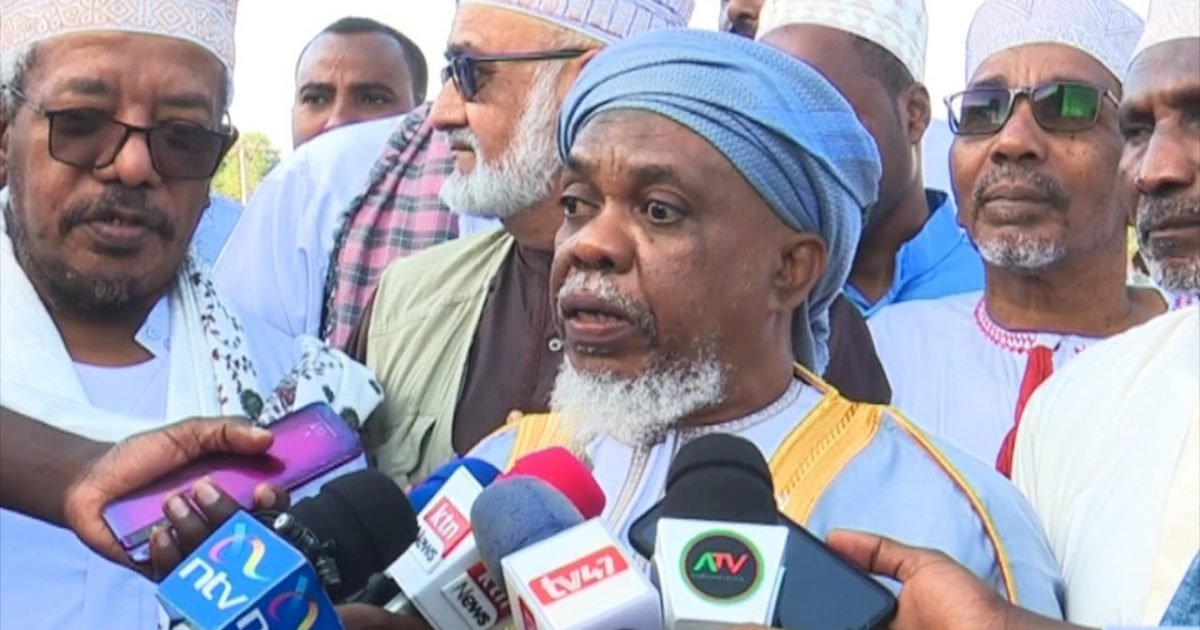
Accompanied by Muslim leaders, Sheikh Khalifa addresses a press conference in Mombasa
Continuing the struggle through religious leadership
Although the Islamic Party of Kenya failed to secure official registration, Sheikh Khalifa did not retreat from public life.
Instead, he continued his activism through the Council of Imams and Preachers of Kenya (CIPK), where he currently serves as the National Organising Secretary.
Over the years, CIPK has evolved into one of Kenya's most influential Muslim organisations, advocating for peace, constitutional governance, social justice and public accountability. Sheikh Khalifa has become one of its most recognisable public voices, regularly addressing national issues through press conferences, public forums and policy engagements.
Mobilising Muslims in national politics
Related
Ahead of the 2007 general elections, Sheikh Khalifa once again found himself at the centre of Kenya's political landscape. Working through the National Muslim Leaders Forum (NAMLEF), CIPK threw its support behind Raila Odinga's presidential bid against the incumbent, Mwai Kibaki.
The endorsement was largely driven by deep seated grievances of human rights violations of Muslims by the Kibaki administration.
Leveraging an extensive network of imams and Muslim community leaders across the country, CIPK and NAMLEF mounted one of the largest coordinated Muslim voter mobilisation campaigns in Kenya's political history, encouraging Muslims to participate actively in the electoral process. The results of the elections saw for the first time in the country’s history, the largest representation of Muslims in Parliament.
Defender of the Kadhi Courts
During the constitutional review process that culminated in the promulgation of the 2010 Constitution, Sheikh Khalifa became one of the leading voices in defence of the Kadhi courts which were facing an onslaught from several Christian churches.
During the Committee of Experts on Constitutional Review public hearings in Mombasa, Anglican Church of Kenya (ACK) Bishop Julius Kalu opposed the inclusion of the Kadhi Courts in the proposed Constitution, arguing that they violated the principle of separating religion from the State. In a forceful rebuttal, Sheikh Khalifa dismissed the argument as historically inaccurate reminding the gathering that it was the Sultan of Zanzibar who facilitated the establishment of Dr. Ludwig Krapf's first Christian missionary station at Rabai in the 19th century.
"If the Sultan had not supported Krapf's mission, there would probably be no Christianity in Kenya today," Sheikh Khalifa argued, as he maintained that the Kadhi Courts were neither a privilege nor a political concession to Muslims but a constitutional and historical right rooted in historic agreements reached before Kenya's independence between the British colonial administration and the Sultan of Zanzibar.
While calling for sobriety, he said the country's history had long been shaped by tolerance, cooperation between religious communities and political authorities.
When Kenyans overwhelmingly adopted the Constitution in August 2010, the Kadhi Courts were retained under Articles 169 and 170 as subordinate courts with jurisdiction limited to matters of Muslim personal law where all parties consent. For Muslim leaders, the outcome represented the preservation of an important constitutional safeguard for religious freedom.
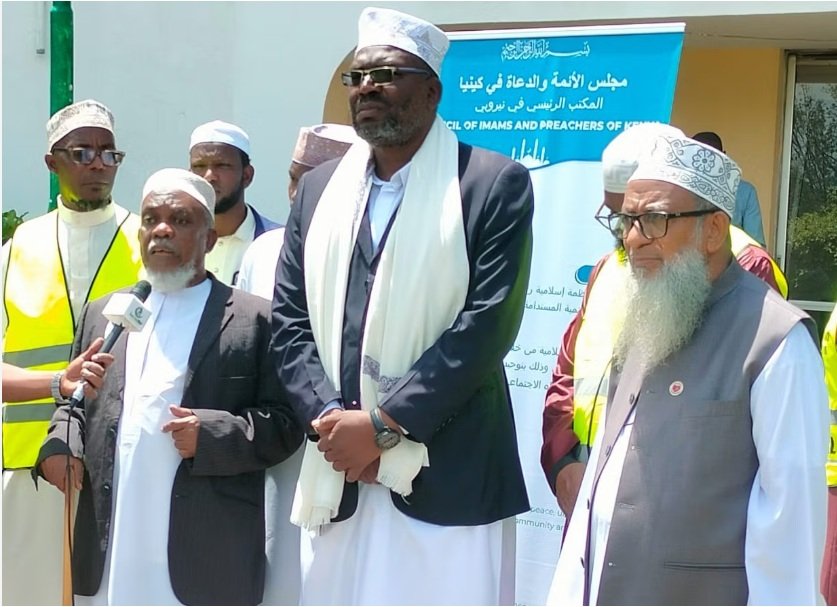
Sheikh Khalifa speaks to the press during a CIPK peace conference at Sir Ali Muslim Club in Nairobi last year. He is accompanied by the council chairman Sheikh Abdallah Ateka and the secretary general Sheikh Muhammad Dor
Championing peace and national cohesion
Over more than three decades in public life, Sheikh Khalifa has consistently advocated for greater Muslim participation in governance while promoting national unity and peaceful political engagement.
While maintaining his role in CIPK, he has focused on promoting peaceful political campaigns and forging partnerships with state agencies to bolster civic peace-building efforts and community dialogue.
Sheikh Khalifa has been outspoken on social challenges affecting Muslim communities, particularly the growing drug and substance abuse crisis along the Coast. He has consistently called for stronger collaboration between government agencies, religious leaders, families and community organisations to combat the menace.
He has remained a frequent public voice on social order, elections, and youth issues, urging peace and restraint during tense periods.
Following the GenZ protests in 2024, Sheikh Khalifa emerged among the voices of reasons appealing for dialogue, as he warned that that prolonged unrest would hurt businesses, education and national stability. He has also criticized political statements that risk promoting ethnic division or undermining national unity.
International recognition
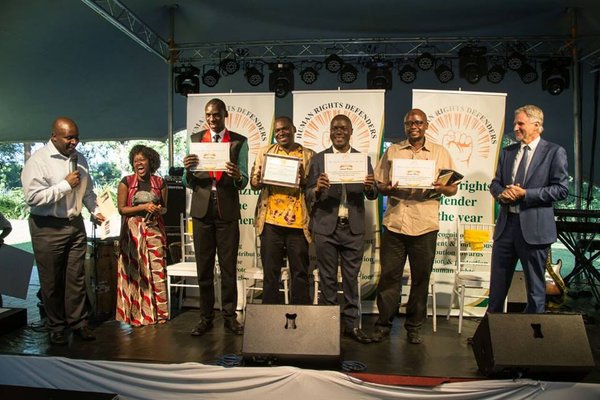
Sheikh Khalifa's recognition has extended beyond Kenya's borders. For several years, has been the only Kenyan personality featured in The Muslim 500, the annual publication ranking the world's most influential Muslims. The publication is produced by The Royal Islamic Strategic Studies Centre, an independent research institution affiliated with The Royal Aal al-Bayt Institute for Islamic Thought in Amman, Jordan.
The recognition reflects decades of religious leadership, civic engagement and advocacy on issues affecting Muslims in Kenya.
A legacy of resilience
Today, Sheikh Khalifa stands among Kenya's most recognisable Muslim leaders.
His journey mirrors the evolution of Muslim political activism in Kenya—from the confrontational struggles of the early 1990s to sustained engagement through religious institutions and constitutional advocacy.
Despite losing his eyesight during years of political persecution, he has remained steadfast in promoting justice, constitutional governance, peaceful political participation and the protection of religious freedoms.
Throughout his public life, Sheikh Khalifa has combined religious leadership with civic and political activism, reflecting a sustained to peaceful political participation while advocating for justice, equality and greater inclusion of Muslim communities within Kenya's constitutional framework.