
Obituary: Sheikh Muhammad Munyu, a foremost voice in Kikuyu da’wah
Sheikh Muhammad Munyu was a trailblazer in Islamic broadcasting, becoming the first scholar to deliver Islamic lectures in the Kikuyu language over national radio.
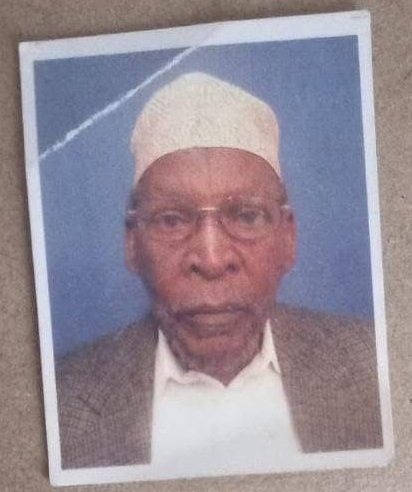
Sheikh Muhammad Suleiman Munyu was among a generation of pioneering scholars who passionately spread the message of Islam across various parts of Kenya in the post-independence era, leaving behind a lasting religious and social legacy.
Hundreds of mourners from diverse Muslim backgrounds attended his funeral prayers at Pumwani Riyadha Mosque on Saturday, January 3, 2026, reflecting the wide respect he commanded across the Muslim fraternity. The congregation later proceeded in a funeral procession to Kariakor Cemetery in Nairobi, where he was buried.
The long-serving Islamic marriage registrar passed away on Friday January 2, 2026 at the age of 87 at his home in California Estate, Pumwani, following health complications arising from chronic obstructive pulmonary disease (COPD), which he had suffered from for several years.
Born in 1938 in Kiambu County, Sheikh Muhammad Munyu was a trailblazer in Islamic broadcasting, becoming the first scholar to deliver Islamic lectures in the Kikuyu language over national radio. From the 1960s, his voice became a household name through the then Voice of Kenya (VOK), later the Kenya Broadcasting Corporation (KBC), where he hosted Islamic programmes in Kikuyu.
He continued this legacy at Iqra FM—the country’s first Islamic radio station—soon after its establishment in 2002. For eleven years, he hosted and stewarded a weekly programme covering a broad range of Islamic disciplines, including jurisprudence (fiqh), Qur’anic studies, and the life of the Prophet Muhammad (peace be upon him).
A graduate of Al-Azhar University in Egypt, Sheikh Munyu was among the first Kenyans to receive a scholarship to study at the prestigious institution. He enrolled in 1962 and returned home four years later equipped to serve the growing Muslim community.
Upon his return, he taught at Mungano Riyadha Madrassa in Majengo and at Mjini Madrassa in Murang’a. At the time, Mungano Riyadha Madrassa—located at the present site of Pumwani Riyadha Mosque—was one of the country’s most prominent Islamic institutions, attracting students from across Kenya as well as Uganda and Tanzania.
“For several years, he would commute daily from Pumwani to Murang’a to teach at Mjini Madrassa,” recalled Sheikh Shaban Gakere, Chairman of the Kiambu branch of the Supreme Council of Kenya Muslims (SUPKEM) and one of his former students.
Sheikh Munyu also played an instrumental role in community development, spearheading the establishment of mosques and madrasas in Embu, Meru, and other parts of Central Kenya.
From 1970, he served as an Islamic marriage officer—then known as an Assistant Registrar of Marriages—a responsibility he carried out diligently for nearly six decades, overseeing marriage contracts and offering guidance to countless families.
In 1971, Sheikh Muhammad Munyu was part of a delegation that met Kenya’s founding President, Mzee Jomo Kenyatta, to petition for the recognition of Eid ul-Fitr as a public holiday. Following the engagement, the request was granted and formalized through an amendment published in the Kenya Gazette in September 1971 under The Public Holidays Act, designating Eid ul-Fitr as a public holiday for Muslims. In later years, Eid ul-Fitr was elevated to a national public holiday, and Eid ul-Adha was added as a holiday observed by Muslims—a legal status that remains to date.
“As President Kenyatta frequently communicated in Kikuyu, the inclusion of Sheikh Muhammad Munyu—then a member of the Baladia Muslim Society—was a strategic move,” said his son, Abdallah Mohammed. “He played a key role in persuading the Head of State to listen to the concerns of Muslim leaders.”
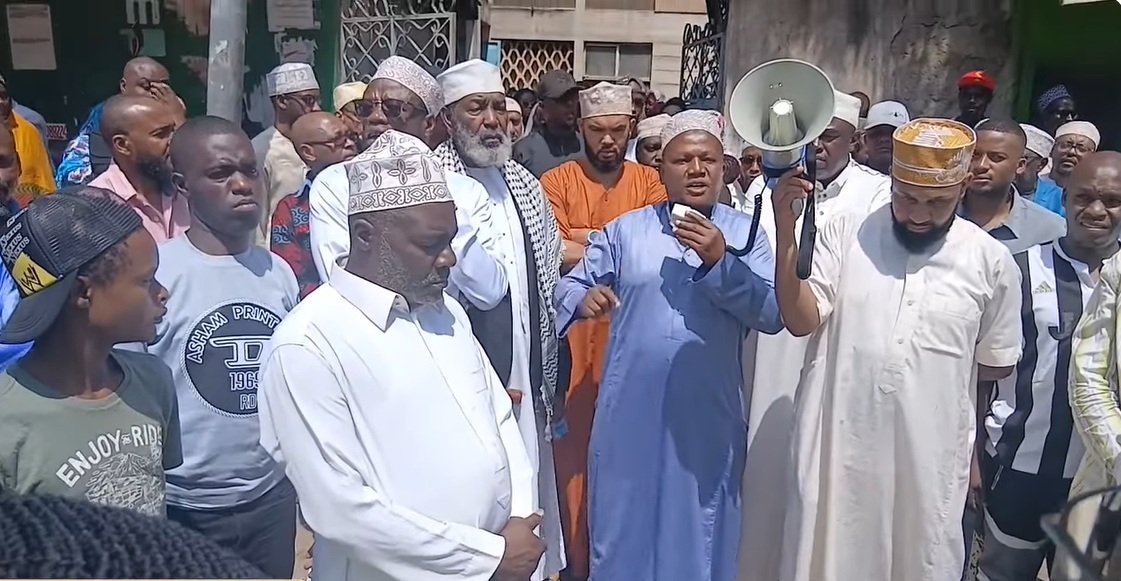
Mourners outside the home of Sheikh Muhammad Munyu at California estate
At the time of his death, Sheikh Munyu was actively involved in plans to translate the Qur’an into the Kikuyu language, an initiative aimed at making the sacred text more accessible so as to foster deeper understanding among Kikuyu-speaking Muslims.
Tributes poured in from scholars and community leaders who praised his immense contribution to Islamic propagation. “His Kikuyu-language programmes were instrumental in advancing da’wah in Central Kenya,” said Sheikh Rashid Muiruri (Abu Najma), former chaplain of Kenyatta National Hospital.
Dr Abdulrahman Nzibo, the former SUPKEM Chairman, described him as a well-respected scholar who travelled extensively across the country delivering lectures, addressing contemporary Muslim issues, and participating in conflict-resolution efforts.
Dr Nzibo, who also hailed from Pumwani, said Sheikh Munyu was among the most notable Muslim leaders of both pre- and post-independence Kenya. “His radio programmes on VOK and KBC will long be remembered for spreading Islamic values,” he added.
A member of Majlis Ulamaa (Council of Muslim scholars) at Jamia Mosque Sheikh Badru Jaffar called for the preservation of Sheikh Munyu’s legacy through the digitization of his radio lectures. “He was among the foremost Kikuyu scholars, and his knowledge should not be allowed to disappear,” he said.
“Until his passing, Sheikh Suleiman Munyu served as the council’s religious leader in Kiambu county and a member of the National Governing Council. Our heartfelt condolence goes to his family and the entire Muslim community. May Allah forgive his shortcomings and grant him Jannatul Firdaws,” said the SUPKEM chairman Hassan Ole Naado.
Sheikh Muhammad Suleiman Munyu is survived by his children, grandchildren, and a wide community of students and admirers whose lives he touched through decades of teaching, broadcasting, and service. His enduring legacy lies in his unwavering commitment to Islamic scholarship, community cohesion, and the propagation of Islam in the Kikuyu language—a contribution that will continue to inspire generations to come.