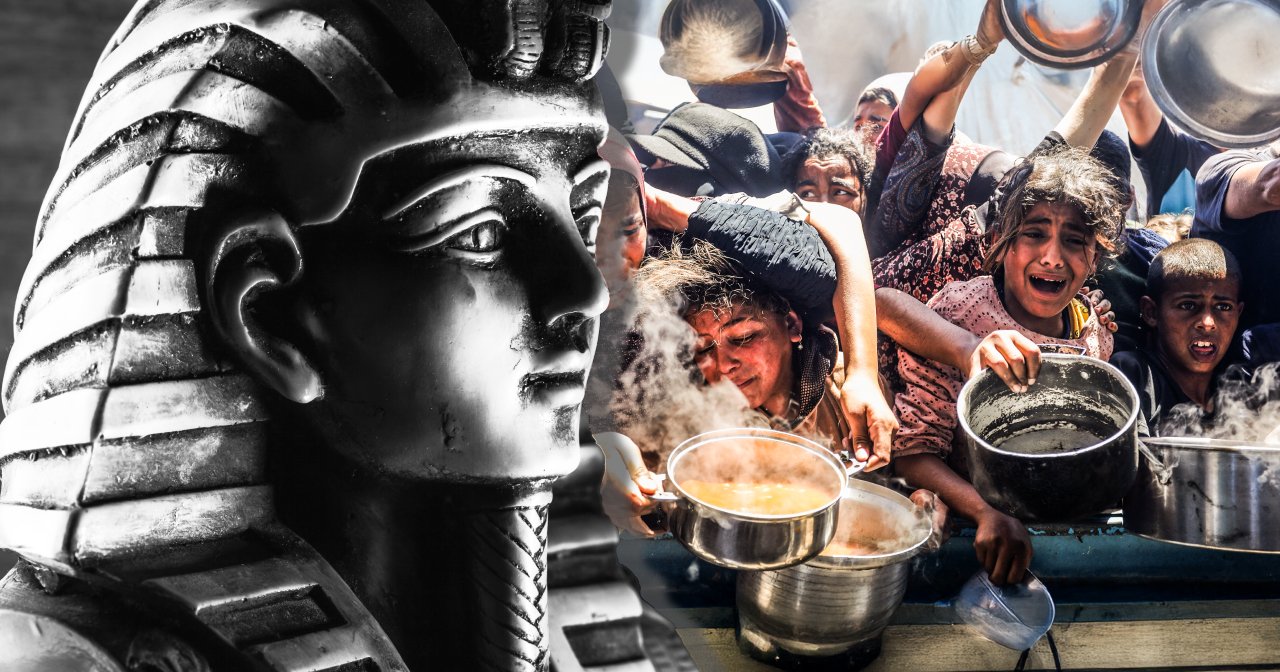
Muharram and ʿĀshūra in the age of unabated genocide
Reducing Muharram to history and law misses its deeper message — one that speaks to a wounded but rising Ummah in Gaza and beyond
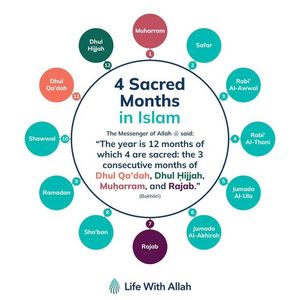
Our Islamic twelve months of the year were not chosen by human hands, but by the Creator of the Universe at the dawn of creation.
Allah says, “Indeed, the number of months with Allah is twelve months in the Book of Allah, from the day He created the Heavens and the Earth; among them, four are sacred…” (Surah al-Tawbah 9:36).
Three of them follow in sequence: Dhul Qa’dah, Dhul Hijjah, and Muharram. The fourth stands alone — Rajab.
In all of these months, fighting was traditionally forbidden, recognising that even in conflict, lines must not be crossed.
That is why Allah says, “So do not wrong yourselves during them.” (Surah al-Tawbah 9:36).
Every month demands caution, but in these months good deeds are amplified and sins are heavier.
Best month in which to fast (after Ramadhan)
If you ask about the most virtuous month for fasting after Ramadhan, it is Muharram.
The Prophet ﷺ said, “The best fasting after Ramadhan is in the Month of Allah, al-Muharram.” (Sahih Muslim, 1163).
In fact, there was one day in this month for which the Prophet ﷺ showed special care: the tenth, the Day of ʿĀshūra’.
Ibn ʿAbbās said, “I never saw the Messenger of Allah ﷺ so keen to fast any day, seeking its virtue, more than the Day of ʿĀshūra’ and this month — meaning Ramadhan.” (Sahih al-Bukhari, 2006).
Significance of fasting on ʿĀshūra’
Then came the migration to Madinah. Upon his arrival, the Prophet ﷺ saw the Jews fasting the 10th.
He asked why, to which they replied: “This is the day Allah saved Mūsā and his people and drowned Pharaoh and his people. So Mūsā fasted it in gratitude, and we fast it too.” (Sahih al-Bukhari, 2004).
The Prophet ﷺ responded: “We are more entitled to Mūsā than you.” (Sahih al-Bukhari, 2004).
So he fasted it and ordered others to fast.
This moment also reminds us that Allah’s deliverance of Mūsā was not merely a historical event but a manifestation of His promise to the believers: “And it was incumbent upon Us to support the believers.” (Surah al-Rum 30:47).
Later, when fasting in Ramadhan was made obligatory, the Prophet ﷺ said,
“Whoever wishes to fast it may fast, and whoever wishes to leave it may leave it.” (Sahih al-Bukhari, 2001; Sahih Muslim, 1125).
But he (ﷺ) never abandoned the fast. In fact, he would say,
“I anticipate from Allah that it will expiate the sins of the year before it.” (Sahih Muslim, 1162).
And towards the end of his life, wishing to distinguish the practice of the Muslims from that of others, he said: “If I remain until next year, I will surely fast the ninth.” (Sahih Muslim, 1134).
But he (ﷺ) passed away just three months after returning from that Hajj, not living to fast the 9th as he intended and instructed the Ummah — i.e. to fast a day before or after the 10th. This marked the final phase in the evolution of ʿĀshūra’.
This, then, is the path of ʿĀshūra’; its meaning, its practice, and the stages it passed through, till it became part of the religious and moral fabric of this Ummah.
However, to stop at history and legalities would be to miss the deeper current running beneath this day, particularly those that speak to an Ummah that is heartbroken, bleeding in Gaza and elsewhere, yet finding its feet.
No Pharaoh reigns forever
This is one of the central messages of Muharram. The tyrant always falls. Eventually.
Prophet Mūsā’s experience on the Day of ʿĀshūra’ is a yearly reminder that no empire or entity of injustice — no matter how powerful, influential, or entrenched — escapes the reckoning of Allah.
Allah says: “And We wanted to confer favour upon those who were oppressed in the land and make them leaders and make them inheritors.” (Surah al-Qasas 28:5).
Centuries later, on that same day, another tragedy unfolded. A beloved grandson of the Messenger of Allah was slain in the sands of Karbalā’.
al-Husayn ibn ‘Alī (radhiy Allāhu ‘anhum) stood for truth in the face of power and refused to legitimise tyranny. For that, he was betrayed, encircled, and murdered — along with his companions and family.
The Prophet ﷺ had said concerning him and his brother al-Hasan: “Al-Hasan and al-Husayn are the leaders of the youth of Paradise.” (Sunan al-Tirmidhi, 3768).
But as history has shown again and again: blood spilled in truth does not vanish, and those who carried out or enabled the killing of al-Husayn did not escape the consequences, as Ibn Kathīr states: “Hardly any of them made it through this world without falling ill — and most ended up losing their minds.”
None were left untouched, as Allah promises: “Whoever commits evil will be repaid for it…” (Surah al-Nisā’ 4:123).
Related

ʿĀshūra is an annual reminder that every tyrant falls, and that though the arc of justice may be long, it is certain.
Allah says: “And you will surely know its truth after a time.” (Surah Sad 38:88).
Exhaust every avenue and strategy
Having said the above, we often hear it said that tyranny is bound to fall, and whilst this is certain, it does not excuse inaction or the comfortable delusion that justice will arrive on its own.
This is the second message we take from the month of Muharram. The victory of Mūsā (ʿalayhi al-Salām) did not descend from the sky unearned. It came after he exhausted every possible means.
He stood before Pharaoh, spoke truth to power, educated his community, raised them upon īmān, led his people out in the night, reached the shore with an army at his back and a sea before him — and only then, when every human effort had been made, did Allah split the sea.
Similarly, we — the true heirs of Mūsā — must walk to the water and not freeze when the Pharaohs approach. Even as they censor truth, tarnish the names of the innocent, hurl false accusations, threaten livelihoods, and invert the narrative (painting the victim as the aggressor), we mustn’t look back, even when every calculation tells us there is nowhere left to go!
Muharram’s reality check is that Mūsā himself once stood where we stand today: at the edge of the sea with no clue as to what happens next. At that moment where the universe held its breath, his words were immortalised in the Qur’ān for us to carry, for us to speak today when we, too, are cornered:
“No. Indeed, with me is my Lord; He will guide me.” (Surah al-Shu‘arā’ 26:62).
And Allah says elsewhere: “O you who believe, if you support Allah, He will support you and make your foothold firm.” (Surah Muhammad 47:7).
So, chase the means of resisting oppression as though everything depends on you, whilst trusting Allah’s All-Capable intervention as though nothing depends on you.
Allah’s aid in the most unexpected of ways
When the above is achieved, Allah often miraculously turns the very tools of oppression into tools of salvation. The sea that saved Mūsā was the same sea that destroyed Pharaoh.
One path, two fates, as Allah says:
“And We saved Mūsā and those with him, all together. Then We drowned the others.” (Surah al-Shu‘arā’ 26:65-66).
One ocean carried the oppressed to freedom. The same ocean buried the tyrant. This is the might of Allah, when the same instrument becomes both mercy and reckoning, hence why the next verse reads:
“Indeed, in that is a sign…” (Surah al-Shu‘arā’ 26:67).
Today, are we not witness to this Divine pattern?
In Palestine, the very violence meant to break people into silence is what is awakening the hearts of the world. The censorship designed to erase the truth is what is making it go viral.
The compulsive lies have become the clearest cause of truth. The bans, the threats, the career cancellations, the frozen bank accounts — they are not producing fear, as one would think, but courage.
And this takes me to the final point below.
With every rising tyrant, reformers are born
Pharaohs fall and new Pharaohs rise. One tyrant is buried; another takes his place. One firebrand of chaos is extinguished; another is lit…
But this pattern is not just reserved for the oppressors, as every time a prophet is taken by Allah or a righteous soul departs, a new bearer of the truth emerges!
For every Pharaoh, there is a Mūsā. For every apartheid South Africa, a Mandela.
For every Crusader, a Salāh al-Dīn. For every colonial empire, a freedom fighter.
And for every genocidal machine, the conscience of the free that is impossible to silence.
This is by design — Sunnat al-Mudāfa‘ah (the law of push and pull) — it is Divine, and balance is always restored.
Allah says: “Had Allah not repelled some people by means of others, the earth would have been corrupted.” (Surah al-Baqarah 2:251).
Likewise for Islam, the relaying of its truth will continue, as the Prophet ﷺ said:
“There will always remain a group of my Ummah manifest upon the truth. They will not be harmed by those who oppose them, nor by those who forsake them — until the command of Allah comes and they are upon that.” (Sahih Muslim, 1920).
The temptation is to romanticise such people — to stand on the sidelines, waiting for a hero to emerge, admiring their courage from afar while quietly excusing ourselves from duty.
But Muharram is not a month for spectators, but an annual summons to break free from the paralysis of admiration, and to become of those we admire. To not merely marvel at their lineage of courage but to step into it, so that when the Earth is finally filled with justice — whether during your lifetime or otherwise — your name is among those written with Allah.
For as Allah says: “Indeed, Allah does not allow the reward of the doers of good to be lost.” (Surah al-Tawbah 9:120).
(Islam21c)