Ashura: What Do Sunnis and Shias Differ On?
A fundamental principle in Islam is acts of worship and expressions of grief must be guided by the Qur’an and the Sunnah.

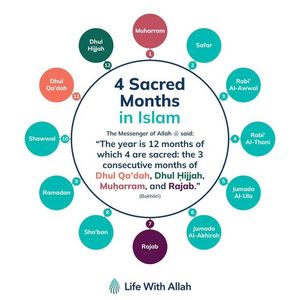
Few days in the Islamic calendar carry as much historical and spiritual significance as the 10th of Muharram, known as Ashura.
For Sunni Muslims, Ashura is first and foremost a day of worship, gratitude, and remembrance of Allah’s mercy. It is a day connected to one of the greatest victories of faith over tyranny: the salvation of Prophet Musa (peace be upon him) and the Children of Israel from Pharaoh and his army.
Yet Ashura is also inseparably associated with one of the greatest tragedies in Islamic history: the martyrdom of Al-Husayn ibn ‘Ali (may Allah be pleased with him), the beloved grandson of the Prophet Muhammad (peace and blessings be upon him), who was killed unjustly at Karbala in 61 AH (680 CE).
While Muslims agree on the virtue of Al-Husayn and the enormity of the injustice committed against him, they differ considerably regarding how Ashura should be commemorated and whether certain mourning rituals introduced centuries later are consistent with the teachings of Islam.
This article presents Ashura from the perspective of Ahl al-Sunnah wa al-Jama’ah: its Prophetic origins, the Sunni understanding of Karbala, the status of Al-Husayn (may Allah be pleased with him), and why Sunni scholars have historically distinguished between loving the family of the Prophet (peace and blessings be upon him) and introducing forms of mourning that were unknown to him and his Companions.
The Origin of Ashura
The religious significance of Ashura predates the tragedy of Karbala by decades.
When the Messenger of Allah (peace and blessings be upon him) migrated to Madinah, he found the Jews fasting on the tenth day of Muharram. They explained:
“This is a blessed day. On this day Allah saved the Children of Israel from their enemy, so Musa fasted on this day in gratitude to Allah.”
The Prophet (peace and blessings be upon him) replied:
“We have more right to Musa than they do.”
He then fasted on that day and commanded the Muslims to fast it. Narrated by Al-Bukhari and Muslim.
This narration establishes an important principle in Sunni Islam: the significance of Ashura originates from revelation and the Sunnah of the Messenger, not from later historical events.
The Prophet (peace and blessings be upon him) encouraged fasting on Ashura and said:
“I hope that Allah will expiate thereby the sins of the previous year.” Narrated by Muslim.
Near the end of his life, the Prophet (peace and blessings be upon him) also expressed his intention to fast the ninth of Muharram alongside the tenth in order to distinguish Muslims from the Jews: “If I remain until next year, I will certainly fast the ninth.” Narrated by Muslim.
For this reason, Sunni scholars recommend fasting either:
- The 9th and 10th of Muharram, or
- The 10th and 11th of Muharram,
with the first option being preferable.
Thus, for Ahl al-Sunnah, Ashura remains a day of gratitude to Allah, worship, fasting, and remembering His aid to the believers.
Karbala: One of the Greatest Tragedies in Islamic History
Approximately fifty years after the death of the Prophet (peace and blessings be upon him), a tragic event occurred that would leave a lasting mark on the Muslim world.
Al-Husayn ibn ‘Ali (may Allah be pleased with him), the son of Fatimah (may Allah be pleased with her) and the grandson of the Messenger of Allah (peace and blessings be upon him), was martyred at Karbala in Iraq in the year 61 AH.
The Prophet loved Al-Husayn deeply. He said: “Al-Hasan and Al-Husayn are the leaders of the youth of Paradise.” Narrated by Al-Tirmidhi and authenticated by Al-Albani.
He also said: “O Allah, I love them, so love them.” Narrated by Al-Bukhari.
Ahl al-Sunnah therefore regard Al-Husayn as one of the greatest men of this Ummah.
They love him.
They honour him.
They affirm his virtue.
And they consider his killing a grievous injustice and one of the greatest calamities to have afflicted the Muslim community.
Imam Al-Dhahabi wrote: “Al-Husayn was noble, honoured, devout, generous, and among the leaders of the people of Paradise.”
The Sunni position is therefore clear:
The murder of Al-Husayn was oppression.
His killers committed a tremendous crime.
And every Muslim grieves his martyrdom and asks Allah to be pleased with him and elevate his rank.
How Sunni and Shia Muslims Observe Ashura Differently
Although Sunni and Shia Muslims both revere Al-Husayn, they differ significantly in how Ashura is observed.
For Sunni Muslims, Ashura is primarily a day of:
- Fasting.
- Worship.
- Gratitude to Allah.
- Reflection upon the stories of the Prophets.
- Remembering the virtues of Al-Husayn and the lessons of Karbala.
For many Shia communities, however, Ashura has become principally a day of mourning.
Public gatherings are held to commemorate the tragedy of Karbala. In some countries, participants recite elegies and sermons recounting the suffering of Al-Husayn and his family.
Certain communities also practise forms of ritual mourning, including chest beating (latm), self-flagellation (tatbir), or other forms of self-inflicted pain.
Ahl al-Sunnah respectfully disagree with these practices.
Their disagreement does not arise from a lack of love for Al-Husayn. Rather, it arises from a fundamental principle: Acts of worship and expressions of grief must be guided by the Qur’an and the Sunnah.
No matter how beloved a person may be, Muslims are not permitted to invent religious rituals that were unknown to the Messenger of Allah (peace and blessings be upon him) and his Companions.
Grief in Islam Has Limits
Islam does not prohibit sadness.
The Prophet (peace and blessings be upon him) himself wept.
Related
He wept at the grave of his mother.
He wept upon the death of his son Ibrahim.
He wept when many of his Companions were martyred.
He said: “The eyes shed tears and the heart grieves, but we do not say except that which pleases our Lord.” Narrated by Al-Bukhari.
Thus, grief itself is not condemned.
What Islam prohibits are acts that express objection to Allah’s decree or resemble the practices of pre-Islamic mourning.
The Prophet (peace and blessings be upon him) said: “He is not one of us who slaps the cheeks, tears the clothes, and calls with the calls of the Days of Ignorance.”
Narrated by Al-Bukhari and Muslim.
For this reason, Sunni scholars throughout history have rejected practices such as:
- Self-harm.
- Ritual cutting.
- Striking the body in grief.
- Turning mourning into annual religious ceremonies.
Imam Ibn Taymiyyah (may Allah have mercy on him) wrote: “What Allah and His Messenger commanded in times of calamity is patience, seeking reward from Allah, and saying that which pleases Him. As for striking the cheeks, tearing garments, and reviving the customs of ignorance, then Allah and His Messenger prohibited these.”
Thus, the Sunni rejection of these rituals is not directed against Al-Husayn. On the contrary, it is because the Prophet (peace and blessings be upon him) himself prohibited such acts.
Loving Al-Husayn Is Part of Sunni Belief
One of the most persistent misconceptions is that Sunni Muslims do not sufficiently honour the family of the Prophet (peace and blessings be upon him).
Nothing could be further from the truth.
Love for Ahl al-Bayt (the household of the Prophet) is part of Sunni creed.
Sunni Muslims love:
- Fatimah (may Allah be pleased with her).
- ‘Ali ibn Abi Talib (may Allah be pleased with him).
- Al-Hasan (may Allah be pleased with him).
- Al-Husayn (may Allah be pleased with him).
- The Mothers of the Believers.
- All the noble Companions.
They neither exaggerate in their praise nor neglect their rights.
Imam Al-Tahawi (may Allah have mercy on him) wrote in his famous creed:
“We love the Companions of the Messenger of Allah. We do not exaggerate regarding any of them, nor do we disown any of them. We love those who love them and speak of them only with goodness.”
Likewise, Sunni scholars have always considered love for Ahl al-Bayt to be among the signs of faith.
But they distinguish between:
- Loving Al-Husayn.
- Transforming his martyrdom into rituals that the Prophet (peace and blessings be upon him) never taught.
Love is not proven through harming oneself.
Nor through annual displays of grief.
Nor through sectarian hostility.
True love for Al-Husayn is shown by:
- Following the Sunnah of his grandfather (peace and blessings be upon him).
- Loving the family of the Prophet.
- Upholding justice.
- Rejecting oppression.
- Remaining steadfast upon the Qur’an and the Sunnah.
Ashura Remains a Day of Worship and Hope
Ahl al-Sunnah do not forget Karbala.
Nor do they forget the deliverance of Musa (peace be upon him).
They fast Ashura because the Messenger of Allah (peace and blessings be upon him) fasted it.
They love Al-Husayn because the Messenger of Allah (peace and blessings be upon him) loved him.
They grieve his martyrdom because injustice against the righteous grieves every believer.
But they do not transform grief into ritual.
Nor do they allow tragedy to overshadow the guidance of revelation.
Ashura remains, as it was in the lifetime of the Prophet (peace and blessings be upon him), a day of worship, gratitude, remembrance, and hope.
A day that reminds believers that Allah grants victory after hardship, relief after tribulation, and honour to those who remain steadfast.
May Allah be pleased with Al-Husayn, with all the Companions of the Messenger of Allah (peace and blessings be upon him), and may He unite the hearts of Muslims upon truth, justice, and mercy.