
World Bank approves Sh58.3billion for Northern Kenya Fibre Project
For the 3.2 million residents in the region, the project is expected to open access to e-government services, telemedicine, digital education, and broader economic opportunities in an increasingly digitised nation.
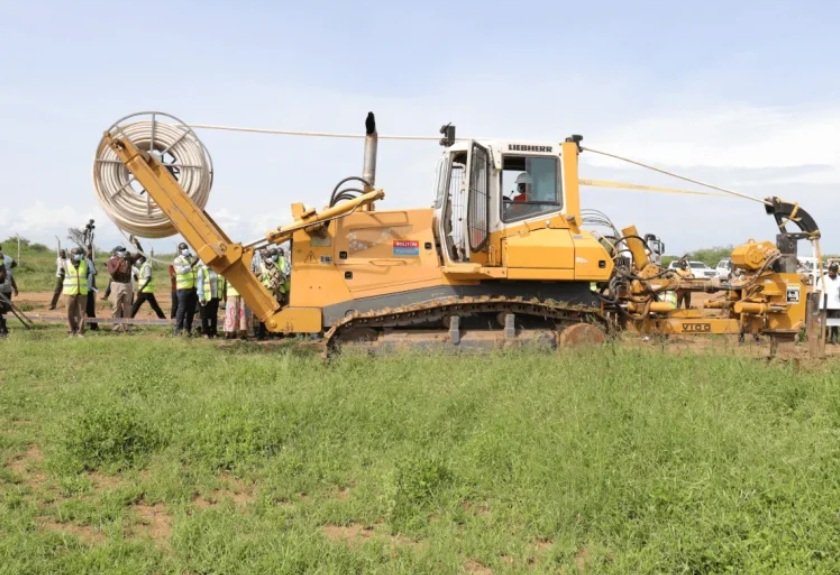
The World Bank has approved Sh58.3 billion to fund a high-capacity fibre optic cable spanning 1,270 kilometres from Isiolo to Mandera, marking a major step toward transforming connectivity in northern Kenya.
The cable will cover 508 kilometres alongside the 740-kilometre Isiolo–Mandera road corridor, which is currently under construction. This digital infrastructure initiative forms part of the broader Horn of Africa Gateway Development Project (HoAGDP), a multi-sector project that integrates road development with digital connectivity.
With a total estimated cost of Sh115.9 billion, the project is expected to unlock economic potential in a region that has historically lagged behind in socio-economic development.
“Multisectoral interventions that enhance connectivity, support livelihoods, create jobs, and strengthen resilience are essential to fostering inclusion, a shared sense of benefits, and ultimately greater peace, security and economic growth,” said Qimiao Fan, the World Bank’s Division Director for Kenya, Rwanda, Somalia, and Uganda.
Implementation of the project is being handled by two key government agencies. The Kenya National Highways Authority (KeNHA) is overseeing civil works, while the ICT Authority (ICTA) is managing the digital component, including fibre installation and charged with building fiber spurs and rings to connect selected schools, hospitals, pastoralist roadside markets, rest stops, and community service centers to the network. The aim is to bring at least 341 public institutions online.
While much of Kenya has experienced rapid expansion in mobile internet and digital services, northern counties have remained largely underserved, limiting their participation in the digital economy. For the 3.2 million residents in the region, the project is expected to open access to e-government services, telemedicine, digital education, and broader economic opportunities in an increasingly digitised nation.
The integrated approach of laying fibre alongside road construction—the first of its kind in the country—is projected to reduce service delivery costs by about 40 percent.
Tthe project is set to dramatically improve mobility. Once complete, travel time between Nairobi and Mandera is expected to drop from nearly three days to just one, a shift that could significantly boost trade, logistics, and daily life in the region.
The initiative also carries regional significance. The Isiolo–Mandera corridor is part of a larger transport network linking Kenya with Ethiopia and Somalia, positioning it as a critical artery for cross-border trade and cooperation. By improving both physical and digital connectivity, the project is expected to strengthen livelihoods while promoting peace, security, and sustained economic growth across the Horn of Africa.