Why Islam has provided solace to Rwandans after the genocide
During the genocide, the Mufti of Rwanda Sheikh Ahmed Mugwiza signed a Fatwa calling on Muslims not to get involved in the murder of fellow Rwandans, warning that whoever did so would be excommunicated.
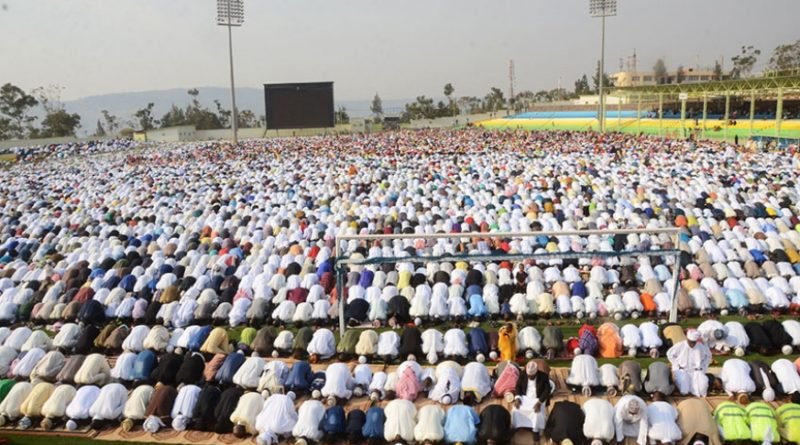
The 1994 Rwandan Genocide created permanent rifts in society, particularly in how Rwandans practise religion. Some have turned to Islam and considered it the only faith that did not have blood on its hands during the genocide.
By Ivan Mugisha
Isaiah Manirakiza, 20, was born into a Catholic family, but upon learning about the genocide, he secretly switched to Islam while in secondary school. His parents, who are not very religious themselves, learned about his switch through his older brother, and respected his choice.
“I grew up Catholic and I initially found solace in church rituals. However, the genocide shattered this comfort, considering that the church was a site of suffering and death. The fact that some priests and nuns were involved in the atrocities prompted me to deeply question my beliefs,” Manirakiza tells The Africa Report.
“I converted to Islam when I was in Senior One because, with its emphasis on social justice and equality, it offered a new perspective. The concept of Ummah, the global Muslim community, resonated with my yearning for a brotherhood that transcended ethnicity,” he says.
His story is not so different from that of Carole Umulinga, 31, who was a baby when many of her family members were slaughtered in the 1994 genocide.
She converted to Islam in 2017 because, to her, the religion’s focus on social responsibility resonated with the immense task of rebuilding Rwanda.
“I hate being a hypocrite, and it felt like I was one when I was a Pentecostal. I don’t even know what took me so long, because how does someone subscribe to a religion whose leaders lured others to be killed?” she says.
“Islam felt like a faith that actively called for a better world, something I desperately craved after the devastating genocide against the Tutsi,” she adds.
Islam played a more protective role
During the genocide, the Mufti of Rwanda Sheikh Ahmed Mugwiza signed a Fatwa (a formal ruling) calling on Muslims not to get involved in the murder of fellow Rwandans, warning that whoever did so would be excommunicated.
Ambassador Sheikh Saleh Habimana, a former Mufti of Rwanda, tells The Africa Report that the Fatwa, coupled with a general fear of Islam within the Rwandan population, ensured that mosques offered a rare source of refuge for Tutsi who were being hunted.
“The colonialists had preached to Rwandans that Islam was a religion of the devil, and that the mosque was the house of the devil. So, the Interahamwe were naturally fearful of hunting anyone who hid in mosques,” he says, referring to the Hutu extremist militia that carried out the genocide and pushed others to do so.
“This, plus the Fatwa by Sheikh Ahmed Mugwiza, is why there was not a single mosque where people were lured to be killed,” he adds.
“… 1994 was history repeating itself,” he continues. “In 1959 when Tutsis were being hunted during the Hutu Revolution, long distance truck drivers – who were predominantly Muslim – helped to smuggle many Tutsi across the border to neighbouring countries.”
Colonial backdrop to rule and divide
Experts argue that the conditions imposed on Rwanda by European missionaries and colonialists made the genocide possible.
“You can see this through religious literature and divide-and-rule attributes they placed on the Tutsi and Hutu, based on physical features,” Ismael Buchana, senior lecturer of political science at the University of Rwanda, tells The Africa Report.
Even though Islam to date remains a minority religion in Rwanda, it saw an increase in converts after the genocide because it was not directly involved in the genocide, experts say.
“Some Muslims killed, of course, but it was not in the name of Islam,” says Buchana.
“Nobody was lured to a mosque to be killed like how people were being lured into the churches to be killed. This is precisely why some people left Christianity to become either Muslim or atheist,” he adds.
Buchana says there was a “real concern” in the early 1990s that a faction of young Muslims was planning to join the Interahamwe.
“The Fatwa (declaration) was primarily issued to prevent the Muslim youth from participating in the planned killings. Eventually, the order cut across the entire Muslim community. It was issued by the highest authority in the community, so every Muslim was bound to take it seriously,” he says.
Investigations into churches
In the aftermath of the genocide, the Rwandan government launched investigations into the Church’s role, leading to tensions between the government and the church hierarchy.
President Paul Kagame has publicly criticised the Catholic Church for its perceived complicity and has called for accountability.
The Catholic Church’s response to the genocide was criticised for being insufficient and sometimes perceived as defensive. These tensions strained the relationship between Rwanda and the Catholic Church for years after the genocide.
In 2017, when Kagame met Pope Francis, they discussed the Church’s role in the tragic chapters of 1994, while the president also highlighted to the Pope how Catholic institutions and missions together with the colonial administration played a role in dividing Rwandans.
Even when Pope Francis asked for forgiveness for the “sins and failings of the Church” during the genocide, Kagame’s government indicated that his apology did not go far enough in admitting that the Catholic Church was complicit in protecting the clergy who were accused of perpetrating the genocide.
Several priests have been tried and found guilty of genocide crimes, such as Athanase Seromba and Wenceslas Munyeshyaka, who were convicted by a Rwandan military court.
According to Rwanda’s 2022 Population and Housing Census, 40% of Rwandans are Roman Catholic; 21% Pentecostal; 15% Protestant, 12% Seventh-day Adventist; 4% other Christian, and 2% Muslim. (Africa Report)