
UN warns of 'brutal, inhumane' Sudan war as Darfur crisis deepens
The human toll is staggering: an estimated 150,000 people killed, and nearly 12 million displaced, making Sudan home to the world’s largest displacement crisis.
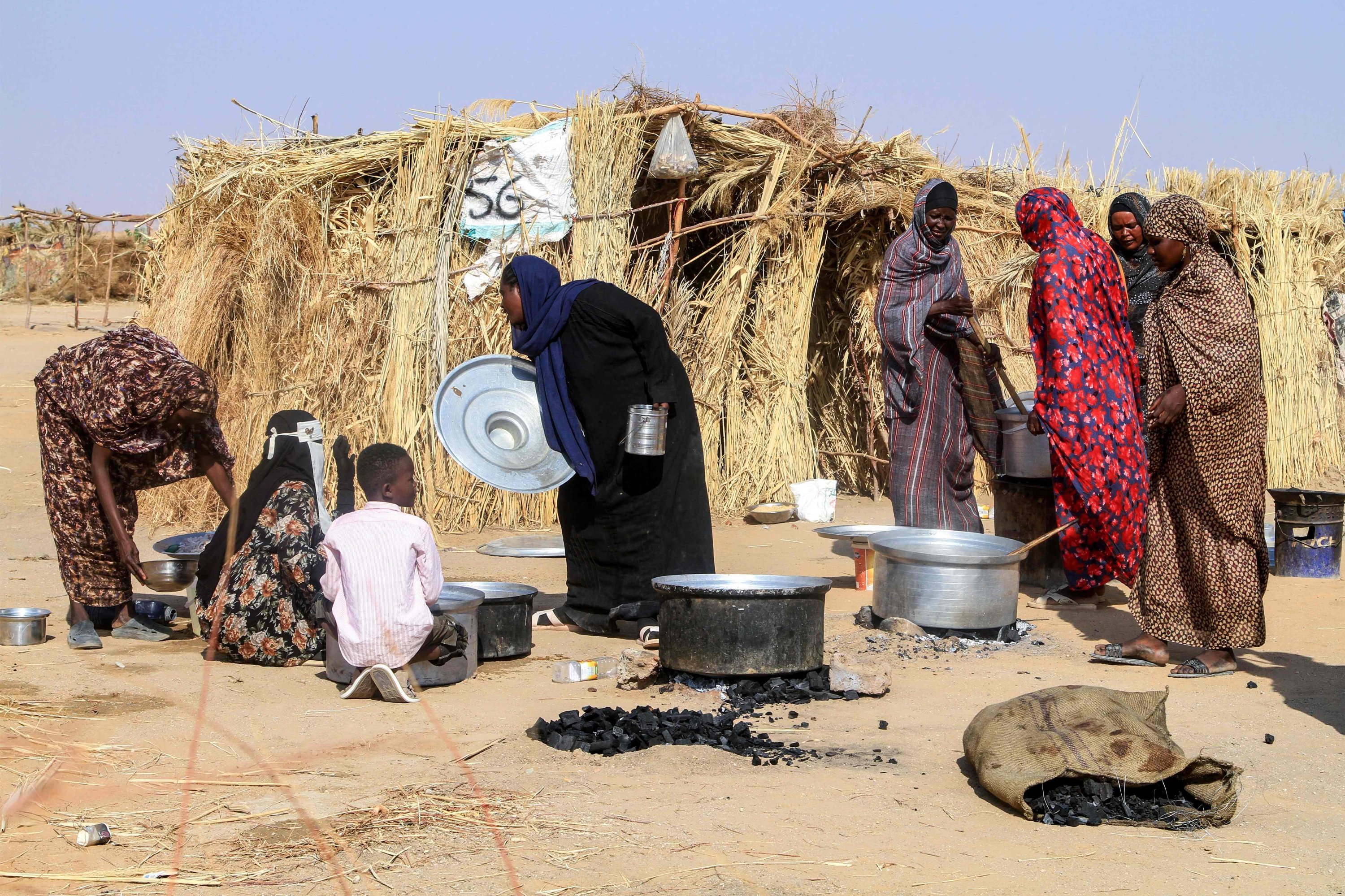
The United Nations’ top humanitarian official condemned Sudan’s spiraling civil war as “brutal and inhumane” during a rare inspection tour through Darfur this week, urging both warring factions to allow unimpeded aid access as famine, mass displacement and escalating atrocities push the nation closer to total collapse.
Under-Secretary-General for Humanitarian Affairs Tom Fletcher arrived in eastern Sudan on Nov. 11 for a week-long mission designed to break the deadlock on aid delivery and press for local cease-fires across the conflict’s front lines.
His visit comes as the war between the Sudanese Armed Forces, led by Gen. Abdel Fattah al-Burhan, and the paramilitary Rapid Support Forces, commanded by Mohamed Hamdan Dagalo, nears its third year after erupting in April 2023.
The human toll is staggering: an estimated 150,000 people killed, and nearly 12 million displaced, making Sudan home to the world’s largest displacement crisis.
U.N. data shows 9.6 million internally displaced people inside Sudan and 4.3 million refugees scattered across Chad, Egypt and South Sudan.
Fletcher’s most consequential stop came in Darfur, the vast western region scarred by the early-2000s genocide and now once again the epicenter of mass killings, sexual violence and famine.
Beginning in Geneina, the ravaged capital of West Darfur, Fletcher traveled by road through Zalingei in Central Darfur and onward toward East Darfur – a route aid groups describe as one of the most dangerous in the country.
Speaking from the roadside outside Zalingei on Thursday, Fletcher called the conflict “a brutal, inhumane war” and said the U.N. must “stand with the survivors” despite grave access challenges.
“We must be allowed to get our life-saving aid through,” he said in a video posted by OCHA. He described the U.N. as “a ship not built to stay in harbor,” signaling his intent to push deeper into areas long cut off by violence and roadblocks.
Before entering Darfur, Fletcher held talks in Port Sudan with SAF commanders, including Burhan, to negotiate safer supply routes and guarantees for aid convoys.
He also communicated indirectly with RSF leaders, pressing for equal access to RSF-controlled zones.
UN officials hope the discussions may nudge both sides toward limited humanitarian truces as broader negotiations remain stalled.
Fletcher will brief the U.N. Security Council remotely from Sudan on Nov. 17.
Fletcher’s tour comes just weeks after the RSF seized el-Fasher, the last major SAF foothold in North Darfur, following months of siege.
Its fall on Oct. 26 gave the RSF control of all five Darfur states – a milestone that triggered widespread warnings of a “second Darfur genocide.”
Rights monitors, including the Yale Humanitarian Research Lab, documented at least 1,500 civilians killed in the first days of the assault, with reports of ethnic executions, mass rapes and the burning of Masalit and other non-Arab communities.
The brutality has drawn unusually sharp criticism from Arab states that have historically backed the RSF.
The fighting unleashed a massive exodus. More than 99,000 civilians – mostly women, children and the elderly – fled el-Fasher on foot toward Chad or SAF-held pockets.
Many arrived malnourished in communities already overwhelmed by previous waves of displacement.
In camps like Zamzam in North Darfur, famine was declared in August, and food supplies remain critically low as aid convoys struggle to enter.
Tens of thousands remain trapped in el-Fasher under RSF control, where Fletcher warned they face “a darker hell” of reprisals and starvation.
The war began as a power struggle between Burhan and Hemedti after the two generals jointly overthrew Sudan’s civilian government in 2021.
Today, it is a fragmented battlefield drawing in regional powers: Egypt backing the SAF, the UAE funneling support to the RSF through Libya, and other actors accelerating the flow of weapons.
By late 2025, nearly 25 million Sudanese – half the population – need humanitarian aid, but only a fraction of the U.N.’s $4.2 billion appeal has been funded.
Aid efforts are hampered by looting, roadblocks, bureaucratic restrictions and violent attacks on relief workers.
In Darfur alone, two famines have been formally declared – in el-Fasher and in Kadugli, South Kordofan – threatening over 600,000 people with starvation.
Human Rights Watch and the UN human rights office have accused both sides of grave abuses, from SAF airstrikes on civilian neighborhoods to RSF-led ethnic cleansing.
They warn that the world’s muted response amounts to “a deadly silence.”
Fletcher’s Darfur trip is an urgent attempt to reopen humanitarian corridors in a region where 90% of health facilities are not functioning and schools have become makeshift shelters for families fleeing violence. He said both sides have given “initial assurances” that aid can move safely – pledges that remain fragile and untested.
“The suffering here is beyond words,” Fletcher said. “This is a moment for the world to act.”