
Transport operators suspend strike after talks with Government
Transport sector leaders called for the immediate resumption of services to ease the burden on commuters and businesses
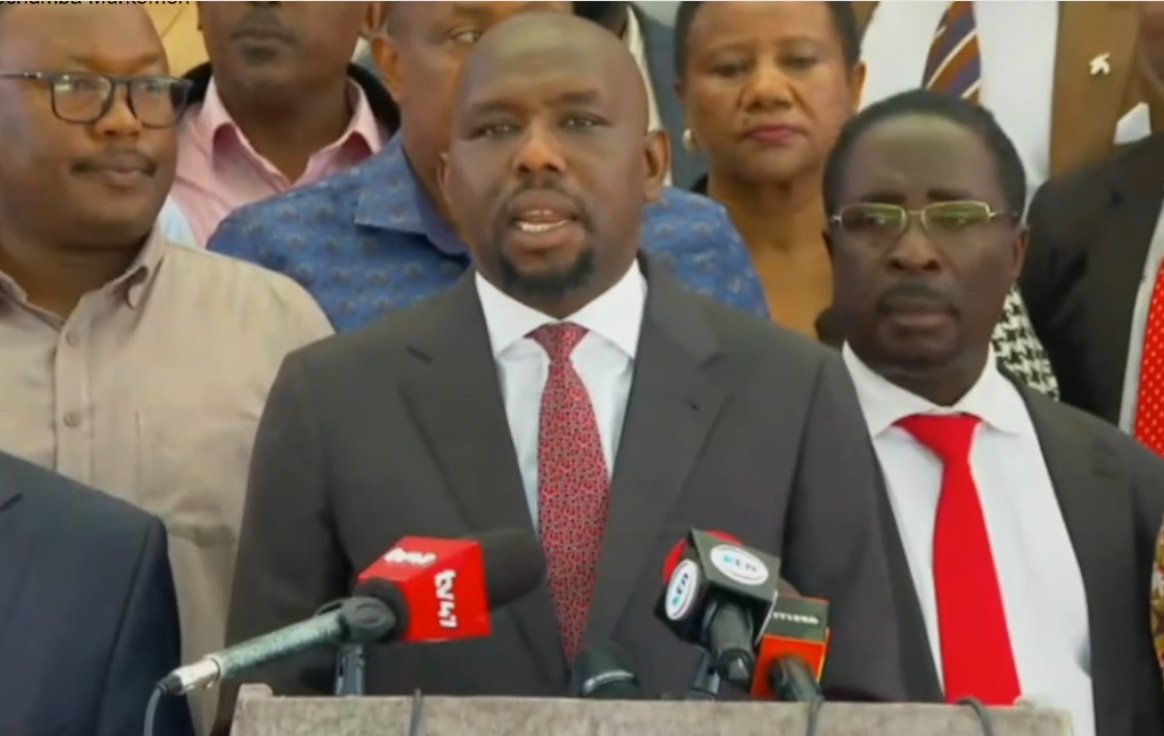
Transport operators have suspended the strike for one week to pave the way for negotiations between the government and key stakeholders in the transport sector.
Speaking during a joint press briefing held on Tuesday, May 19, at Harambee House, government officials and transport sector leaders called for the immediate resumption of services to ease the burden on commuters and businesses affected by the industrial action. The briefing was attended by Interior Cabinet Secretary Kipchumba Murkomen alongside representatives from transport associations.
The Federation of Public Transport Sector (FPTS) and the Association of Matatu Transport Owners confirmed that they had agreed to suspend the strike to create room for dialogue.
“On behalf of the Federation of Public Transport Sector and the Association of Matatu Transport Owners, I urge all our members, drivers, and conductors to resume operations effective immediately so that Kenyans can continue with their normal daily activities,” said FPTS Chief Executive Officer Kushian Muchiri.
National Chairman of the Matatu Owners Association (MOA), Albert Karakacha, echoed the call, urging operators across the country to return to work while consultations continue.
“We want to urge our members, wherever they are, to go back to work. We are going to work very closely with the government, and we have agreed to form a committee that will look into the broader issues affecting the transport sector,” Karakacha stated after the meeting.
The transport sector stakeholders also condemned incidences of violence and destruction of property witnessed on Monday in some parts of the country and dissociated from them.
CS Murkomen assured transport operators that the government is committed to addressing their concerns, particularly those linked to the rising cost of fuel. He emphasized that suspending the strike was necessary to create a conducive environment for constructive engagement while preventing further disruption to economic activities and essential transport services.
Join Our WhatsApp Channel for Updates and Announcements
“Within the intervening period between now and Tuesday, May 26, the ongoing strike is suspended for one week to provide an avenue for consultations and negotiations,” Murkomen said.
Earlier, the Kenya Muslims Small and Medium Enterprises Association (KMSMEA) appealed to both the government and transport stakeholders to urgently reach an amicable solution to the fuel price crisis, warning that ordinary Kenyans were bearing the brunt of the standoff.
In a statement released on Tuesday, May 19, KMSMEA acknowledged the constitutional right to peaceful protest but cautioned that the continued strike was deepening the country’s economic and social challenges.
“Everyday citizens are enduring immense hardship. Commuters are stranded, workers cannot reach their workplaces, healthcare access has been dangerously compromised, and the cost of basic food items is skyrocketing, pushing already vulnerable families to the brink,” said Secretary-General Ibrahim Mohammed Kazee.
Kazee further noted that the paralysis of public transport had forced many micro and small enterprises to shut down temporarily, leading to significant revenue losses and threatening the livelihoods of millions of Kenyans already struggling with the high cost of living.
For the second consecutive day, the strike had severely disrupted public transport operations in Nairobi and other major towns, leaving thousands of commuters stranded and businesses counting heavy losses.
Transport operators called for the strike on Monday in protest against sharp increases in fuel prices, arguing that the escalating costs had made it increasingly difficult to sustain operations without government intervention or relief measures.