Tattoos: Understanding the Islamic View
In today’s world, Muslim scholars are increasingly addressing contemporary issues that generate debate and misunderstanding within society.
Muslims generally approach every commandment and prohibition in Islam with deep respect, striving to incorporate Islamic teachings into every aspect of daily life. Islam provides comprehensive guidance on matters related to faith, morality, and personal conduct.
In today’s world, Muslim scholars are increasingly addressing contemporary issues that generate debate and misunderstanding within society. One such issue is tattooing.
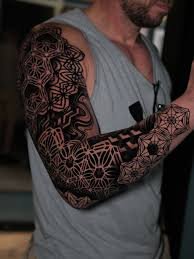
In modern society, tattoo art has gained widespread acceptance and popularity, particularly in Western cultures. Over the years, tattoos have become mainstream, with tattoo artists earning recognition for their creativity and craftsmanship. Tattoos are now common among people of different ages, backgrounds, and professions. From celebrities to ordinary individuals, many choose to decorate their bodies with various designs.
This raises an important question for Muslims: Are tattoos permissible in Islam?
Islamic View on Tattooing
Permanent tattoos are considered a serious matter in Islamic teachings because they involve permanently altering the body. Once the skin is tattooed, restoring it to its original condition is often difficult or impossible.
Although the Quran does not explicitly mention tattoos, several verses emphasize preserving the natural form in which Allah created human beings. One of the verses frequently referenced in this discussion is:
“So be steadfast in faith in all uprightness, the natural Way of Allah which He has instilled in all people. Let there be no change in the creation of Allah. That is the Straight Way, but most people do not know.”
(Surah Ar-Rum 30:30)
Scholars often interpret this verse as guidance against unnecessary alterations to the human body. Since permanent tattoos modify the skin and remain for life, many scholars view them as conflicting with this principle.
In addition to Quranic guidance, several authentic Hadiths clearly discourage tattooing. Abdullah ibn Umar reported that the Messenger of Allah (ﷺ) cursed the tattooer and the one being tattooed, along with those who wear wigs and those who attach hair extensions for beautification purposes (Sahih al-Bukhari).
Similarly, Abdullah ibn Mas‘ud reported that the Prophet Muhammad (ﷺ) cursed women who practice tattooing, those who seek tattoos, those who pluck facial hair, and those who create gaps between their teeth for beautification, saying that they alter the creation of Allah (Sahih Muslim).
These narrations demonstrate the seriousness with which Islam views unnecessary bodily alteration for cosmetic purposes.
Join Our WhatsApp Channel for Updates and Announcements
The Body as a Trust from Allah
In Islam, the human body is regarded as an amanah (trust) from Allah. Muslims are therefore encouraged to care for their bodies responsibly and preserve their natural state as much as possible.
While Islam permits certain forms of body modification for hygiene, health, or religious reasons—such as trimming hair, cutting nails, or circumcision—many scholars distinguish these from permanent cosmetic alterations like tattoos.
Islam teaches believers to appreciate and feel content with the way Allah created them. Altering the body without a valid medical or practical need is often viewed as contrary to this principle.
For this reason, mainstream Islamic scholarship generally considers permanent tattoos to be prohibited (haram), based on both Quranic principles and authentic Hadiths.
Exceptions and Repentance
The concept of preserving the natural state (fitrah) extends beyond tattoos and also applies to unnecessary cosmetic procedures or body modifications. However, Islam does permit certain alterations when there is a legitimate need, such as medical treatment, correcting a deformity, or repairing an injury.
If a person had tattoos before accepting Islam, they are not required to remove them, especially if removal would be difficult, harmful, or expensive. Islam teaches that embracing the faith erases previous sins. The Prophet Muhammad (ﷺ) said:
“Islam wipes away the sins that came before it.”
(Sahih Muslim)
Likewise, a Muslim who got a tattoo in the past and later sincerely repents can seek Allah’s forgiveness. Islam is a religion of mercy, and sincere repentance is always accepted by Allah.
Whether a person is born Muslim or embraces Islam later in life, what matters most is sincerity, repentance, and striving to obey Allah to the best of one’s ability.