
Ruto urges religious leaders to join war against drug abuse
Mombasa and other counties at the coast remain among the worst affected areas in the country with the high prevalence of drug abuse.
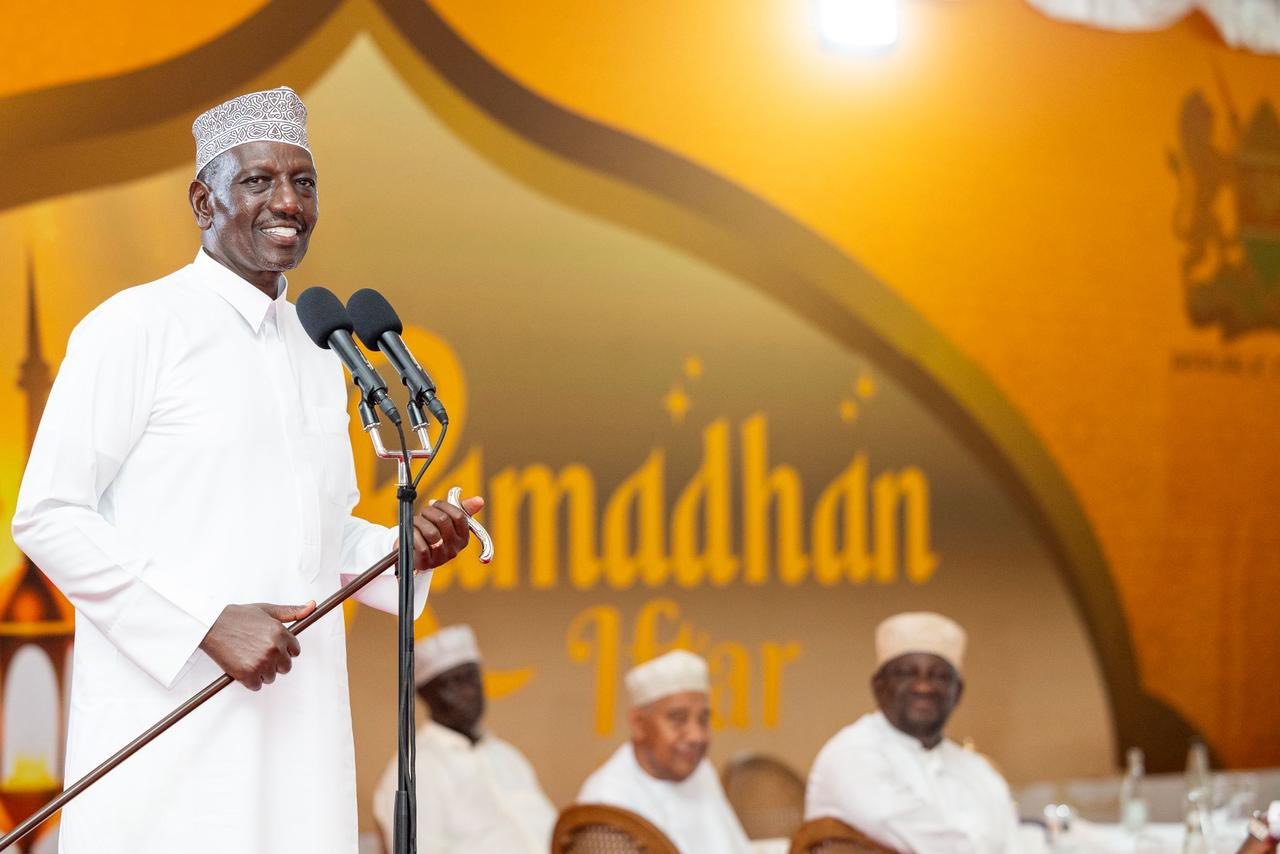
President William Ruto has called for cooperation from religious leaders in the fight against drug abuse, saying the vice poses a grave threat to the country’s future.
Speaking during a Ramadhan iftar dinner in Mombasa, the Head of State stressed the need for concerted efforts to combat the prevalence of drug abuse, reiterating that religious leaders have a critical role to play in the fight against social evils.
“These are the issues undermining one of the country’s most critical sectors — the young people. Religious leaders should also take steps to ensure we do not lose the future of our country,” he said.
Mombasa and other counties at the coast remain among the worst affected areas in the country with the high prevalence of drug abuse.
The President described the event held on Friday, March 13, at State House Mombasa as a cherished moment of reflection, gratitude, and unity during the holy month of Ramadhan.
He also praised Muslims for their continued contribution to the social, economic, and cultural progress of the country, noting that the community remains an important pillar in building a more cohesive and prosperous Kenya.
“Our nation draws great strength from its diversity of faiths and cultures. It is through such shared moments that we reaffirm our commitment to mutual respect, peaceful coexistence, and the common good,” he said.
The President also reaffirmed the government’s commitment to ensuring Muslims receive national identity cards and passports, saying the move is aimed at correcting past injustices.
Amason Kingi, the Speaker of the Senate, applauded the President for his commitment to ensuring that all Kenyans are treated as equal citizens of the country.
“It was a common trend to see Mijikenda youth being issued with national identity cards while Muslims were deliberately denied and subjected to bureaucratic bottlenecks. This is no longer the case under the present administration,” he said.
The President further noted that the National Infrastructure Fund would help address the historical marginalisation of northern Kenya and support development in arid and semi-arid regions. He said 12 dams have already been identified for funding under the programme, with about 60 per cent to be located in northern Kenya to strengthen agriculture and enhance food security.
“This will improve the future of agriculture and food security in the country,” he said.
Iftar dinners hosted by the Head of State have in recent years become a regular tradition, offering an opportunity for leaders and members of the Muslim community to meet and reflect during the sacred month.
The gathering — the first of its kind in the coastal city — brought together Muslim leaders and government officials to share the breaking of the fast during the month of Ramadhan.
Among those in attendance were Abdulswamad Shariff Nassir, Governor of Mombasa; Aden Duale, Cabinet Secretary for Health; Junet Mohammed, National Assembly Minority Leader; Salim Mvurya, Cabinet Secretary for Sports; and Oburu Odinga, among other leaders.