
Ruto orders integration of Madrassa and Duksi into national education system
The President directed the Cabinet Secretary for Education to engage stakeholders and take the necessary measures under the Basic Education Act
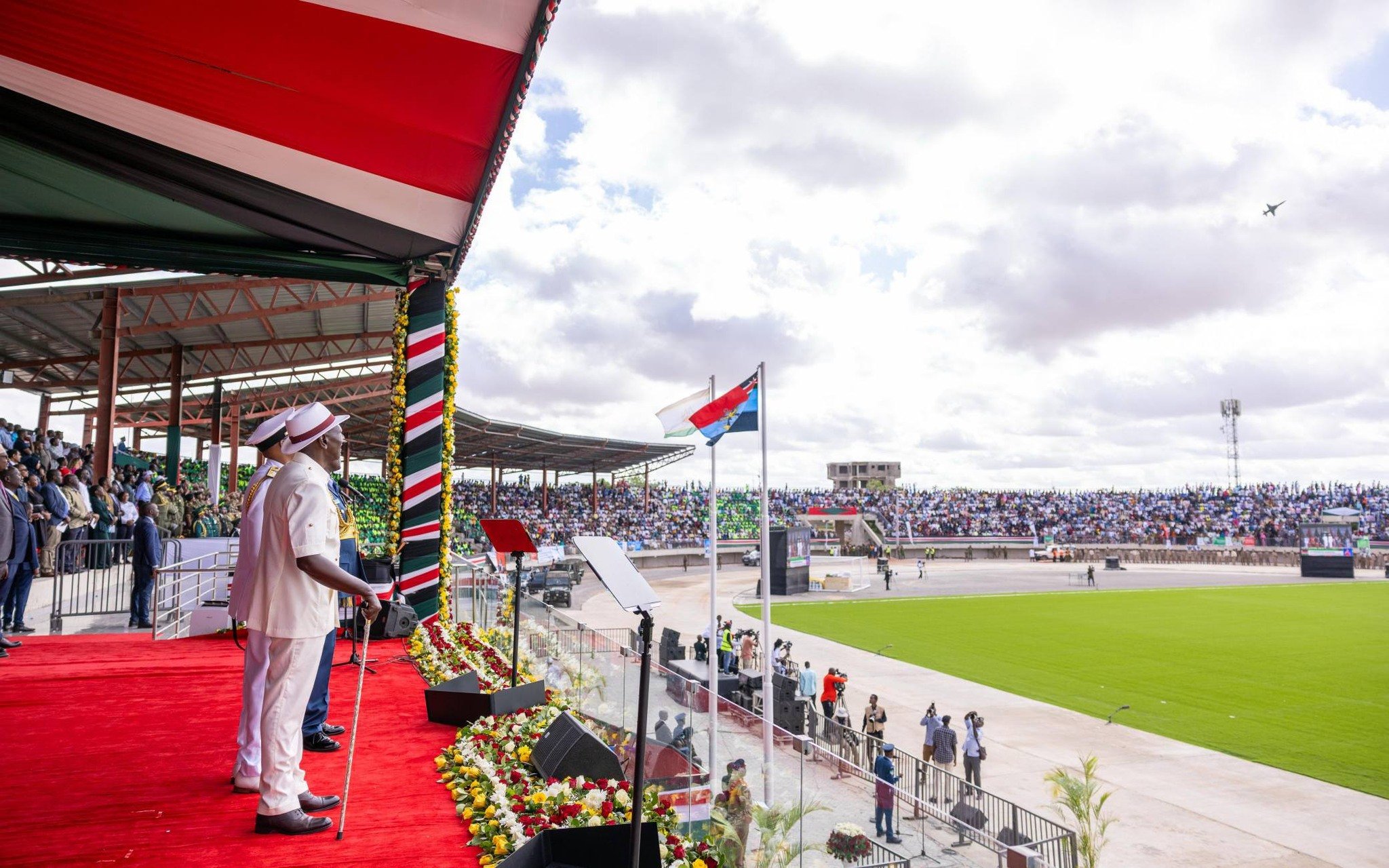
President William Ruto has directed the formal integration of Madrassa and Duksi learning pathways into Kenya’s national education system, saying the move will enhance on educational opportunities for thousands of children.
The President said integrating the Islamic education system alongside pastoral learning programmes will expand access to education and ensure that learners from all backgrounds have a clear pathway into formal education.
Speaking during the 63rd Madaraka Day celebrations in Wajir, President Ruto directed the Ministry of Education to establish the necessary legal and policy framework to facilitate their integration.
“I direct the Cabinet Secretary for Education to engage all relevant stakeholders and take the necessary measures under the Basic Education Act to consult widely and recommend appropriate measures for the formal integration of the same,” the President said.
“This will ensure that every child, regardless of background or circumstance, has a recognised pathway into learning, skills and opportunity. Every child deserves a door into learning. It is our duty to open every door.”
Madrassas provide comprehensive Islamic education from elementary to advanced levels, while Duksi serves as a foundational religious learning institution for young children, particularly in Somali-speaking communities. Although these learning pathways are recognised under the Basic Education Act, they have not yet been fully structured within the country's formal education system.
Emphasising the transformative power of education, President Ruto said his administration’s affirmative action programme has led to the operationalisation of teacher training colleges in the North Eastern region, helping address the chronic shortage of teachers in northern Kenya.
“Today, through this affirmative action programme, a record 1,800 local teachers from Wajir, Mandera County and Garissa County have been employed and will be deployed within the region,” he said.
The President further revealed that 4,616 students from the region are currently enrolled in teacher training colleges—the highest number ever recorded in the area’s history.
To improve access to higher education, he also announced plans to establish a university in Wajir County.
President Ruto acknowledged the historical marginalisation of northern Kenya, saying years of neglect and discrimination had slowed the region’s development. “The consequences were devastating—decades without adequate water, healthcare or schools; communities pushed to the fringes where their patriotism was questioned, their citizenship doubted and their aspirations undermined,” he said while pointing out that his administration was committed to reversing that trend through targeted investments and policy reforms.
The President also highlighted reforms introduced through the Presidential Declaration on Registration and Issuance of IDs and Birth Certificates in Northern Kenya, which he signed in Wajir in February last year. He said the reforms have already enabled thousands of young people to obtain identity documents without undergoing additional vetting procedures.
Ruto described the hosting of a national celebration in the heart of Northern Kenya as a historic moment and a significant recognition of the region’s place in the country’s development.
“Today, Kenya has made history by celebrating a national event in the heart of Northern Kenya. This is a moment of dignity, recognition and inclusion for the people of this region,” he said.
This year’s Madaraka Day celebrations, the first to be held in Northern Kenya, were held under the theme, ‘Education, Skills and the Future’, highlighting learning, innovation, technical training and skills development as key drivers of Kenya’s economic transformation.