
Pumwani's changing face, the erasure of its Muslim heritage
Pumwani was founded as a resettlement area for the first African residents of Nairobi, many of whom had migrated from the East African coast at the turn of the 20th century
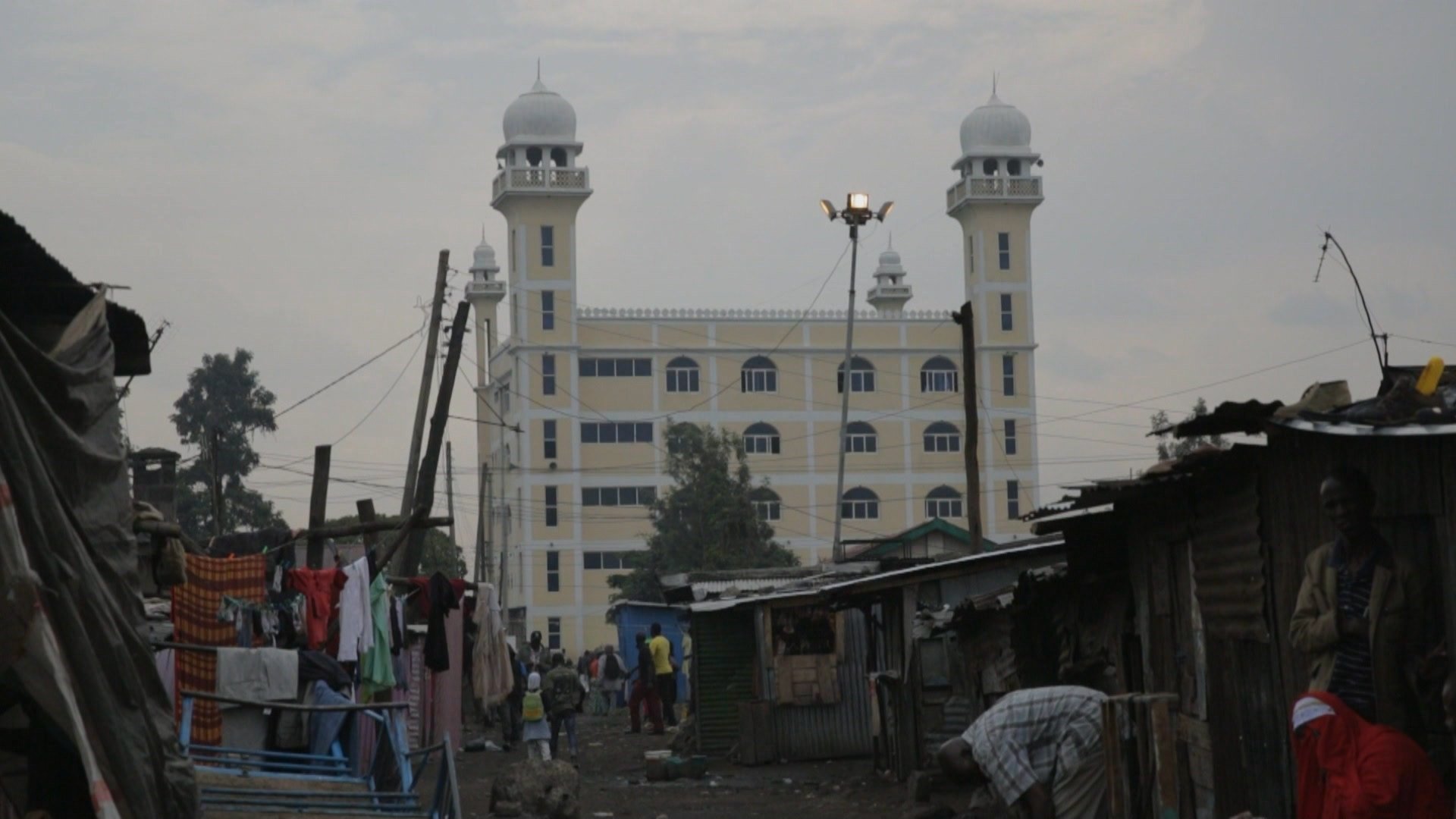
Pumwani Estate, one of the first African settlements in Nairobi, is undergoing a gradual erasure of its distinct Muslim identity.
A research study by New Lines, an award-winning American magazine, revealed that the process, which began shortly after Kenya's independence in 1963 and has accelerated in recent years, has been driven by the illegal allocation of land to outsiders by corrupt city officials, eviction orders, and the sale of property by some residents to people from outside the community.
Established in the 1920s, the estate has undergone a profound transformation over the decades which has seen the original residents and their descendants gradually being replaced by people from other communities.
Pumwani was founded as a resettlement area for the first African residents of Nairobi, many of whom had migrated from the urban societies along the East African coast at the turn of the 20th century. Drawn by opportunities created by the Uganda Railway, whose headquarters were based in Nairobi, they came seeking work and a new life.
The early settlers arrived from coastal towns such as Malindi, Mombasa and Lamu, as well as from Zanzibar, the Comoros Islands and the coast of what was then Tanganyika. They were later joined by Muslim converts from the Kamba, Kikuyu and other communities.
Their original settlements in Mji wa Mombasa and Mji wa Kileleshwa were demolished after the British colonial administration introduced stricter racial segregation policies in Nairobi. The displaced residents were relocated to what became known as "Pumwani" — a Swahili word meaning "a resting place" or "a place to breathe."
The new residents were required to build their own houses and were permitted to use only mud and wattle as construction materials. They constructed traditional Swahili homes — square-shaped structures made of mud and wattle. The Swahili-style mud houses became known as "majengo," meaning "houses" in Swahili, a term that later gave its name to the settlement and to similar Muslim settlements elsewhere in the country.
Although homeowners paid monthly rent for the plots on which their houses stood, they had no security of land tenure.
The Muslim settlers who were relocated to Pumwani laid the foundations of a vibrant African community deeply rooted in Islam and Swahili culture. "The estate existed as a unique and predominantly Muslim community, where various African ethnicities, cultures and languages united under a distinct identity," wrote New Lines journalist Jaclynn Ashly.
"The Muslim homeowners rented out rooms and employed non-Muslims coming into Pumwani," explained community elder Maalim Hassan. "The non-Muslims were always treated as family, and that's how people naturally started converting to Islam because of the strong moral character displayed by Muslims."
According to Hassan, the influence of Islam extended beyond the Muslim community itself.
"Today in Pumwani, residents say that even the estate's longtime Christian residents behave like Muslims, including fasting alongside their Muslim neighbours during the holy month of Ramadan and participating in community religious activities," he added.
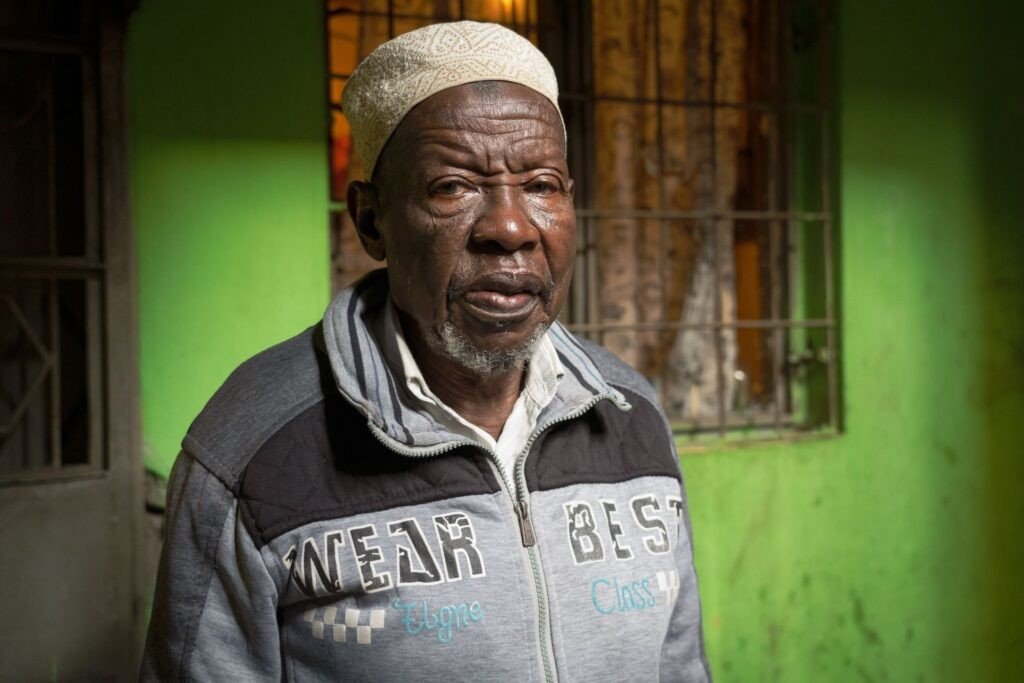
Community elder Maalim Hassan
Almost a century later, the Pumwani of today feels vastly different.
Pumwani's proximity to the central business district, coupled with opportunities at the nearby Gikomba market, has made it an attractive destination for many newcomers. The influx has gradually altered Pumwani's Muslim-majority demographic, diluting the unique urban identities that once defined the estate. Combined with years of neglect by successive governments, the changes have taken a heavy toll on residents' sense of belonging.
Unlike many Nairobi residents who maintain strong ties to their rural homes, Pumwani's longtime residents consider the estate their only home. For them, these overcrowded and increasingly neglected streets are where generations of family history are rooted.
"This community is dead," says 65-year-old Mustafa Saleh in a raspy voice that mirrors the despair felt by many of Pumwani's long-established residents. "It's only the name that remains. The land has already been grabbed. We are just waiting for the day we get evicted."
"This is my only home," Saleh adds. "There is nowhere else for me to go."
According to Maalim Hassan, the changes began shortly after independence when local leadership increasingly came from outside the community. "It was after independence when everything started to change," he says. "All of our local city councillors and representatives were not from Pumwani. They were Kikuyu from outside the community."
Despite these concerns, some efforts were made to improve housing conditions in the estate.
During the 1960s, Tom Mboya, then the Member of Parliament for Kamukunji, launched an ambitious upgrading programme intended to provide permanent housing for all Pumwani residents, including both landlords and tenants.
The first phase resulted in the construction of the California and Biafra estates to accommodate landlords and tenants respectively. However, Mboya's assassination in 1969 interrupted the long-term vision for the estate.
Under former President Daniel arap Moi, the upgrading programme continued with the construction of Highrise Phase I, where residents were allocated apartments through lease-to-own arrangements.
Another project, Highrise Phase II, was completed in 2005 but has since been plagued by allegations of corruption and government neglect.
The project was intended to replace a long-standing informal settlement known locally as "Bash," a cluster of mud and tin structures that had housed hundreds of families for decades. Yet despite the large number of residents displaced by the redevelopment, only 160 families were allocated units in the new housing complex.
Residents say the National Housing Corporation increased the agreed monthly rent from Sh3,400 to Sh13,000 — a figure many beneficiaries could not afford. Today, many residents are struggling with debt, and approximately 70 per cent of the beneficiaries face eviction.

Majengo residents during a community engagement forum with area member of Parliament Yusuf Hassan
In the late 1990s, the government began issuing allotment letters — a precursor to title deeds — to Pumwani's remaining landlords. The move sparked resentment among tenants, many of whom remained without property rights.
"All of us here in Pumwani could have been settled in decent housing if the government had followed Mboya's plan," says Issa Muhammad Abdi, a former assistant treasurer at Pumwani Riyadha Mosque. "It was a project that was meant to continue and benefit all of us. Instead, the government divided us into landlords and tenants. Now those of us who are not landlords live in fear of being evicted from our own community."
Many residents identify the allocation of land to outsiders during the 1990s as the primary catalyst for Pumwani's demographic transformation. According to community leader Ahmad Washee, government officials targeted plots whose owners had died, stopped paying land rates or left no heirs. "The officials would follow up on plots where the owners had died or where there were no inheritors," Washee says. "Any unclaimed plots in Pumwani were irregularly transferred to other people."
Residents also accuse developers of grabbing land originally reserved for community facilities.
The allocations paved the way for the construction of private high-rise apartment blocks that now dominate Pumwani's skyline. With monthly rents going for more Sh25,000, many longtime residents say the developments are beyond their reach. "Some of us are already struggling to afford KSh4,000 a month in rent, so clearly these developments are not meant for us," laments 72-year-old Abubakar Ali Kamau.
Yet Pumwani's gradual erasure cannot be blamed solely on government officials and outside developers. Over the past two decades, some descendants of the original landowners have sold family plots to private investors. According to Washee, approximately 20 plots belonging to original Pumwani families have changed hands.
Poverty, he says, has often been the driving force behind these sales.
"It has made me very sad," he says, lowering his gaze. "It makes me feel very bad. But there's nothing I can do. I also can't blame them. I understand the circumstances they are living in. I just wish things could be different."
Today, Pumwani stands at a crossroads between memory and change. For many of its longtime residents, the estate that once embodied their collective identity is steadily disappearing before their eyes.
"Pumwani is already finished," says Maalim Hassan, shaking his head as he rubs his palms together, as though brushing away the last remnants of the estate that shaped his entire identity. "We have no choice but to accept it now."