
Profiling of Kenyan Somalis: From Historical Atrocities to Contemporary Xenophobia
Inflammatory statements by political leaders are amplified by partisan media, recycled through social media, and gradually absorbed as accepted fact.
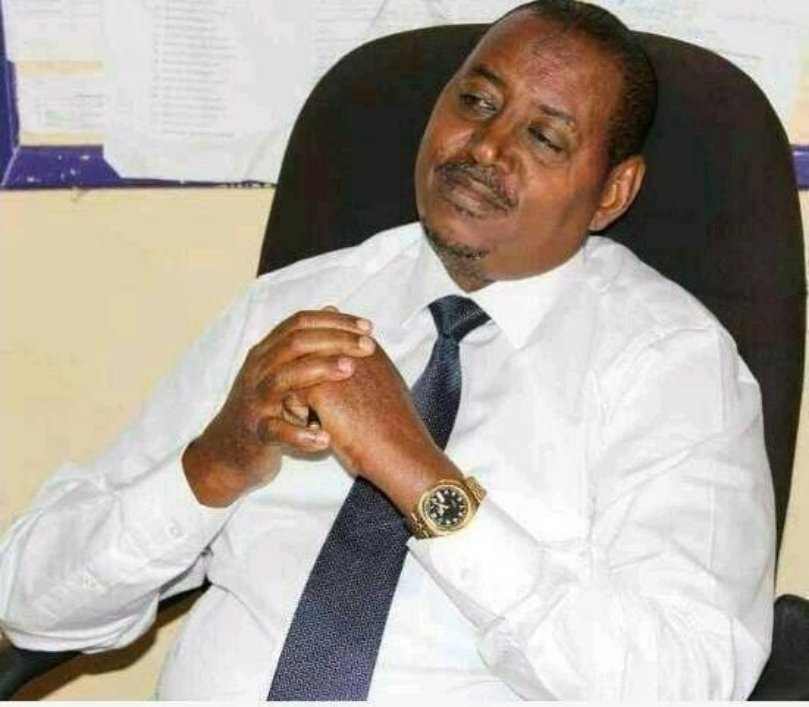
By Adan Ibrahim (Hish)
Recent political discourse has revealed a disturbing pattern of attacks on Kenya’s Somali community. A prominent political figure recently linked an alleged crime in Minnesota by American-Somalis to a legitimate business at BBS Mall in Nairobi, attacking the investors while ignoring their contributions: tax revenues, regional development, employment for thousands, and infrastructure benefiting entire communities.
This manipulation draws false connections between crimes committed by individuals on another continent to legitimate businesses by Kenyan citizens, reinforcing the profiling of an entire community as inherently suspect.
This incident shows how Somaliphobia has spread through Kenyan public discourse. Across media and digital spaces, alleged crimes by individuals are automatically blamed on the entire Somali community.
Tellingly, no other Kenyan community faces such scrutiny where individual misconduct becomes grounds for communal condemnation. When individuals from other ethnic groups commit crimes, they remain individuals. By contrast, when a Somali does so, the entire community is implicated.
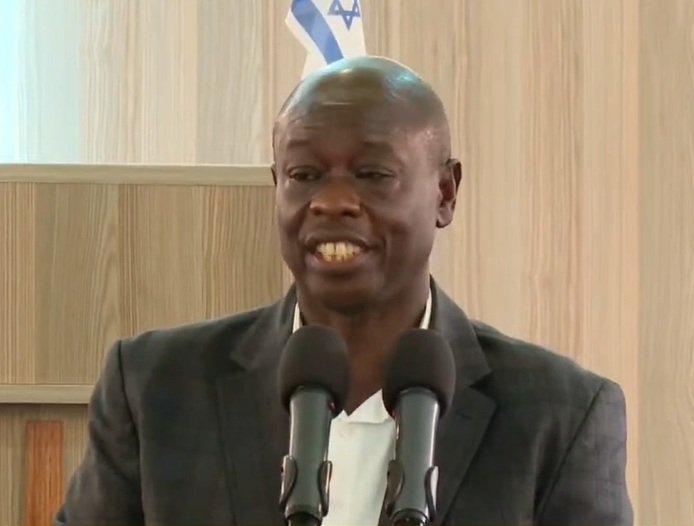
Former Deputy President Rigathi Gachagua who has been accused of fomenting Somaliphobia
This double standard treats Somali economic success with suspicion, Somali entrepreneurship as questionable, and Somali presence as a problem requiring political intervention.
What makes this particularly troubling is how the machinery of prejudice operates with disturbing efficiency. Inflammatory statements by political leaders are amplified by partisan media, recycled through social media, and gradually absorbed as accepted fact.
This pattern followed a disturbing sequence: from the February 5, 2025 Presidential Proclamation ending decades-long extra vetting for North Eastern residents, which sparked hostile political backlash and conspiracy theories about infiltration, to attacks on Somali-owned real estate investments, and finally to targeting educational opportunities along ethnic lines.
More troubling is the impunity these political leaders enjoy. They always escape accountability for their hateful statements, never required to validate their allegations or face consequences for incitement.
As a result, this creates another layer of institutionalized discrimination where xenophobic rhetoric against Somalis carries no consequences, effectively licensing further attacks.
The absence of accountability transforms isolated prejudice into systematic oppression.
Yet these contemporary manifestations are merely the latest chapter in a much longer story. Kenyan Somalis have endured systematic marginalization and violence across every era: through the colonial _Shifta_ War’s collective punishment; through independence when emergency powers restricted their movement; through post-independence decades as second-class citizens subjected to state-sanctioned atrocities including the Wagalla massacre in Wajir County, the _Malkamari_ massacre in Mandera County, and the _Suq-Muqdi_ massacre in Garissa County; horrors largely unacknowledged in our national conscience; and even after the 2010 Constitution promised equality but has not fully delivered it.
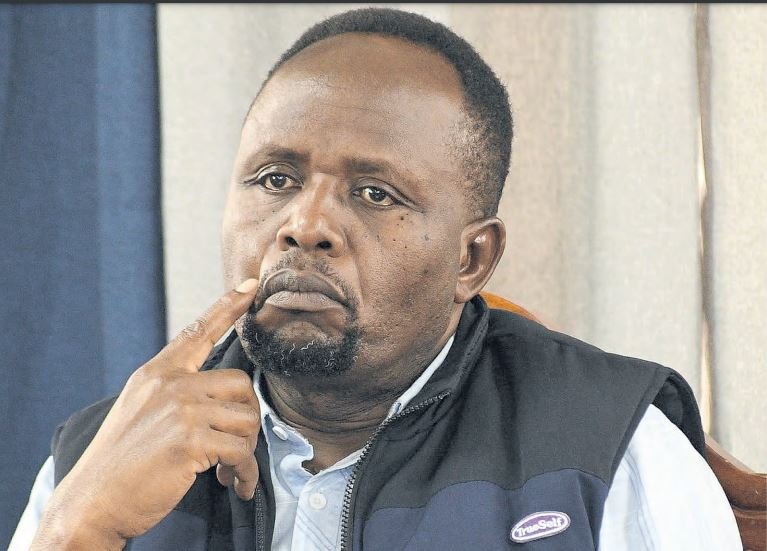
Tans Nzoia Governor George Natembeya came out strongly to oppose the abolition of the vetting process in North Eastern saying IDs will begiven to "terrorists"
Given this history, the burden of perpetual otherness, this unrelenting requirement to prove their Kenyan-ness while others have it assumed, represents an intolerable injustice. The question is no longer whether Kenyan Somalis can bear this, but whether Kenya can continue calling itself a constitutional democracy while perpetuating it. This cycle must end.
Despite these orchestrated campaigns, what remains non-negotiable is the strong commitment of Kenyan Somalis to citizenship, nationhood, and patriotism. These calculated attacks will not erode the constitutional bond between Somali Kenyans and their country.
They have earned their place through sacrifice: soldiers defending Kenya’s borders, civil servants serving in national and county governments, taxes funding national institutions, businesses creating employment, scholars and professionals serving every sector, and a steadfast refusal to abandon Kenya even when repeatedly abandoned by it.
Their citizenship is not conditional upon politicians’ approval. Their patriotism requires no validation from those who question it. Their claim to this nation is rooted in the Constitution, guaranteeing equal rights to every Kenyan. Hence, these attacks cannot diminish what has been forged through generations: an identity as Kenyan citizens with all attendant rights, responsibilities, and dignity.
To be clear, the Somali community, like every Kenyan community, includes individuals who commit offences. Every ethnic group has produced criminals. Moreover, Islamic jurisprudence, which guides the overwhelming majority of Somali people, explicitly condemns criminal behaviour.
When a Somali individual engages in criminality, they contravene their religious principles. Yet when individuals from other communities commit crimes, Kenyan society correctly treats this as an individual failure. In stark contrast, when a Somali commits an offence, individual criminality is transformed into communal character, as if ethnicity determines moral capacity.
This represents logical absurdity: holding one community to standards of collective perfection while granting all others individual judgment. No community in human history has achieved moral unanimity. If we judge communities by their worst members, no Kenyan community can withstand such scrutiny. Conversely, if we judge individuals by their actions—the only coherent standard in a nation governed by law, then the systematic demonization of Somali Kenyans collapses.
Kenyans of goodwill must refuse the divisive politics orchestrated by self-seeking politicians who profit from division while contributing nothing to national development.
These political entrepreneurs of ethnic animosity depend on our complicity, our willingness to accept simplified narratives reducing complex realities to tribal grievances. Furthermore, national cohesion requires constant cultivation.
It demands we reject prejudice and embrace the harder work of seeing our fellow citizens in their full humanity.
Equally important, the Somali community must also embrace its responsibilities in strengthening national cohesion. While maintaining their rich cultural and religious heritage, Somali Kenyans should actively pursue deeper integration: building bridges across ethnic divides, participating in civic life, engaging constructively with other communities, and demonstrating that Somali success contributes to Kenya’s collective advancement.
Integration does not mean cultural erasure; rather, it means recognizing that Kenyan identity encompasses multiple expressions while demanding commitment to shared constitutional values. When communities live parallel lives, prejudice finds fertile ground. By contrast, when they engage in schools, marketplaces, neighbourhoods, stereotypes lose their power.
Ultimately, the Somali community is not Kenya’s problem; the erosion of our constitutional commitment to equality is. When we allow any community to be systematically demonized, we set a precedent threatening every community. Today’s target becomes tomorrow’s precedent for further division. The solution lies in building an inclusive Kenya where every citizen, regardless of ethnic origin, religious affiliation, or regional background, can pursue their aspirations without the burden of collective suspicion.
Ibrahim Hish Adan is a former Teachers Service Commission Regional Director, education policy consultant, and commentator on teacher welfare and governance
The views expressed in this article are the authors’ own and do not necessarily reflect the editorial policy of Sahifa Media