
President Ruto appoints Mohamed Warsame to Supreme Court
His appointment comes after he successfully went through the nomination and approval process conducted by the Judicial Service Commission.
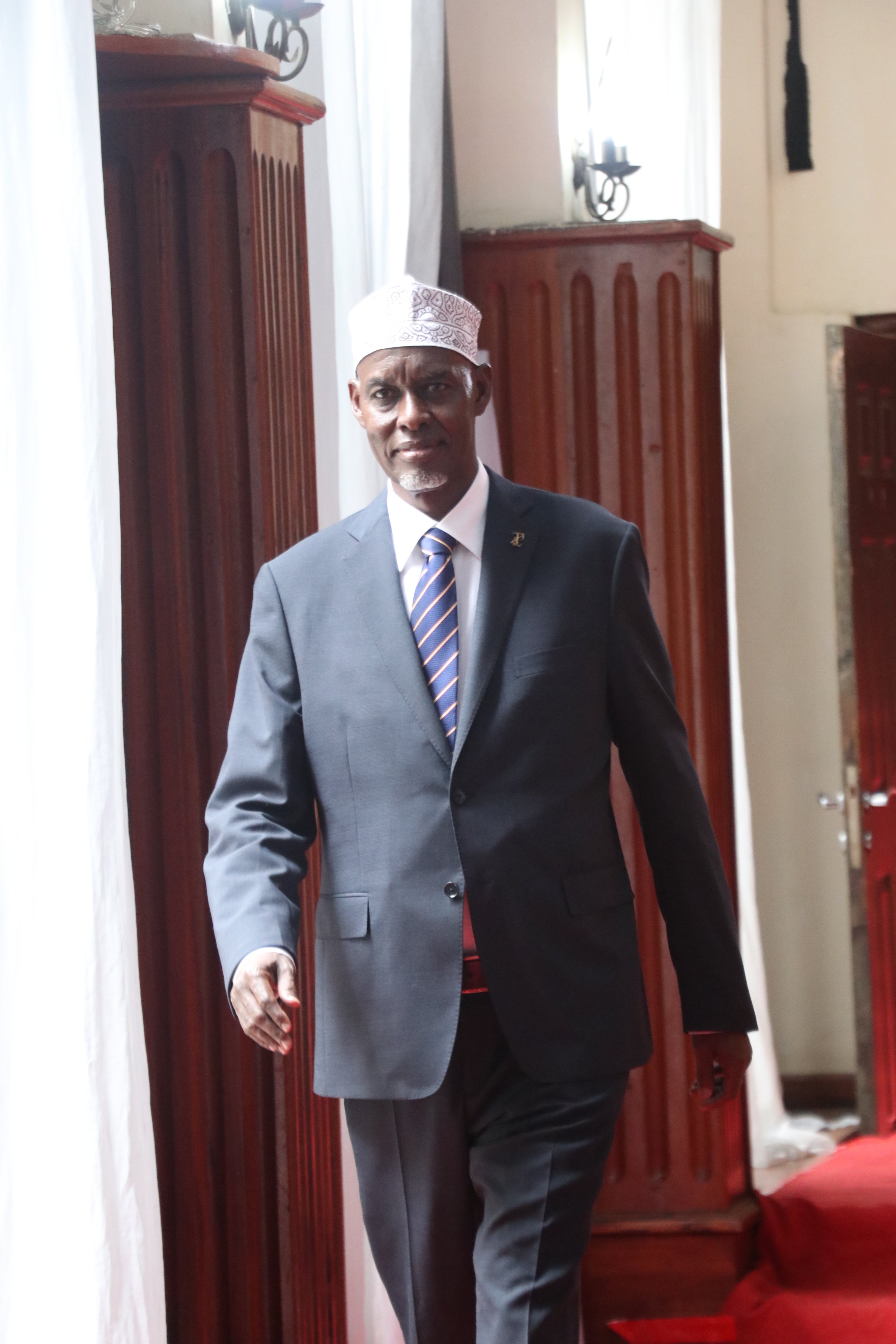
President William Ruto has appointed Court of Appeal Judge Mohamed Abdullahi Warsame to the Supreme Court of Kenya.
His appointment, through a Gazette notice dated May 5, comes after he successfully went through the nomination and approval process conducted by the Judicial Service Commission.
“In exercise of the powers conferred by Article 166 (1) (b) of the Constitution of Kenya, I, William Samoei Ruto, President of the Republic of Kenya and Commander-in-Chief of the Defence Forces, appoint Justice Mohamed Abdullahi Warsame to be Judge of the Supreme Court of Kenya,” the notice from the Head of State read.
Following his nomination, he subsequently underwent vetting by Members of Parliament, who endorsed his suitability for appointment to the country’s apex court.
He now awaits formal swearing-in to officially assume his role as a judge of the Supreme Court.
His appointment ensures continued Muslim representation on the apex court following the death of Mohamed Kadhar Ibrahim in December last year.
Once sworn in, Warsame will join the Supreme Court bench, which now comprises Chief Justice and President Martha Koome, Deputy Chief Justice and Vice President Philomena Mwilu, as well as Justices Smokin Wanjala, Isaac Lenaola, William Ouko, and Njoki Ndung’u, in shaping landmark rulings at the highest level of Kenya’s judiciary.
On April 29, the Judicial Service Commission nominated Mohamed Abdullahi Warsame for appointment to the Supreme Court of Kenya following a competitive recruitment process to fill a vacancy that arose after the death of the late Mohammed Kadhar Ibrahim.
Speaking during his interview, Warsame called on the Supreme Court to facilitate the application of Islamic law within the parameters of the Constitution, stating that this would complement the dispensation of justice.
He emphasized that multiple legal systems can coexist within the constitutional framework, noting that religious law, as embedded in the Kadhi courts, can align with constitutional principles in the country’s secular system.
“We should not constitutionalise Islamic Sharia, but allow it to operate within the parameters of equality and fairness. Islamic law is not repugnant to justice,” he said during the JSC interview for the position of Supreme Court judge.
Before his latest elevation to the apex court, Judge Warsame had served at the Court of Appeal since 2012.
Prior to his appointment to the Court of Appeal, he served as a High Court judge in the Commercial Division and Criminal Division, and was also in charge of the Judicial Review Division of the High Court.
Before his appointment to the High Court in 2003, he was a practising advocate of the High Court of Kenya. In 2013, he was elected as a commissioner to the JSC by Court of Appeal judges.