
Mosques urged to guide youth on responsible use of social media
Social media is a double-edged sword that, while capable of spreading religious values and beneficial knowledge, also presents grave dangers when misused
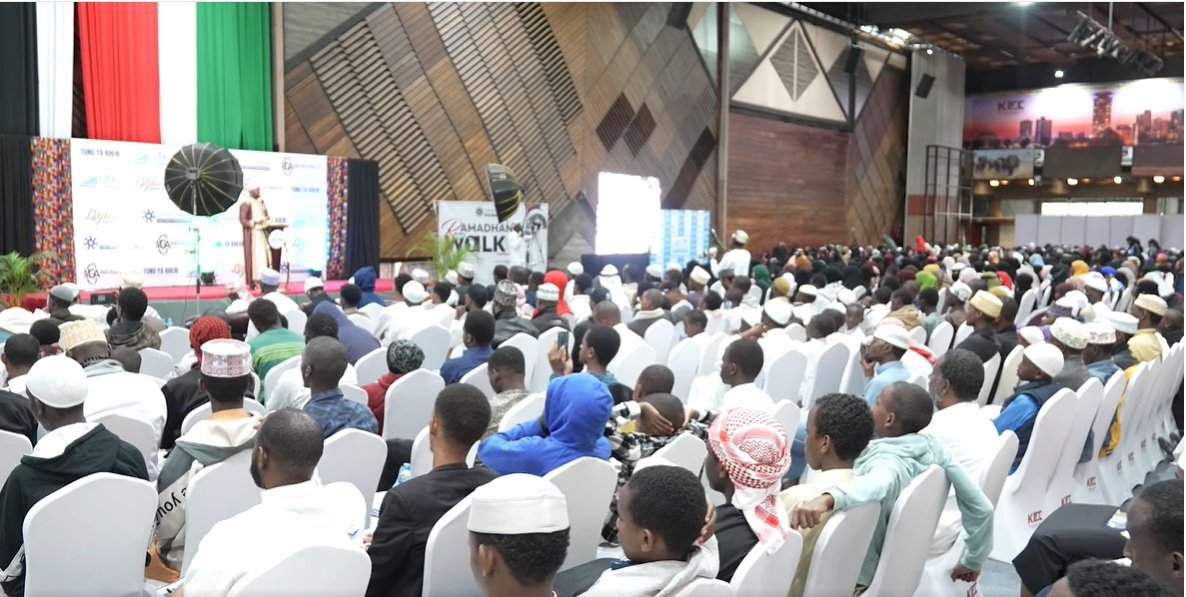
Mosques and Muslim organisations have been urged to develop structured programmes to guide young people on the responsible use of social media, with the aim of nurturing morally upright, productive individuals who contribute positively to society.
Speaking at the third edition of the annual Tunu ya Kheri Islamic Conference held at the Kenyatta International Convention Centre (KICC) in Nairobi over the weekend, Sheikh Shamsi Elmi, the General Secretary of the Dhi Nureyn Islamic Foundation of Tanzania, warned that the misuse of social media poses a serious threat to the moral fabric of society.
Sheikh Shamsi emphasized that platforms such as Friday sermons, lectures, and community forums should be utilized to educate young people on proper digital etiquette. He described social media as a “double-edged sword” that, while capable of spreading religious values and beneficial knowledge, also presents grave dangers when misused.
“Although social media offers immense benefits, it also threatens established societal norms and can easily lead people down paths that are harmful to both individuals and society,” he said.
He noted that social media currently wields more influence over young people than parents or religious institutions, cautioning that without guidance, its impact could be devastating. “If left unchecked, social media causes more harm than good, with catastrophic consequences for the mental, emotional, and physical well-being of our youth,” Sheikh Shamsi stated.
He warned that the consequences of irresponsible use include broken families, mental health challenges, and widespread social disorder. “Failure to put in place proper guidance programmes will condemn our young people to an abyss of destruction,” he added.
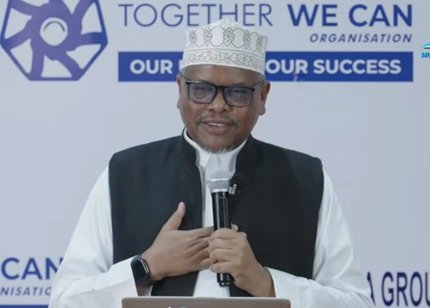
Sheikh Shamsi Elmi
Citing statistics, Sheikh Shamsi observed that Kenya ranks among the most active social media users in Africa. He noted that approximately 33 million Kenyans use social media, spending an average of three and a half hours daily on various platforms.
“We must ensure that our youth are engaging with beneficial and productive content that inspires them to become better Muslims and responsible citizens,” he said.
He further expressed concern over data indicating that between 10 and 20 per cent of young people access pornography and other harmful content through social media. He warned that Muslim youth are not immune to these dangers, noting that many children access inappropriate content within their own homes using devices provided by their parents.
To address this, Sheikh Shamsi called on parents to acquire basic digital skills to help them monitor and regulate their children’s online activities. He recommended the use of content filters, screen-time limits, and guidance based on Islamic principles to encourage productive use of digital platforms.
He also linked excessive social media use to rising cases of emotional distress, anxiety, and depression, which have contributed to increased incidents of self-harm and suicide among young people.
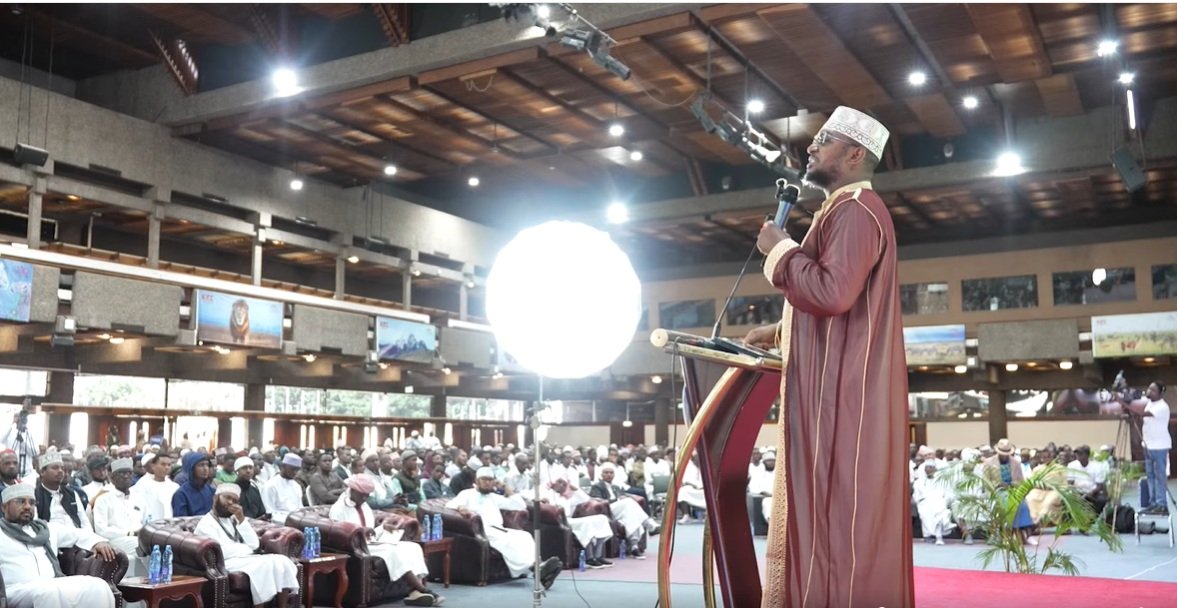
Sheikh Muhammad Bahero addressing the gathering
Also speaking at the conference, Malindi-based motivational speaker Dr Mujahid Uthman highlighted the growing burden of mental health challenges, describing them as not only a medical issue but also a significant social and economic concern.
“Mental illness is not a curse, a sign of weakness, or a result of poor religious commitment. It is a medical condition that can affect anyone,” Dr Uthman said, urging families to support those affected to seek professional care and treatment.
The Tunu ya Kheri Conference, now in its third year, is an initiative of Together We Can, a Mombasa-based welfare organisation founded by Sheikh Muhammad Bahero. The annual event attracted over 4,000 attendees and featured lectures by prominent scholars, including Sheikh Yusuf Abdo from Mombasa, Sheikh Ibrahim Njuguna from Nairobi, and Sheikh Hassan Ahmad from Malindi.
The conference concluded on a celebratory note, with Musa Bofu and Said Kisiwa Kiteo winning fully sponsored Umrah trips, courtesy of Mabsa Group Agency.