
Miraa, Muguka, and the Quiet Destruction of Northern and Coastal Kenya
Religious leaders must stop avoiding this subject for fear of controversy. Silence in the face of harm is not wisdom; it is abdication of duty.

By Hon. Mohamed Hussein Ali (Qaras)
A Community Reckoning We Can No Longer Postpone
Northern and Coastal Kenya are not poor because they are incapable. They are not lagging because they lack faith, intelligence, or resilience.
They are struggling because we have normalized habits and leadership failures that quietly destroy productivity, responsibility, and moral courage.
Miraa and muguka were not indigenous to our communities. They were introduced during the colonial period under strict controls, never intended to
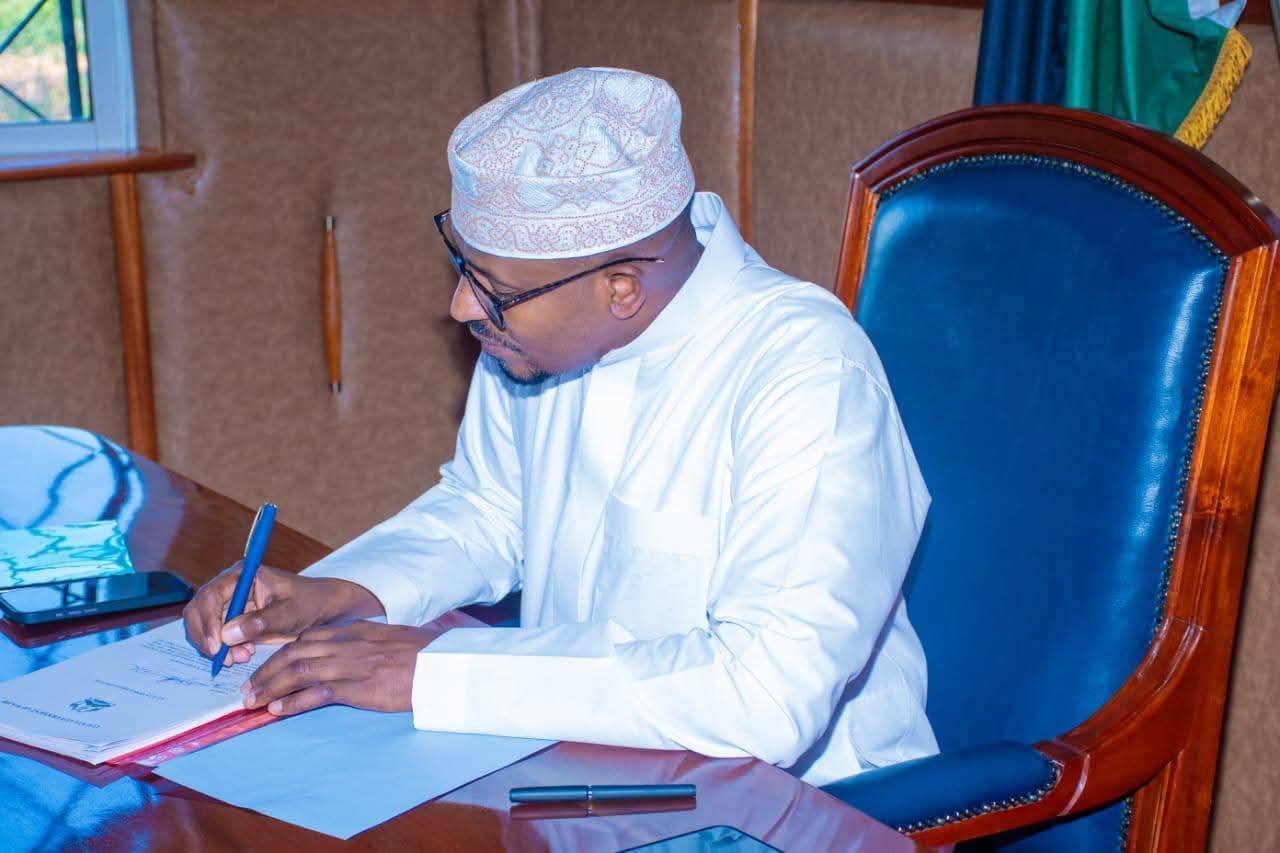
Wajir Governor Ahmed Abdullahi signing into law the Miraa and Other Substances Control Act, 2025 in December 2025, which established a strict regulatory framework for the sale, consumption, and distribution of miraa in the county
dominate daily life or define social behavior. Even then, colonial administrators understood something we seem to have forgotten: a community dulled by substances cannot govern itself, educate its children, or protect its future.
After independence, miraa became an economic lifeline for producers elsewhere, while Northern and Coastal communities became the primary consumers—and the primary casualties. For years, consumption remained limited and socially contained. It was not widespread, nor openly destructive. Today, that restraint has vanished.
Miraa, muguka, bhang, and other substances now cut across homes, schools, offices, mosques, and marketplaces. What was once occasional has become routine. What was once hidden is now normalized. And what was once manageable has become systemic.
What We See on the Ground.
In Garissa, Wajir, Mandera, Lamu, Kilifi, and Mombasa, the signs are no longer subtle.
Schools are deteriorating—not because children are lazy, but because teaching has lost seriousness and supervision has collapsed. Students sit for exams unprepared, while cheating becomes an open secret. Parents complain, but systems do not change.
Local administration is weakened. Chiefs and Assistants—meant to stabilize communities—often fail to command respect. Conflicts drag on. Decisions are inconsistent. Authority is blurred by personal interest and indulgence.
Elders, once the guardians of wisdom and peace, have been reduced in many places to transactional mediators. Justice is delayed, negotiated, or sold. The moral authority that once held clans together is fading.
Politics has become noise without substance. During elections, Northern and Coastal communities are courted passionately. After elections, they are forgotten politely. Development funds disappear into workshops, allowances, and banners, while youth unemployment and dependency deepen.
This is not coincidence. A distracted, addicted, and idle population is easier to manage politically—but impossible to develop.
A Moral Crisis Wearing Religious Clothing
Perhaps the most painful truth is this, we appear religious, but we behave irresponsibly.
Mosques are full. Umrah trips are frequent. Islamic dress is visible. Yet honesty, amanah (trust), justice, and discipline are in short supply.
Islam places immense value on the preservation of intellect (aql). Anything that clouds judgment, wastes wealth, kills time, and leads to harm violates the spirit of the Shariah—even if it does not cause physical drunkenness.
The Prophet salallahu alayhi wa sallam was clear: “Every intoxicant is haram.” More than intoxication, miraa and muguka produce moral numbness: Fathers absent from family responsibility, youth trapped in dependency and idleness, leaders avoiding accountability, communities confusing patience with surrender.
We cannot claim taqwa while excusing habits that destroy households and futures.
Our Shared Responsibility
This crisis cannot be outsourced. County governments in Northern and Coastal Kenya have the authority to regulate trade, zoning, and public health. Failure to regulate miraa and muguka is not a legal limitation—it is a political choice.
Religious leaders must stop avoiding this subject for fear of controversy. Silence in the face of harm is not wisdom; it is abdication of duty. Elders must reclaim their moral role. Mediation without justice is corruption by another name.
Families must stop normalizing substance use in the home. A parent’s silence today becomes a child’s addiction tomorrow.
Youth must be offered alternatives—skills, sports, mentorship, dignity of work. Lectures without opportunities are empty.
What Must Be Done—Locally and Now
Restrict sale hours and consumption zones, especially near schools, mosques, and public offices.
Enforce accountability among administrators and educators
Redirect county funds from cosmetic projects to youth livelihoods.
Address addiction openly in mosques, madrassas, and community forums.
Judge leaders by delivery and integrity—not clan arithmetic or religious symbolism.
A Final Word to Our Communities
Northern and Coastal Kenya have survived marginalization, insecurity, and neglect. We should not be defeated by self-inflicted decay.
Allah will not change our condition until we change what is within ourselves. Neither will development come to a community that refuses discipline and accountability.
This is not about banning culture, it is about saving our future.
If we delay, we raise a generation unable to think clearly, work consistently, or lead ethically. If we act—together, honestly, and courageously—we can still reclaim our dignity, our institutions, and our hope.
The time for excuses has passed.The time for action is now.
The author is a former MP for Mandera East