
Milestone as Siraj Rahman Islamic College earns TVET recognition
For the first time, certifications obtained by students pursuing Islamic and Arabic studies at the institution will be recognised by the government, the private sector, and internationally.
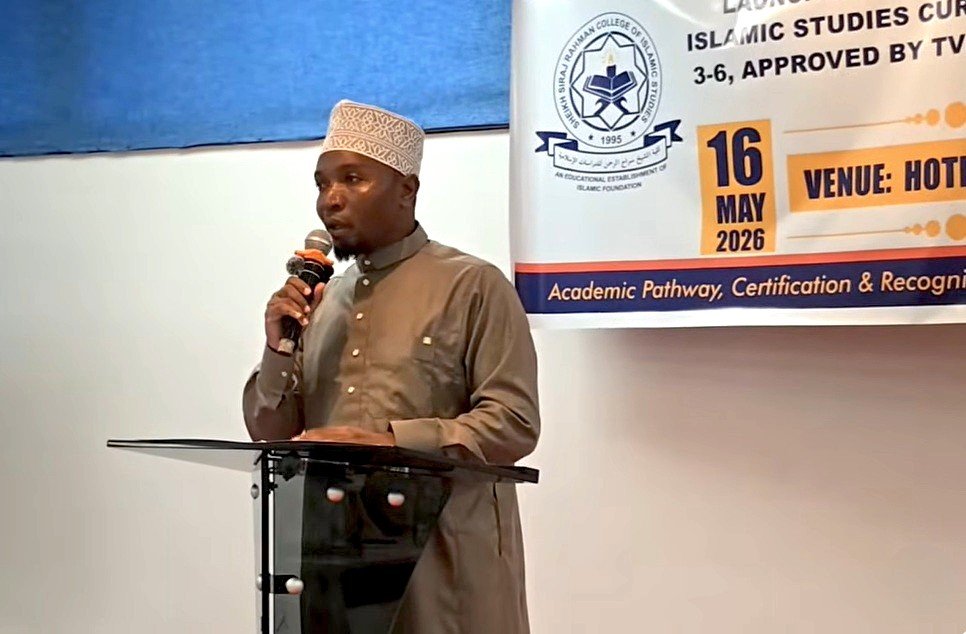
The Mombasa-based Siraj Rahman College of Islamic Studies has achieved a major milestone after its academic programmes received recognition from the Technical and Vocational Education and Training Curriculum Development, Assessment and Certification Council (TVET CDACC).
For the first time, certifications obtained by students pursuing Islamic and Arabic studies at the institution will be recognised by the government, the private sector, and internationally.
Speaking during the launch of the Arabic Language and Islamic Studies curriculum for Levels 3–6, the college principal Dr Musa Shauri hailed the achievement as a transformative step towards empowering institutions, youth, and future generations.
He observed that although Muslim institutions have for a long time played an important role in nurturing moral values, religious understanding, and leadership in society, the lack of accreditation and recognition of their certifications had limited career progression, professional growth, and employment opportunities for many Muslim students.
“The curriculum has been developed to bridge the gap between religious education and the national education system, ensuring that Arabic language and Islamic studies are professionally structured and recognised by TVET,” he said.
Join Our WhatsApp Channel for Updates and Announcements
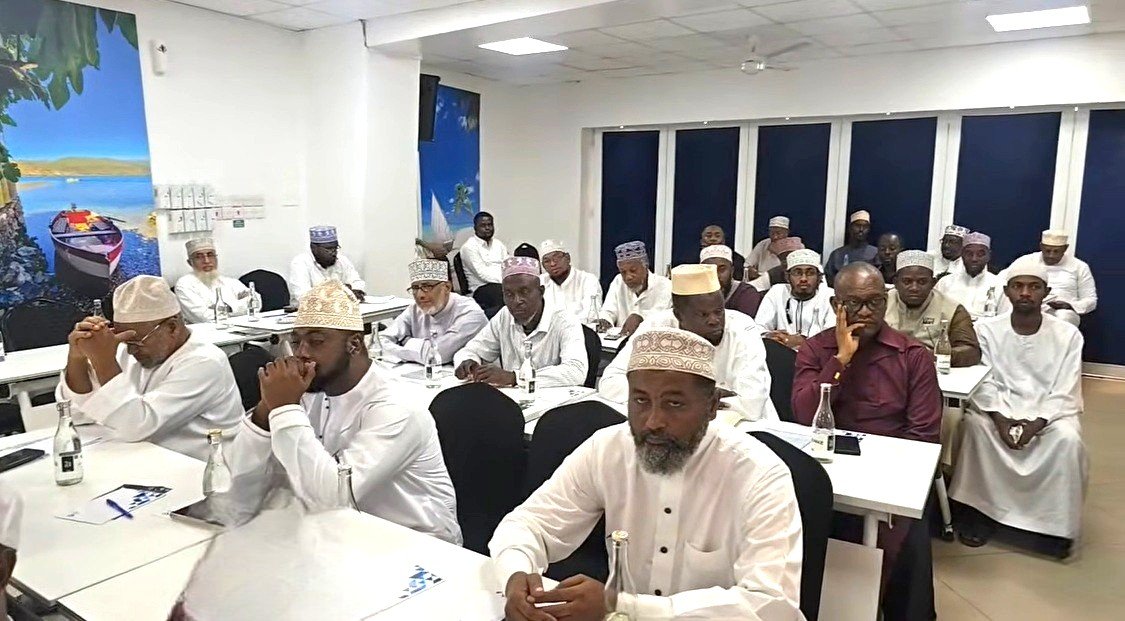
In his remarks, the chief executive officer of the Muslim Education Council (MEC), Muhammad Ibrahim, said the recognition would provide equal opportunities for progression for madrasa students who, for many years, had been locked out of the national education system.
“This is about integrating into the country’s national development agenda by providing opportunities for higher education while also opening up employment opportunities,” he said.
He added that MEC was working with other stakeholders to ensure that Thanawi (high school) certifications are also recognised to enable students to further their studies at universities.
“It is unfortunate that Thanawi graduates cannot be addmitted at Umma University and the Islamic University of Kenya (IUK) because their certifications are not recognised by the government,” he said.
Speaking at the event, the chairman of the Islamic Foundation, Ayub Khalid, paid tribute to the late principal of the institute, Sheikh Siraj Rahman, describing him as a visionary leader who, together with the foundation’s former chairman, the late Akhtar Rao, aspired to see Muslim institutions offer quality and competitive education while preserving Islamic values.
He emphasised that with the introduction of the Competency-Based Education (CBE) curriculum, it was essential for Muslim institutions to adapt to the changes to ensure they remain relevant and capable of preparing learners for future challenges while maintaining Islamic values.
In his remarks, the chairman of the Kenya Muslim Discipline Services Chaplaincy, Maalim Abbas, described the achievement as a strategic milestone that would standardise competency-based Islamic education while opening up more opportunities for Muslims in the disciplined forces.
Through the Technical and Vocational Education and Training Curriculum Development, Assessment and Certification Council (TVET CDACC), the college offers certificate and diploma courses in Islamic Studies, covering core areas such as Tafseer, Hadith, Fiqh, and Seerah, giving students a structured understanding of the Islamic faith and its practices.
The Arabic language courses equip learners with reading, writing, and conversational Arabic skills for religious, academic, and professional purposes.
To further strengthen its academic programmes, the Sheikh Siraj Rahman College of Islamic Studies last year established academic collaborations with the Islamic University in Uganda (IUIU).
Notable attendees at the event included the chairman of council of Siraj Rahman College, Dr Abdallah Khatib, Prof. Mohammed Salim Badamana the chairman of the Pwani University Council, Dr Mbwarali Kame the Mombasa County County Executive Committee Member (CECM) of Education and Vocational Training, the Vice Rector of the Islamic University in Uganda Prof. Jamil Serwanga, Deputy Vice Chancellor of the Islamic University of Kenya Dr. Ali Said Sunkar and the chairman of the Mombasa branch of the Supreme Council of Kenya Muslims (SUPKEM), Muhdhar Khitamy.
The institution had its beginning as the Kisauni Islamic Institute 1980, established as an educational project of the Islamic Foundation. In 1995, the College of Islamic Studies was launched to provide higher education for Muslims across East Africa. The institution has been a hallmark of Islamic studies in the region admitting students as far as Somalia, Ethiopia, Madagascar and Comoro Islands.
It was later renamed in honour of its legendary principal, Sheikh Siraj Rahman al Nadwi, following his demise in 2009.