
May 1453: The historic conquest of Constantinople
The prophecy was fulfilled when Sultan Muhammad Al-Fatih conquered Constantinople on May 29, 1453.
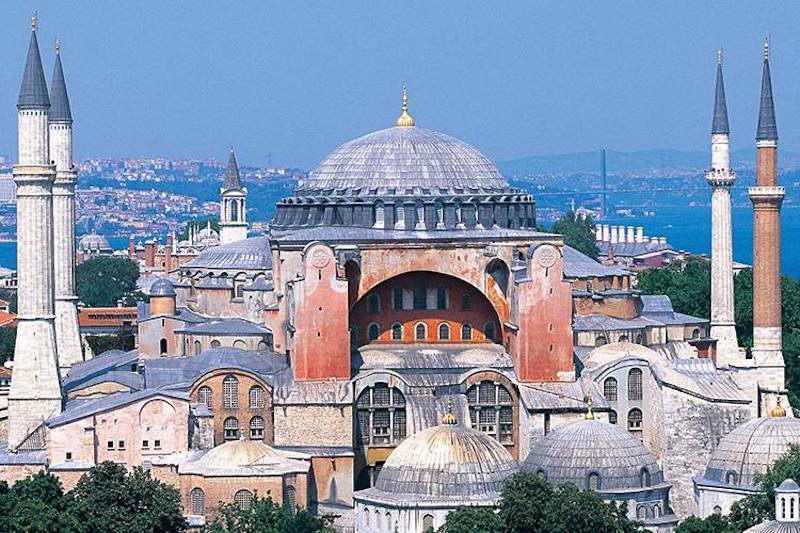
Constantinople (modern day Istanbul) was conquered by the Muslims.
For eight centuries, the conquest of Constantinople, now Istanbul in Turkey was a dream for the Muslim commanders. Ever since the era of the revered companion, Mu'awiyah Ibn Abu Sufyan, there had been many attempts to conquer it, but none had succeeded.
Every Muslim commander wanted to be the conqueror praised in the narration in which the Prophet peace be upon him said: "You will conquer Constantinople. Its commander is the best and its army (that will conquer it) is the best." — Musnad Ahmad
Centuries later, this prophecy was fulfilled when Sultan Muhammad Al-Fatih conquered Constantinople on May 29, 1453.
This historic victory marked the end of the Byzantine Empire and opened a new chapter in world history. It remains a powerful reminder of faith, vision, perseverance, and leadership.
The conquest of Constantinople was not merely a military achievement—it was the fulfillment of a prophecy and a moment that inspired generations of Muslims.
May Allah ﷻ grant us the sincerity, determination, and devotion shown by those who worked tirelessly to achieve great goals for the sake of truth and justice.
Constantinople was conquered at the end of May 1453 by Ottoman Sultan Mehmed II. In recognition of his victory, the 21-year-old ruler was thereafter known as Mehmed the Conqueror.
Muhammad Al-Fatih was born on 27th Rajab, 835 A.H., 30th March, 1432. He was brought up under the supervision of his father, Sultan Murad II, the seventh Ottoman Sultan. His father prepared and trained him to shoulder the responsibilities of the position of a Sultan. Muhammad Al-Fatih memorized all the Quran, learnt the Prophetic narrations, Islamic jurisprudence, mathematics, astronomy and the skills and tactics required for an ideal warrior.
He also learnt Arabic, Persian, Latin and Greek languages. He joined his father in his battles and conquests.
After the death of his father, Sultan Murad II on 5th Muharram, 852 A.H., 7th February, 1451 A.C. Muhammad Al-Fatih took over and became the Sultan of the Ottoman Empire.
Constantinople
In the 15th century Constantinople was one of the most important cities in the world, straddling Europe and Asia and vital for world trade.
The Ottomans had already conquered significant European and Asian territories but needed to conquer Constantinople to remove an annoying hindrance to their rear and push even further into Europe.
But by 1453 the Roman Empire was a shadow of its former self and the city had only defended itself from invasion due to its famous double defensive walls and moat. And those who tried to attack the city by water had to contend with the Sea of Mamara and the Golden Horn.
The Christians were also divided among themselves so no help came from Europe until it was too late.
The siege
The Byzantine army numbered around 8,000 men whereas Muhammad commanded a much larger army of around 60,000.
A technological advance also altered the balance of power – canons. At that time, a talented engineer managed to make a number of cannons for Sultan, Muhammad Al-Fatih. One of these cannons, never known before that time, could fire canons more than one mile and made a terrible noise.
But the Sultan also understood that to take Constantinople he had to surround the city from the sea as well as the land. So he amassed a blockading fleet of around 140 ships.
In response Byzantine Emperor Constantine ordered a protective chain of mail to be laid across the harbour.
So in the third week of the seven week siege Muhammad simply ordered his fleet to be picked up and carried over land and dropped back into the water behind the defensive shield. Now he could attack from land and sea.
On the land side Ottoman losses were heavy as the walls failed to yield. But as the weeks dragged on the cannon began to exert its toll and after seven weeks a final attack was prepared.
At dawn of Tuesday, 20th Jumada Al-Awwal, 827 A.H., 29th May, 1453 A.C., the Ottoman forces managed to penetrate the walls and drive away the defenders who fled.
The conquest ended the 1,058-year-old Byzantine Empire (Eastern Roman Empire), brought the Middle Ages to a close, and made Istanbul the proud new capital of the Ottoman Empire.
The Sultan was very tolerant and merciful with the people of the city, and acted according to the teachings of Islam. He commanded his soldiers to treat their prisoners of war in a good manner and he assured all the people that their lives and freedoms were protected.
Legacy
The Hagia Sophia was then the greatest building in the world – the crowing glory of Christendom and seat of the Eastern Orthodox Church. And one of the Sultan’s first acts was to order it to be converted into a mosque, although he left other churches untouched.
As for the Ottomans, they now possessed a capital at the junction of two continents from which they could consolidate and continue to spread their domains.
And Muhammad Al-Fatih would go down in history as one of Islam’s great heroes – securing Muslim rule and expanding it for centuries.