
Majengo children reenact Hajj in unique educational event
The event sought to teach children how to perform Hajj while helping them appreciate its importance from a young age.
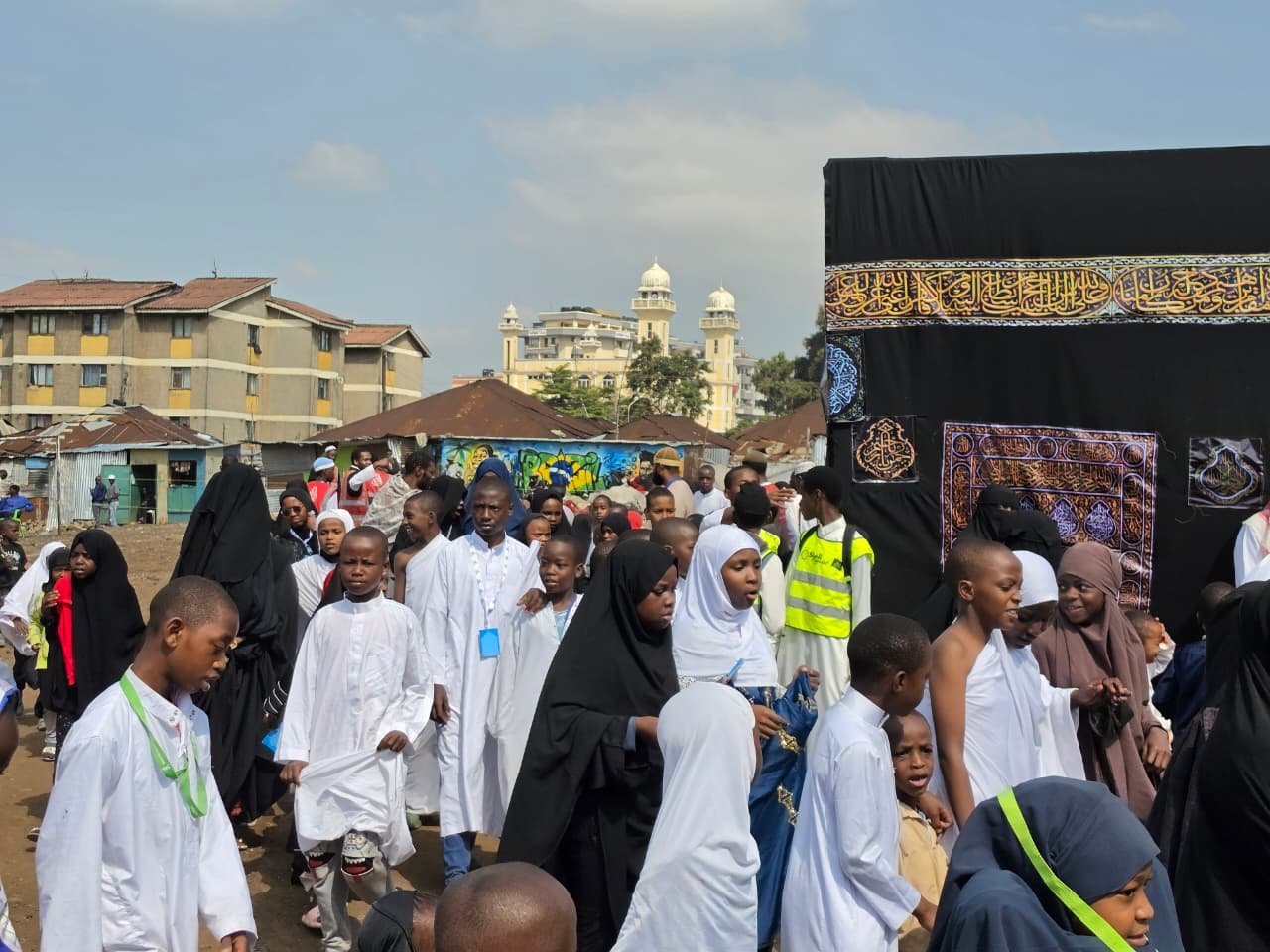
In a unique event, children in Nairobi’s Majengo area enthusiastically participated in an educational programme aimed at giving them a better understanding of Hajj.
The event, held on Saturday, May 23, at the San Siro grounds sought to teach children how to perform Hajj — the fifth and final pillar of Islam — while helping them appreciate its importance from a young age.
It also aimed to explain the sacred rituals of Hajj and the spiritual significance of the pilgrimage to both Muslims and non-Muslims.
A miniature model of the Kaaba was the main attraction at the event. Alongside simulations of the hills of Safa and Marwa, the plains of Mina, Mount Arafah, and the symbolic stoning site of Jamarat in Mina, participants took part in guided tours and interactive displays that demonstrated the sequence of pilgrimage rituals and their spiritual meaning.
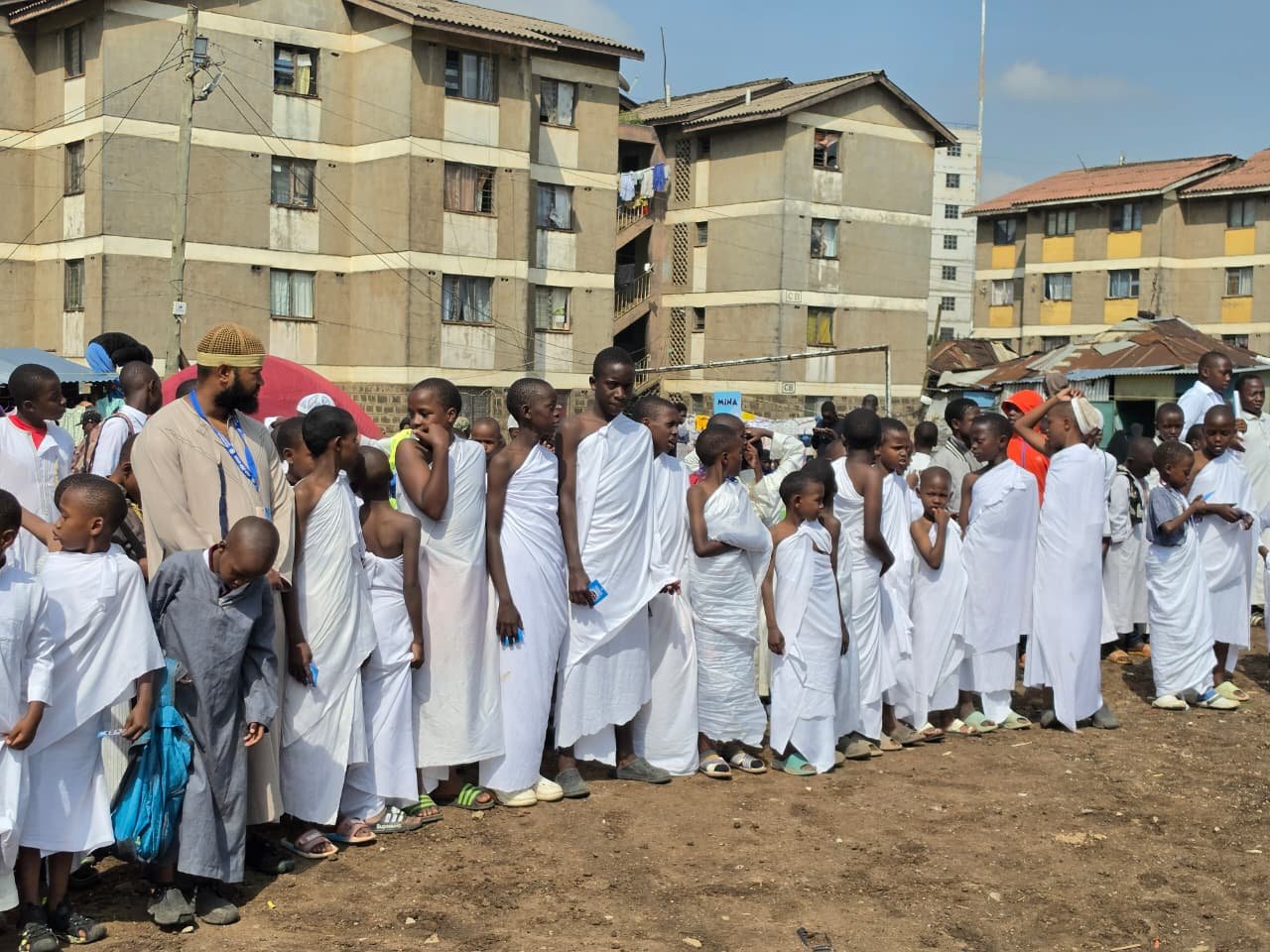
The children dressed in Ihram
Dressed in simple white garments known as Ihram, the children walked around the Kaaba seven times in a counterclockwise direction while performing Tawaf (circumambulation) and reciting the Talbiyah.
The children also walked back and forth seven times between the hills of Safa and Marwa, reenacting the story of Hajar, the wife of Prophet Ibrahim, as she searched for water for her son Ismail in the then-barren land of Makkah.
They also ascended Mount Arafah, which represents the most important ritual of Hajj and takes place on the ninth day of the Islamic month of Dhul Hijjah. Guided by teachers, the children participated in the symbolic “Stoning of the Devil” ritual by picking up stones and throwing them at makeshift pillars representing the devil.
The event, organised by Pumwani Riyadha Mosque and Abu Najma With Kids, attracted hundreds of people who gathered to witness the reenactment of the Hajj rituals.
“It is a unique event, the first of its kind in East Africa. Seeing our young ones walk the path of the Prophet strengthens our faith and unity,” said Sheikh Abu Najma.
“Our hope is that the children will gain a deeper understanding of these rituals and, Inshallah (God willing), one day this experience will motivate them to perform Hajj or Umrah themselves,” he added.
The Kaaba, located inside the Grand Mosque in Makkah, Saudi Arabia, is the focal point towards which Muslims around the world face during prayers.
Muslims who are financially and physically able are required to perform the pilgrimage at least once in their lifetime.
Millions of pilgrims from across the world are currently in Saudi Arabia for this year’s Hajj pilgrimage.