
Lamu’s Pemba community in a lingering wait for Kenyan identity
Despite a presidential directive in July 2023 acknowledging the community as Kenyan citizens, many Pemba families in Lamu continue to live without identity cards
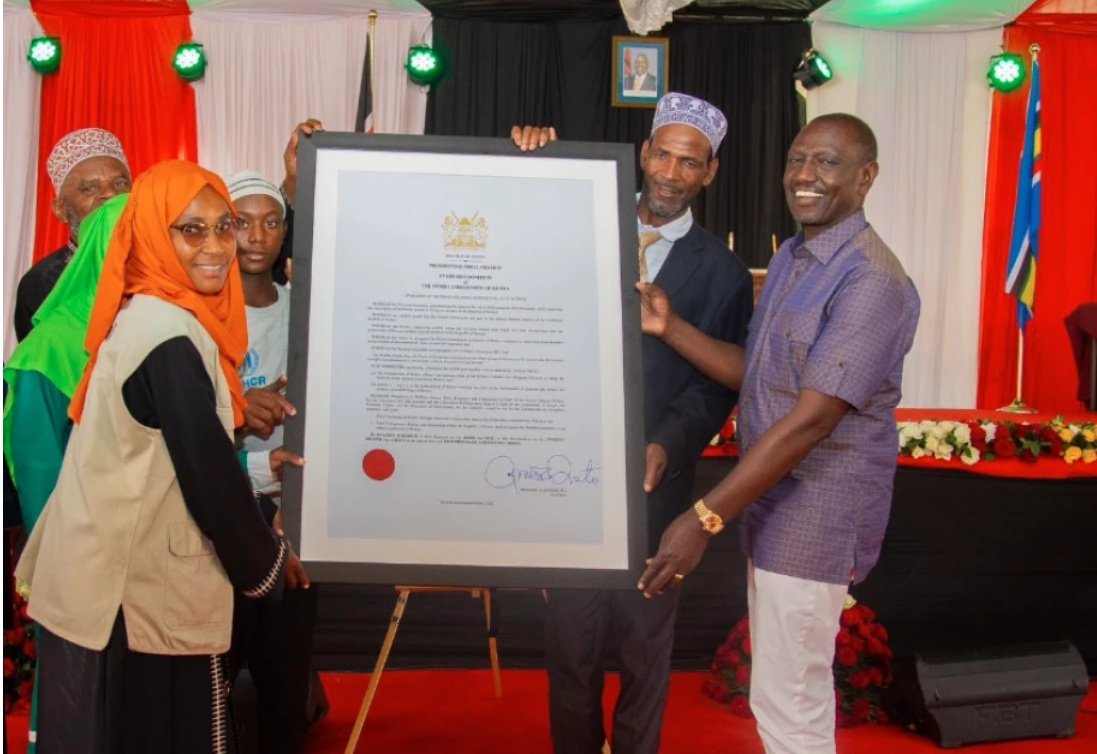
Lamu’s Pemba community in a lingering wait for Kenyan identity
By Abubakar Juma
I have embarked on a journey to one of Kenya’s most marginalized communities, a people officially recognized by the state, yet still living as if recognition has never reached them.
Despite a presidential directive made in July 2023 formally acknowledging the Pemba community as Kenyan citizens, many Pemba families in Lamu continue to live without identity cards, birth certificates, or the basic protections that citizenship should provide. For them, recognition remains an announcement heard on the radio, not a reality felt in daily life.
The Pemba community traces its roots to two histories those whose ancestry connects to Tanzania and those who have lived in Kenya for over a hundred years. Known largely as fishermen, they migrated along the coastline, settling in places such as Kilifi and Lamu. The ocean has sustained them for generations, yet today it can no longer shield them from exclusion.
Sheikh Abubakar Musa, a madrassa teacher in Lamu, has lived his entire life without an identity card. He speaks slowly, choosing his words carefully, as though each sentence carries years of quiet endurance.
“Our parents did not have IDs. We do not have them. And I fear our children may also grow up without them,” he says. “If this is not corrected, it becomes a cycle.”
Kenyan law requires individuals applying for national identity cards to present parental documentation to prove citizenship. For communities like the Pemba whose parents and grandparents were never registered this requirement has locked entire generations out of the system. Civil society reports, including those by the Kenya National Commission on Human Rights, have consistently shown that undocumented status disproportionately affects coastal and minority communities, denying them access to education, healthcare, employment, and freedom of movement.
For Mzimilu Issa, that exclusion begins at birth and follows him through every stage of life.
“I have never even applied for an ID,” he tells me. “I already live knowing that every document needed in life, I do not have.”
The consequences are now spilling into his children’s lives. His child is enrolled in school, but the future is uncertain.
“The teacher told me clearly that after Grade Three, I must produce a birth certificate. If I fail, my child may be discontinued,” he says.
For now, his children remain in school only because of the intervention of the area chief, who has written informal representations on their behalf.
“If it were not for the chief,” Mzimilu admits, “my children would not be studying.”
In Lamu, the lack of identification carries an added weight. Since 2015, the county has been under heightened security operations following a wave of al-Shabaab attacks. Joint patrols involving the Kenya Defence Forces and police units remain a familiar presence nearly a decade later. Movement in and out of the county is heavily monitored, with identity cards required at checkpoints and during routine patrols.
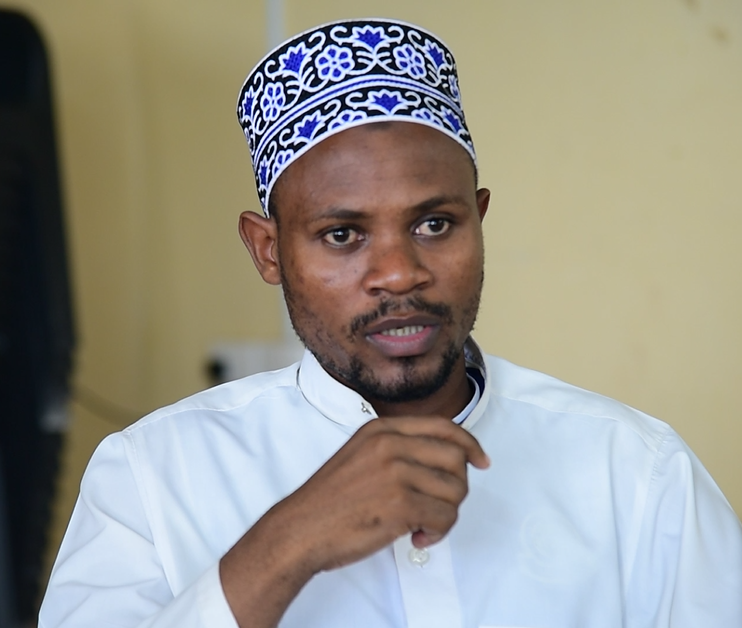
Sheikh Abubakar Musa
“We are not even allowed to operate at night,” Sheikh Abubakar explains. “If you meet police and you do not have an ID, the first thing they ask is for it.”
He pauses, then adds, “We now fear security officers. Not because we are criminals but because we cannot prove that we are not.”
Encounters with law enforcement often end in arrest, harassment, or extortion. For many, this has reshaped daily life into one of caution and avoidance.
At 27 years old, Shamwilu Saidi is unmarried not because he does not wish to start a family, but because he fears the life his lack of documentation would create.
“I may not get a marriage certificate. I may not register my children,” he says. “I fear my whole life will remain undocumented.”
Some in the community have resorted to desperate measures. He tells me that families have sought out foster fathers men with identity cards so their children can be registered as Kenyan citizens.
“It is painful,” he says quietly. “But people are desperate.”
On 28 July 2023, hope briefly surged. At Karisa Maitha Stadium in Kilifi, President William Ruto publicly recognized the Pemba community as part of Kenya’s Swahili-speaking population. Acting on recommendations from the National Assembly, he directed registration offices across the country to assist the community in acquiring identity cards. Thousands attended the event, many believing the long wait was finally over.
Said Bakari remembers that day clearly.
“Yes, it is true, we were recognized,” he says. “But for the Pemba community in Lamu, we were forgotten.”
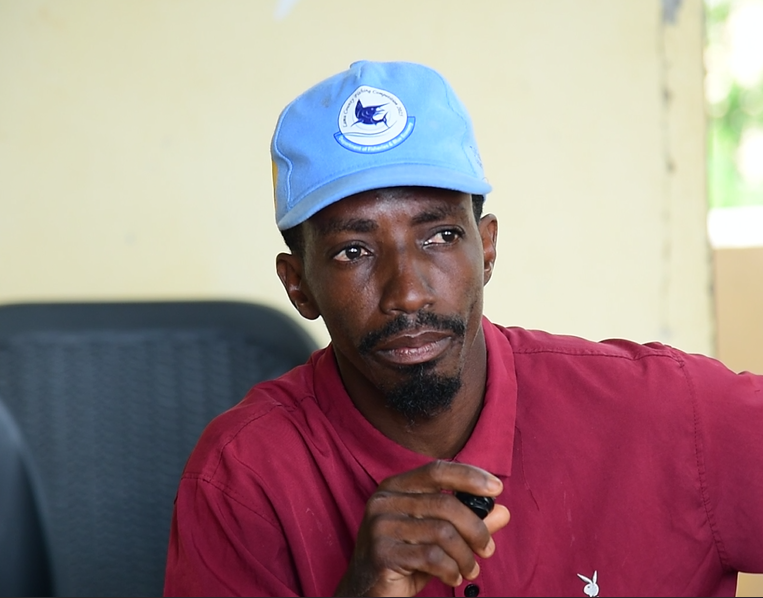
Said Bakari
Registration efforts, he explains, were largely concentrated in Kilifi. Lamu saw little follow-up.
“The chance passed us by,” he says. “Here, nothing changed.”
For a community whose survival depends on fishing, the consequences are immediate and harsh. Fishing licenses require identification, and security patrols regularly check both licenses and IDs.
“Most of the time, we are forced to fish late at night,” says Bakari. “Not because it is safer but because we are trying to avoid security officers.”
When fishermen are arrested or chased away, families go hungry.
“The Pemba were built for fishing,” he says. “When we are not in the ocean, it means our children do not eat.”
National data shows that hundreds of thousands of livelihoods along Kenya’s Coast depend on small-scale fishing. For undocumented fishermen, exclusion from licensing systems deepens poverty and reinforces marginalization.
As I leave the community, there is cautious hope. Chiefs have begun visiting homes, and identification officers have carried out sporadic registration exercises. People speak of change in hushed optimism, careful not to expect too much.
The Pemba community is now calling on the government to move beyond declarations and ensure implementation so that recognition is not just spoken, but lived.
Until then, they remain citizens by history, by culture, and by belonging but not yet by document.