
Kenya’s Two Development Timelines — Why the North Still Lags Behind
The disparity between Northern Kenya and the rest of the country did not begin in our time. It is the outcome of a map drawn more than a century ago

By Mohamed Guleid
At sunrise in Garba Tula, a pupil steps onto a narrow dusty track and begins a long walk to school. The distance is measured not in minutes but in endurance — past dry riverbeds, grazing fields and scattered homesteads. At that same hour in Kiambu, another child leaves a gated home, boards a bus on a paved road and travels under functioning streetlights. Both children sing the same national anthem, study the same curriculum and sit the same national examinations. Yet they were born into different investment histories.
The disparity between Northern Kenya and the rest of the country did not begin in our time. It is the outcome of a map drawn more than a century ago — a map of infrastructure, opportunity and presence — whose lines are only now being slowly erased.
When Kenya formally became a British colony in 1920, infrastructure followed profit. The railway linked Mombasa to the fertile highlands where settler agriculture thrived. Roads connected plantations to export points. Electricity powered towns that generated commerce. Investment flowed along the logic of extraction: where revenue existed, services followed.
Northern Kenya, then administered as the Northern Frontier District, was governed differently. It was treated less as an economic region and more as a buffer zone — restricted, monitored and largely excluded from the colonial economy. Movement required permits. Commercial settlement was discouraged. Integration was never intended. By independence in 1963, the new nation inherited not just borders but two distinct realities: a connected agricultural economy in the south and a vast unintegrated frontier in the north.
Independence raised hopes that the imbalance would be corrected. Instead, policy unintentionally preserved it. In 1965, Sessional Paper No. 10 on African Socialism proposed concentrating public investment in “high-potential areas” to accelerate national growth. The reasoning was rational — invest where returns are highest so the country grows faster. But because potential was defined by existing infrastructure, the approach reinforced colonial geography. Roads followed cash crops, electricity followed population density, and water followed established towns. Northern Kenya, lacking those foundations, remained outside the investment cycle.
Kenya grew, but unevenly. One part accumulated markets and industry; the other accumulated distance.
Through the 1980s and 1990s the gap widened further. In many parts of Wajir, Mandera and Turkana, the state was visible primarily through security presence rather than development services. Schools were few and far between. Hospitals served vast catchment areas. Paved roads were rare across enormous landscapes. Meanwhile the rest of the country expanded hydropower, built trunk highways and urbanised rapidly.
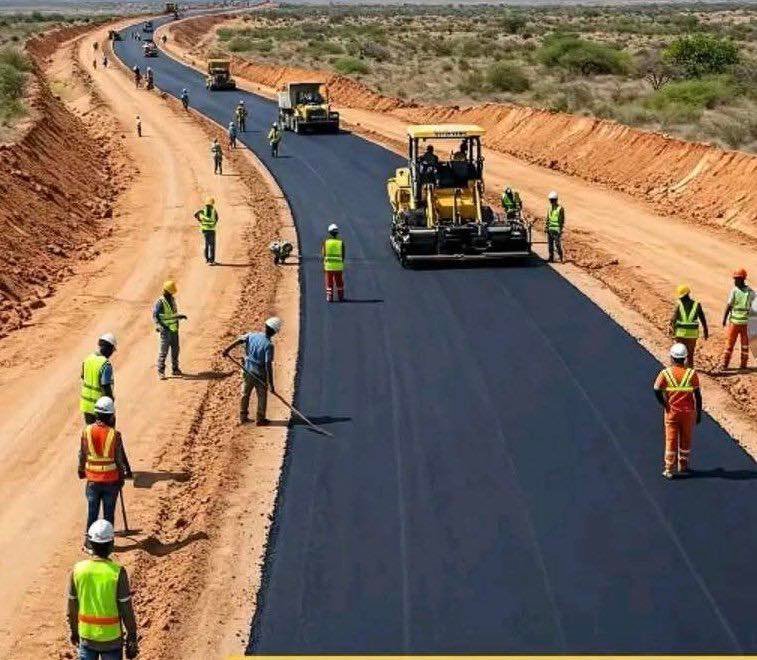
Isiolo-Mandera highway under construction. The road project, one of the biggest infrastructure project in the country is expected to open up Northern Kenya
Infrastructure behaves like compound interest. A road brings trade. Trade attracts electricity. Electricity encourages enterprise. Enterprise generates tax revenue, which funds more infrastructure. Regions without the first investment rarely receive the second. By the turn of the millennium, inequality between northern and southern Kenya was no longer anecdotal — it had become structural.
By the early 2000s, statistics confirmed what communities had long experienced. Northern Kenya covered a vast share of the landmass yet contributed only a small portion of economic output. But this was not because people lacked initiative; it was because opportunity had never physically reached them. Development does not begin with income — it begins with connection.
The 2010 Constitution marked a philosophical shift. Kenya moved from growth-only planning toward equity-aware development. Devolution, the Equalization Fund and targeted frontier programmes recognised historical marginalisation. Major highways began extending northward. Fibre-optic cables followed. Energy projects expanded beyond traditional centres. For the first time, national infrastructure policy aimed not only to grow the economy but to integrate the country.
Even so, disparities remain visible. Infrastructure cannot be equalised overnight because its effects accumulate over generations. Regions invested in for sixty years cannot instantly match those invested in for ten years.
In recent years a new conversation has emerged. As more resources reach historically marginalised counties, some northern leaders have faced scrutiny over alleged misuse of public funds. These discussions are sometimes presented as proof that development challenges stem solely from local leadership failures. The truth is more layered. Weak oversight systems, delayed national disbursements, fragmented planning between levels of government and projects designed far from local realities have often produced stalled works and inflated costs. Accountability is necessary, but so is understanding the institutional environment in which projects operate.
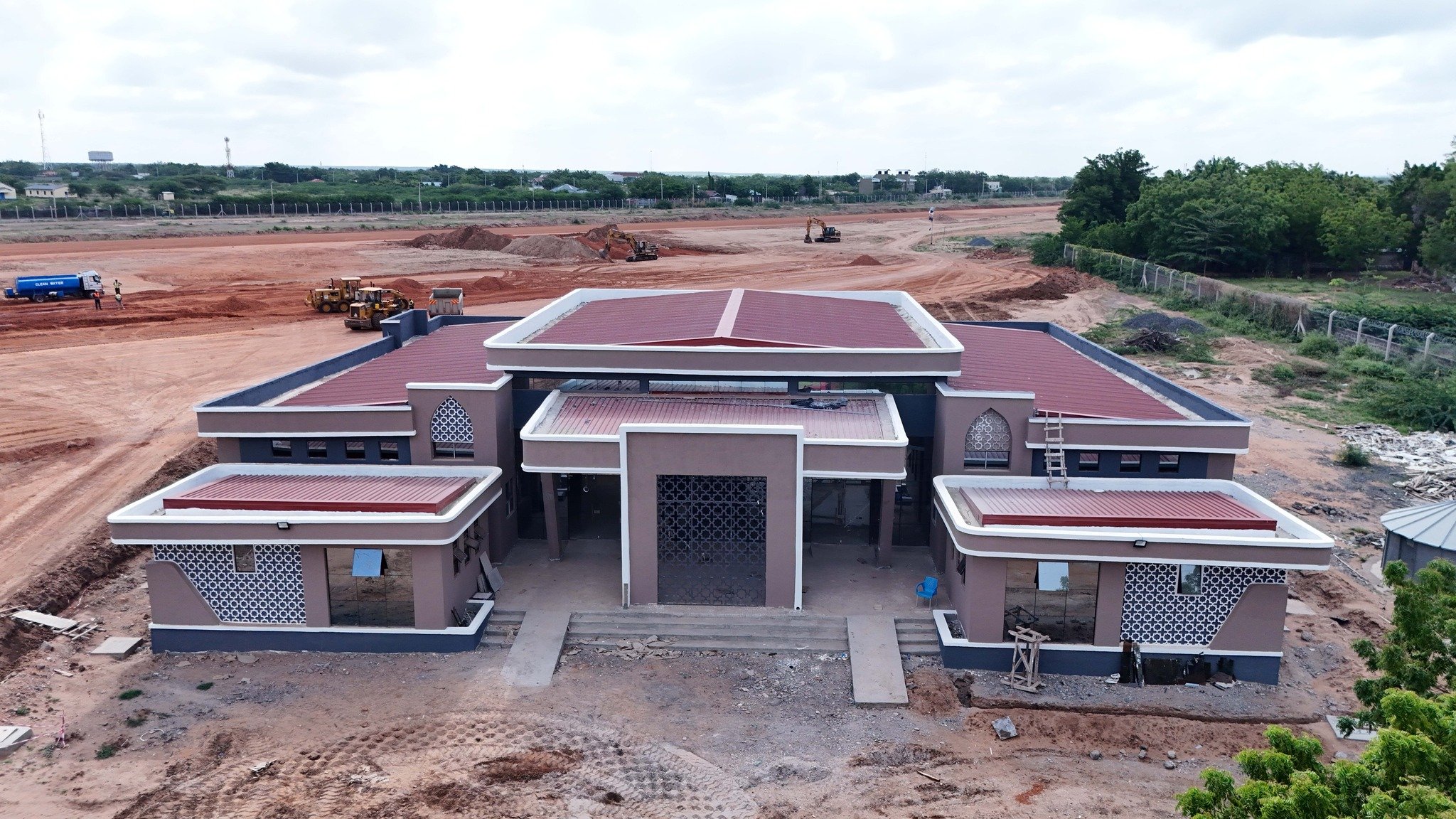
The terminal building under construction at Garissa Airstrip. The new airstrip will have its runway expanded and upgraded to accommodate larger and more aircrafts
For northern communities, infrastructure is not abstract economics. It is lived reality. When a road arrives, ambulances arrive. When electricity comes, small businesses open. When connectivity improves, families no longer have to migrate in search of opportunity. A livestock trader who once travelled days to reach market now travels hours; the difference determines whether pastoralism remains viable or poverty becomes permanent.
Kenya today faces a unique national task — integrating a region after decades of exclusion. Southern Kenya reflects cumulative investment stretching back to colonial times. Northern Kenya reflects delayed investment now accelerating through devolution and national connectivity projects. Bridging the gap therefore requires more than equal allocation. It requires corrective investment — not as charity, but as balance.
The north is often described as underdeveloped. That description misses the point. It is not a failure of people or potential; it is development postponed. Colonial policy created the gap, post-independence strategy widened it, security politics froze it, and modern Kenya is now attempting to close it.
Infrastructure ultimately defines citizenship. A nation is not fully integrated when opportunity depends on birthplace.
The child in Garba Tula and the child in Kiambu already share a constitution. The unfinished task of the Republic is to ensure they share the same starting line. When that day comes, the map drawn a century ago will finally lose its meaning.
The writer is the former Deputy Governor of Isiolo County and former CEO of the Frontier Counties Development Council (FCDC).