
JSC invites applicants to fill the position of Chief Kadhi
In a public notice issued on Friday, January 16, the JSC called on qualified candidates to apply for the position, which became vacant after Sheikh Abdulhalim’s demise.
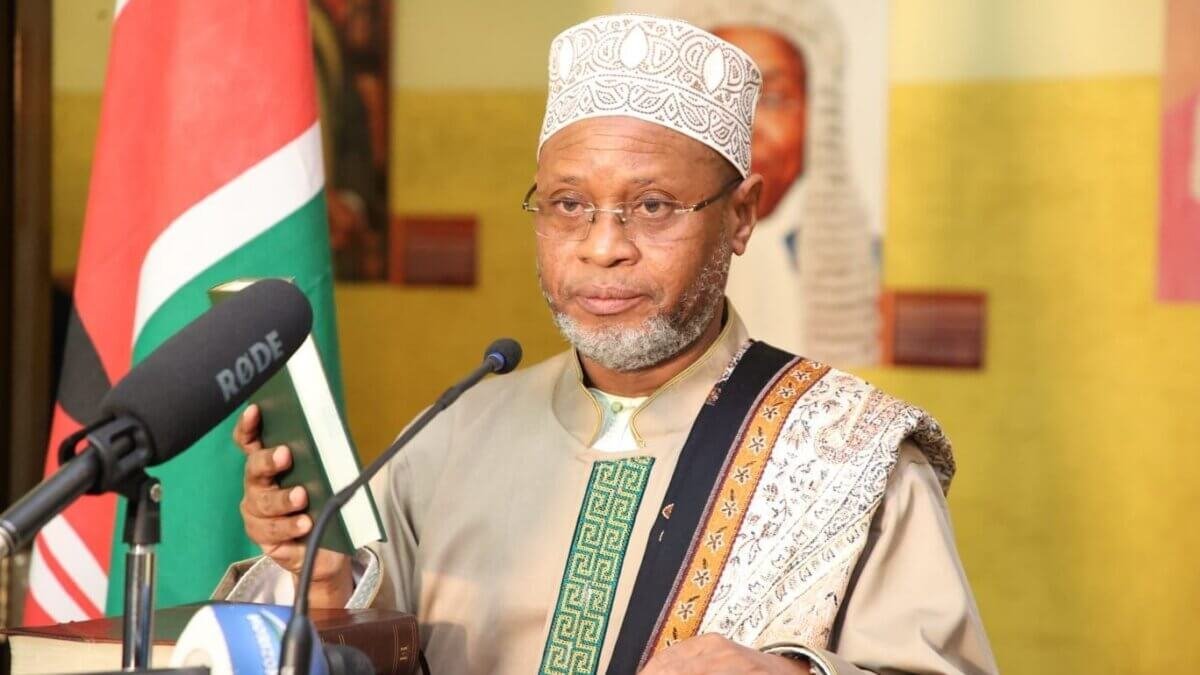
The Judiciary Service Commission (JSC) has invited applications to fill the position of the Chief Kadhi. In a public notice issued on Friday January 16, the JSC, invited applications from qualified personnel to fill the position which fell vacant after the death of Sheikh Abdulhalim Athman Hussein who passed away in July last year.
In a public notice issued on Friday, January 16, the JSC called on qualified candidates to apply for the position, which became vacant after Sheikh Abdulhalim’s demise. He had served as the country’s Chief Kadhi for a period of two years.
The Deputy Chief Kadhi, Sheikh Sukyan Hassan Omar has been serving in an acting capacity as the country’s Chief Kadhi.
The Chief Kadhi is the head of the Kadhi Courts and this places the office holder at the apex of Islamic judicial authority in family and personal law within the Kenyan legal system. The office plays a critical role in the administration of justice for Muslim communities across the country.
Key responsibilities of the Chief Kadhi include arbitrating disputes relating to inheritance, marriage, and divorce among Muslim families, solemnising and registering Muslim marriages, supervising the pronouncement of Muslim divorces, and ensuring their proper registration.

The acting Chief Kadhi Sheikh Sukyan Hassan Omar
Additional duties include signing affidavits, declarations, and agreements; supervising court registries in consultation with the magistrate in charge; maintaining accurate arbitration records; and submitting statutory returns of registered marriages and divorces to the Attorney-General.
According to the JSC, applicants must profess the Muslim faith, hold a degree in Islamic Law or its equivalent from a recognised university, and be members of a recognised Islamic association. They must also demonstrate effective communication skills in English, Kiswahili, and Arabic.
Candidates are further required to be of good moral standing in accordance with Islamic principles, possess computer proficiency, and meet the requirements of Chapter Six of the Constitution, which emphasises leadership and integrity. A Master’s degree in a relevant field will be considered an added advantage.
In addition, prospective applicants must have a minimum of 10 years’ experience as a distinguished academic in Islamic law, an Islamic law practitioner, or in other related fields.
The JSC noted that the position of Chief Kadhi is permanent and pensionable, with a gross monthly salary ranging between Sh531,675 and Sh783,146, exclusive of benefits, as determined by the Salaries and Remuneration Commission (SRC).
Interested and qualified candidates have been advised to submit their applications through the JSC online recruitment portal by February 5, 2026.
The office of the Chief Kadhi carries strong symbolic importance for Muslims, as it represents the Constitutional recognition of Islamic law, the protection of Muslim personal law in Kenya secular state and inclusion of Muslim religious practices in the country’s justice system.
The Chief Kadhi is often seen as a custodian of Muslim identity and rights within the Kenyan judiciary.
Meanwhile, on Tuesday, January 13, the JSC also declared a vacancy in the Office of Judge of the Supreme Court of Kenya, following the death of Justice Mohamed Ibrahim in December 2025, and invited applications to fill the position.
Applicants for the Supreme Court judge position are required to hold a law degree from a recognised university or be advocates of the High Court of Kenya, with at least 15 years’ experience as a superior court judge or as a distinguished legal practitioner, academic, or judicial officer.