
Jamia Mosques calls on Chief Justice to review divorce rules
"This conventional understanding of decree nisi and decree absolute is inoperative in Islam"
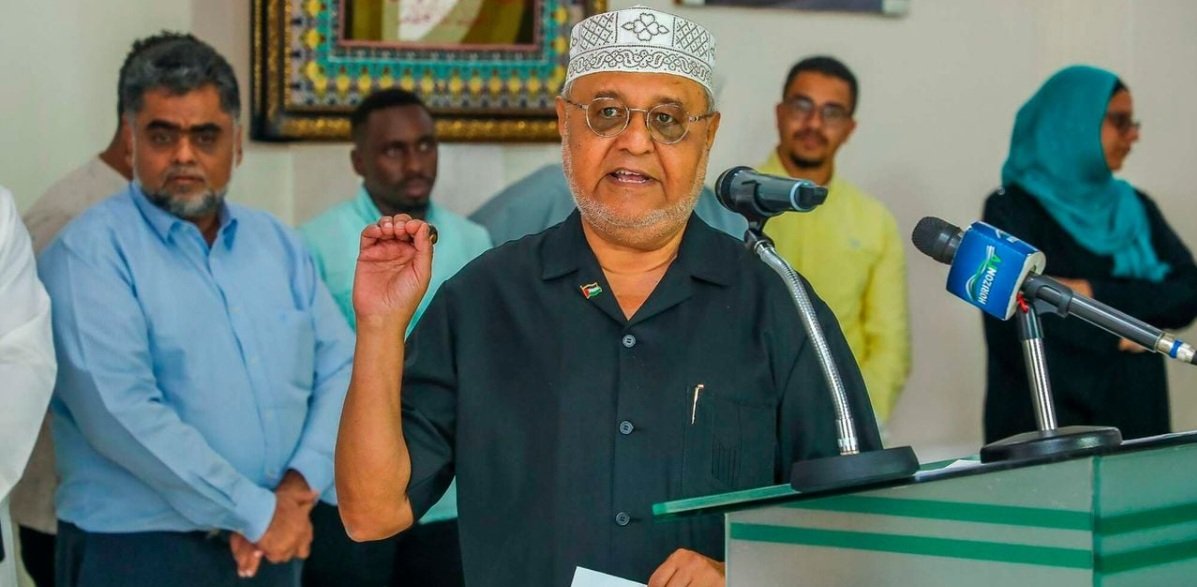
The Jamia Mosque Committee, Nairobi, has called for a review of the directive contained in a notice discontinuing the issuance of divorce certificates by the Kadhi courts.
In a letter to Chief Justice Martha Koome, Secretary General Abdulbari Hamid expressed concern that the decision was made without consultation with key Muslim stakeholders and, more importantly, its implementation could have significant implications for Islamic jurisprudence relating to divorce.
The Judiciary issued a notice announcing the discontinuation of divorce certificates effective October 1, 2025, directing instead the issuance of “Decree Nisi” and “Decree Absolute” as proof of the dissolution of Islamic marriages.
“This conventional understanding of decree nisi and decree absolute is inoperative in Islam. A blanket application of foreign legal concepts within a different legal system, one that has its own established principles, should not be imposed on Islamic law, which is guided by distinct doctrines,” the Secretary General stated in a letter dated February 3, 2026, to the head of the Judiciary.
He noted that the directive was made arbitrarily and without stakeholder engagement, emphasizing that such a far-reaching decision should have followed consultations with key Muslim stakeholders, including religious scholars and legal practitioners.
Jamia Mosque further stated that the procedure is likely to create unnecessary confusion in the application of Islamic divorce law.
In the letter, he explained that under Islamic law, a couple may divorce up to three times, with the possibility of remarriage after the third divorce only if the woman subsequently marries and is lawfully divorced by another husband. Additionally, a husband may issue a unilateral talaq, with each divorce followed by a waiting period (‘iddat) of approximately three months, during which the couple may reconcile and resume their marriage.
“The question then arises when should a decree nisi be issued? During the waiting period of the first and second divorces, or at the end of the waiting period in either case? And when should a decree absolute be issued — at the conclusion of the first and second divorces, or only upon the pronouncement of the third talaq? Does a Decree Absolute bar a couple from remarrying after the pronouncement of the third talaq and the wife’s subsequent marriage and divorce?” he posed.
“Again if a couple’s marriage end after a first or second talaq (the couple does not get back together) and the wife intends to marry another man, what kind of divorce issues to these parties, nisi or absolute?” he queried.
He added that Islamic law also recognizes other forms of dissolution of marriage, including Dhihar, Lian, and Mubarat, to which the conventional concepts of decree nisi and decree absolute do not apply.
The Secretary General further emphasized that the concepts of Decree Nisi and Decree Absolute are foreign to Islamic matrimonial law, noting that the rules were meant forChristian, Civil or Customary marriages.. According to the Marriage (Matrimonial Proceedings) Rules, 2020, the dissolution of Islamic marriages falls under the jurisdiction of the Kadhi’s Court.
“Part XIII of the Kadhi’s Courts (Procedure and Practice) Rules, 2020, titled ‘Dissolution of Muslim Marriages,’ outlines the procedures for the dissolution of Muslim marriages, including — but not limited to — the issuance of a Certificate of Divorce (see Rules 152(2) and 154),” the letter states.
“There is therefore a need for your office to reconsider the directive in order to address the confusion and concerns it has generated among many Muslims in Kenya,” Abdulbari said, urging the Chief Justice to initiate stakeholder consultations to ensure that the personal status rights of Muslims remain safeguarded within the framework of Islamic law.