In a landmark initiative, Qur’an to be translated into Maasai language
The initiative is part of the Mohammed Bakari Foundation’s broader efforts to translate the Qur’an into various local languages across the country.
The translation of the Holy Qur’an in the Maasai language is in the pipeline. The momentous project being undertaken by the Mohammed Bakari Foundation seeks to enhance on the message of Islam among the maa speaking communities.
The Maasai who straddle Kenya and Tanzania are renowned for their rich cultural heritage and nomadic lifestyle, and their language is integral to their cultural identity.
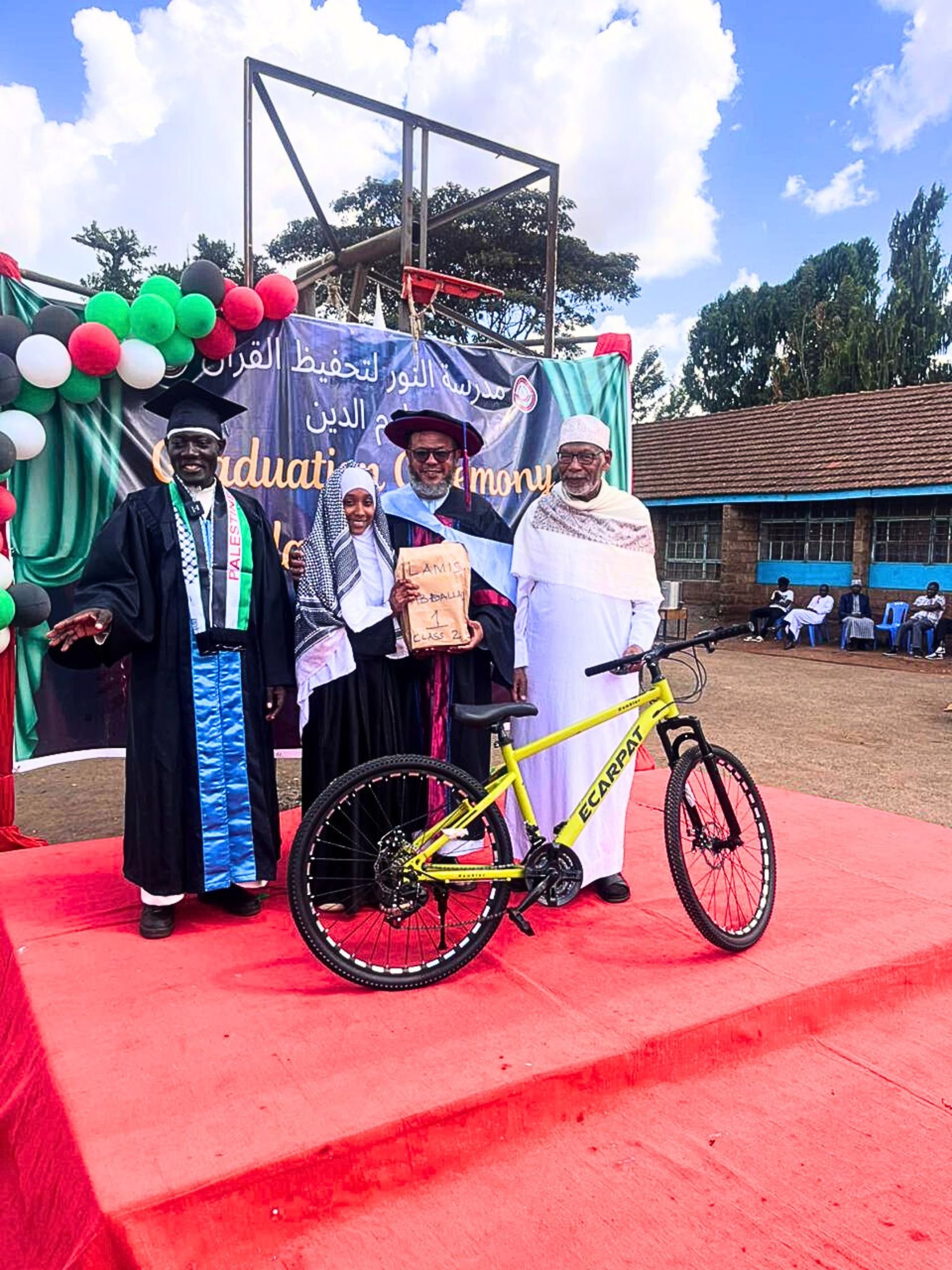
Speaking at the graduation event of Al Nur Madrasa in Kibera, Prof. Mohammed Bakari said the initiative is part of the Foundation’s broader efforts to translate the Qur’an into various local languages across the country.
This will be the second major translation project by the Mohammed Bakari Foundation, following the Giriama Qur’an translation launched in March this year. The Giriama are one of the nine coastal tribes known collectively as the Mijikenda and are the largest among them.
“The whole purpose of having the Qur’an translated in local language is for the various communities to feel that the Quran belongs to them,” he said.
Prof Mohammed emphasized the need to have the Qur’an translated in local languages saying that there is a need for communities to better understand the message of Allah conveyed in the Qur’an through their local languages.
“While Arabic is the principal language of the Qur’an, understanding its message in the local language will make a lot of people-including non-Muslims appreciate the sublime message of the Qur’an” he said.
He emphasized the importance of Qur’an translations in indigenous languages, noting that communities are better able to understand the message of Allah when it is conveyed in their mother tongue.
“While Arabic is the principal language of the Qur’an, understanding its message in one’s local language allows many people—including non-Muslims—to appreciate its sublime teachings,” he added.
Translations of the Qur’an currently exist in Swahili, Somali, Dholuo, and Kalenjin. Partial translations have been completed in Kikamba, while a Kikuyu translation has been finalised and is awaiting ratification by scholars from the community.
A renowned academician, Prof.Mohammed Bakari is the former Vice-Chancellor, RAF International University, now Islamic University of Kenya.
Speaking at the event, the Imam of Landhies Mosque, Sheikh Ahmad Uthman, urged parents to ensure that their children access Islamic education through madrasas, stressing that these institutions form the foundation of Islamic knowledge.
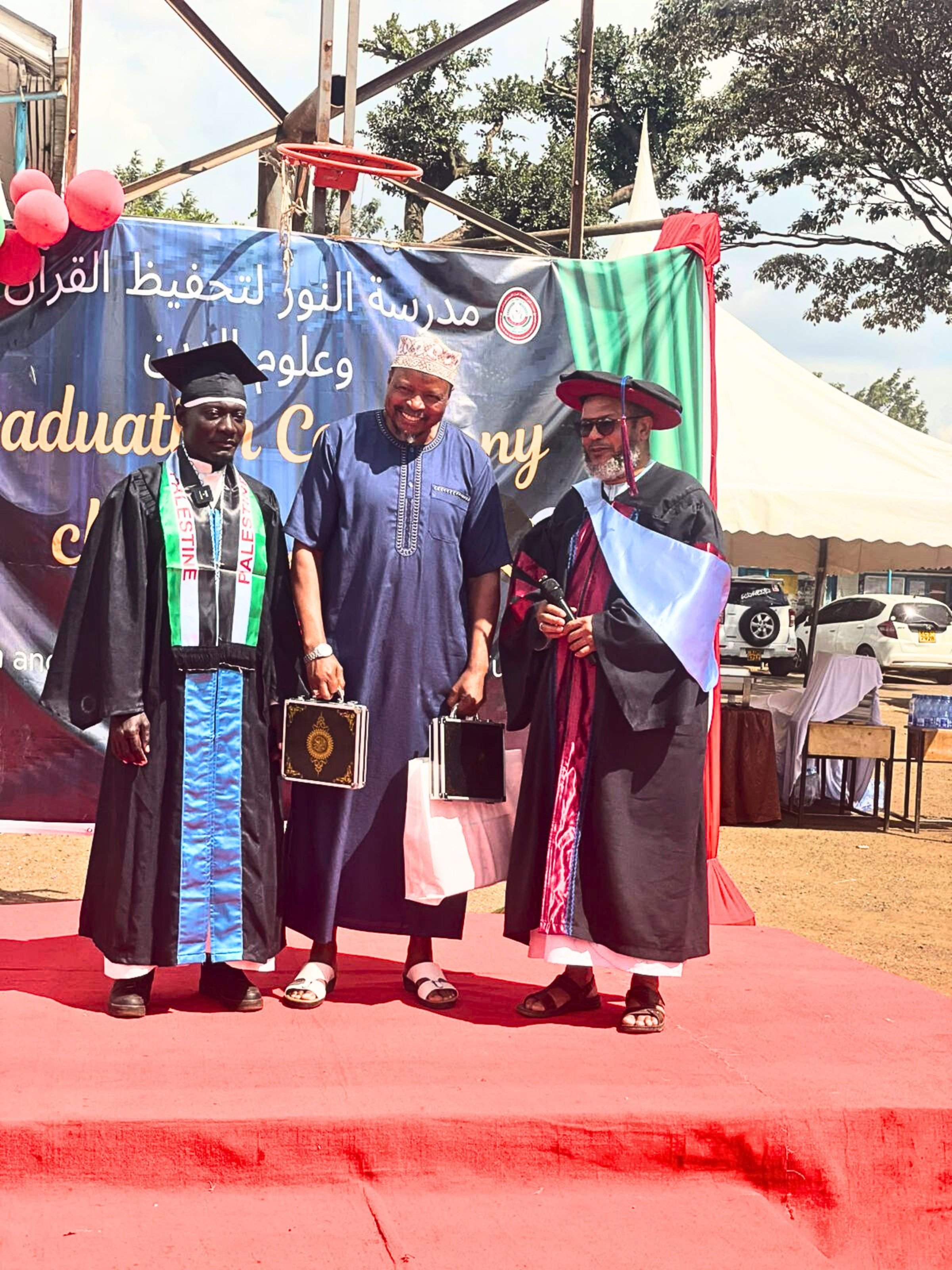
The Imam, who was the chief guest at the event, further encouraged Muslims to be ambassadors of Islam by exhibiting good character, noting that noble conduct can significantly enhance the image of the religion. “Our character is our identity. We should strive to display good conduct among people. Many have embraced Islam simply by observing Islamic manners,” he said.
He also commended Al Nur Madrasa for its effective teaching methodologies, which have instilled strong Islamic values in learners. “It was a pleasure to see young children reciting the Qur’an with correct tajweed and delivering sermons in Arabic. This is a testament to the strength of Islamic educational heritage,” he said.
The institution offers Ibtidaai (primary) and Mutawassit (intermediate) levels of madrasa education.
The Palestinian-themed graduation event featured learners participating in awareness activities that served as a stark reminder of the suffering endured by the people of Gaza, who have faced a harrowing two-year genocide by the Israeli entity.