Hypocrisy echo: Why the outcry over Samia m Suluhu masks deep-seated Islamophobia
The cacophony against Samia Suluhu Hassan is not a principled stand for democracy; it is a thinly veiled loathing for Islam.
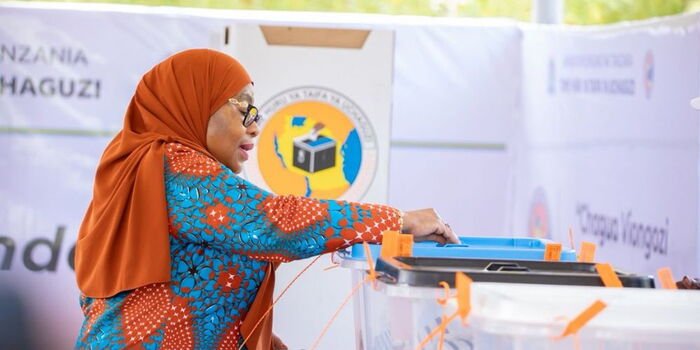
In the sweltering heat of October 2025, Tanzania’s general election unfolded not as a beacon of democratic renewal, but as a grim tableau of exclusion and repression. Incumbent President Samia Suluhu Hassan, the East African nation’s first female leader and a devout Muslim, was declared the victor with a staggering 97.66% of the vote.
The main opposition parties, including the Chadema alliance, were absent from the ballot, prompting a boycott, waves of violent protests, and fears of people dead in the ensuing crackdown.
International observers decried the poll as a sham, laced with fraud, intimidation, and a suffocating clampdown on dissent. Yet, as the dust settled and the world turned its gaze, a familiar chorus rose from East African neighbors, Western media outlets, and self-appointed guardians of democracy: outrage, condemnation, and calls for accountability.
As a proud Muslim, I stand unapologetically in my faith—a faith that commands respect for all humanity, irrespective of creed. It does not license hatred, discrimination, or the diminishment of others.
But I must call out the hypocrisy poisoning this discourse. The cacophony against Samia Suluhu Hassan is not a principled stand for democracy; it is a thinly veiled loathing for Islam. Why? Because the sins we now heap upon her—electoral manipulation, suppression of opposition, erosion of freedoms—are the very hallmarks of the regimes we have long tolerated, even celebrated, in leaders who share the “right” religious or cultural pedigree.
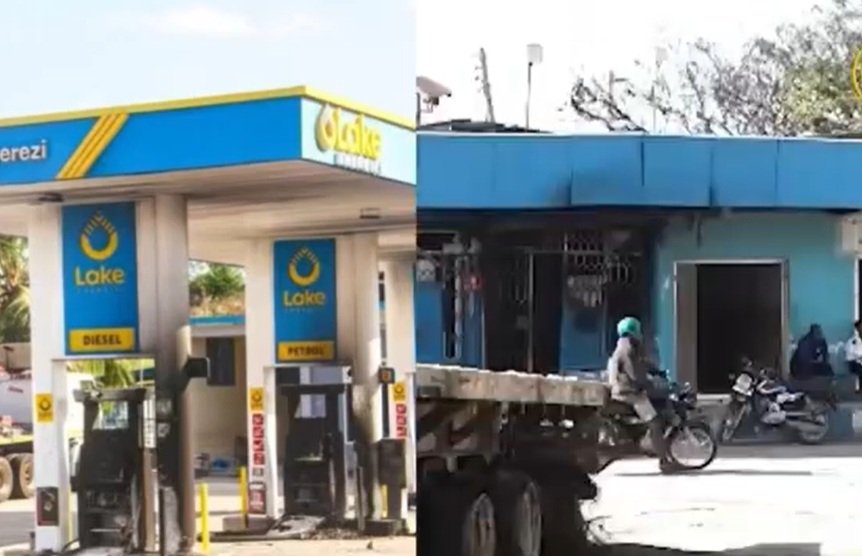
A Lake Oil petrol station in the capital Dar-es-Salaam torched during the post by protestors election violence torched. A total of 30 petrol stations owned by Tanzania billionaire Ally Adha Awadhi were reduced to ashes leaving 300 Tanzanians out of work
Where were these voices when Rwanda’s Paul Kagame, Uganda’s Yoweri Museveni, or even Tanzania’s own John Pombe Magufuli orchestrated identical farces? And why the selective silence on Benjamin Netanyahu’s documented war crimes, or the Christian-led West’s blood-soaked interventions in Iraq, Afghanistan and Libya? Why the silence on India’s mass crimes against the people of Kashmiri.
This is not mere oversight; it is a pattern of bias, where Muslim leaders are held to an impossible standard, their flaws magnified through an Islamophobic lens, while atrocities by others fade into footnotes.
The Tanzanian Precedent: From Bulldozer to “Bulldozed” Democracy
Samia Suluhu Hassan’s ascent to power in 2021, following Magufuli’s sudden death, was hailed as a progressive pivot. She loosened some of her predecessor’s iron-fisted controls, opposition rallies resumed, journalists faced fewer arbitrary arrests, and COVID-19 data—long suppressed under Magufuli—flowed more freely. Yet, as her first contested election loomed, the gloves came off. Opposition figures were harassed, media outlets muzzled, and the Electoral Commission accused of rigging turnout figures north of 90%. Her 97.66% landslide mirrors a grim East African tradition, where incumbents routinely claim 90%+ mandates in polls riddled with boycotts and brutality.
But rewind to John Pombe Magufuli, Tanzania’s “Bulldozer” president from 2015 to 2021. He won 58.46% in 2015 and 84% in 2020—both marred by fraud and intimidation. Under him, pregnant schoolgirls were expelled en masse, LGBTQ+ individuals subjected to forced “anal examinations” deemed torture by Western health experts, and bloggers shackled by draconian licensing laws. Newspapers shuttered, radio stations silenced, and activists like journalist Azory Gwanda vanished without trace. The Catholic Church? Mute. East African media? Largely deferential. Ian Khama, Botswana’s former president and vocal critic of Samia? Nowhere to be found.
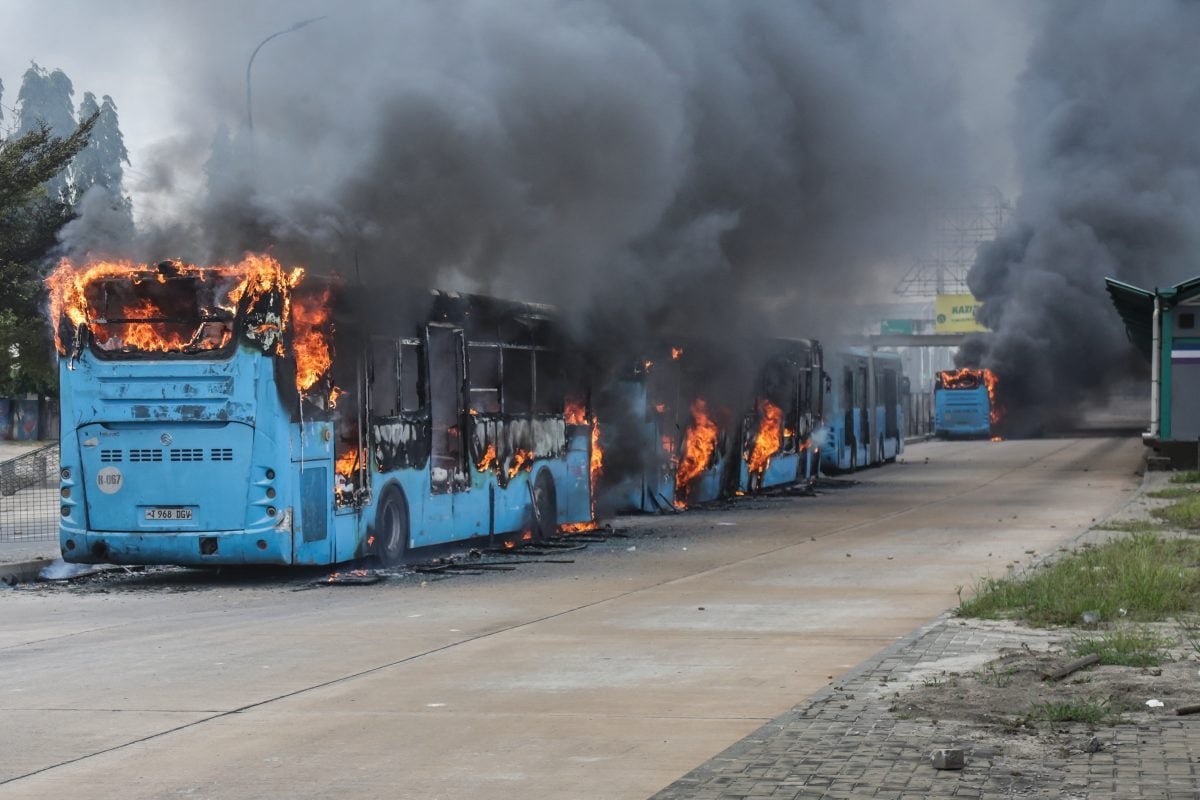
"Mwendo Kasi" buses, the bedrock of Dar-es-Salaam public transportation system go up in flames during the post election violence
Even Julius Nyerere, Tanzania’s revered “Father of the Nation” (1964–1985), built his legacy on authoritarian foundations. His one-party state crushed opposition via the Preventive Detention Act, jailing critics without trial. The Ujamaa villagization campaign forcibly uprooted millions into communal villages, shattering livelihoods through coercion and violence. He won 98% in 1962, 96.7% in 1970, 93.25% in 1975, and ~90% in 1980—referendums with no real choice. Nyerere’s flaws are today romanticized as “stabilizing necessities.” Samia’s? Cataclysmic threats to democracy.
East Africa’s Electoral Hall of Mirrors: The Full Ledger
Samia Suluhu Hassan’s 97.66% is not an anomaly—it is the regional standard.
The percentage each president won is the core evidence—highlighted in bold. Here is the complete, unfiltered record of every presidential election win percentage across East Africa. Tanzania: Julius Nyerere (Tanzania) 1962 —98% (Post-independence referendum; one-party state), John Pombe Magufuli 2020—84% (Disputed; fraud and intimidation alleged), Samia Suluhu Hassan: 2025—97.66% (Opposition barred; boycott; fraud rampant)
Rwanda: Paul Kagame 2024 —99% (98% turnout; minor opposition only)
South Sudan: Salva Kiir 2010 —93% (Pre-independence; main rival withdrew)
Burundi: Pierre Nkurunziza 2010 —91.6% (Opposition boycotted after local fraud), Évariste Ndayishimiye: 2020 —71% (Handpicked successor; rigging alleged)
Democratic Republic of Congo: Félix Tshisekedi 2023 —73.47% (Logistical chaos; fraud claims)
Uganda; Yoweri Museveni: 1996 → 74.2% (First direct election) 2021 —58.6% (Bobi Wine under house arrest; elections marred with violence and killings of opposition supporters)
Average landslide margin (excluding competitive races 88.7%)
Samia’s 97.66% ranks 3rd—behind only Kagame’s ~99% (2024) and Nyerere’s 98% (1962).
This is the indictment. Every bold percentage proves: Samia’s victory is not unique. It is the norm in the region.
The Regional Rogues’ Gallery: Silence on Familiar Tyrants
Paul Kagame has won 95.05%, 93%, 98.8%, and ~99%—yet is praised for “stability.”
Yoweri Museveni won 74.2%, 69.3%, 59.3%, 68.4%, 60.6%, and 58.6%—amid internet shutdowns, torture and violence.
Salva Kiir won 93% in 2010—then plunged South Sudan into war.
Pierre Nkurunziza won 91.6% and 69.4%—triggering bloodshed.
Félix Tshisekedi won 38.6% (allegedly stolen) and 73.47%—both disputed.
These men—Christian, secular, or otherwise—wield power through the same playbook. Samia is now damned for. Their human rights ledgers? Dotted with blood: arbitrary detentions, media muzzling, ethnic purges. Yet the outrage? Muted, if existent.
Global Atrocities, Selective Amnesia: Netanyahu, Iraq, and Beyond
The hypocrisy scales globally. Benjamin Netanyahu faces an ICC arrest warrant for war crimes in Gaza (October 2023–May 2024): starvation as warfare, civilian-targeted strikes, and sieges denying essentials to 2.3 million. Over 100,000 dead or maimed. UN reports decry man-made famine and hospital bombings. The Catholic Church? A whisper. Ian Khama and Kenyan pundits? Crickets.
The Christian-led U.S. invasion of Iraq (2003) claimed a million lives. NATO’s 2011 Libya intervention, backed by the “Christian West,” killed Gaddafi and birthed chaos. Lebanon’s 2024 Israeli incursions? Thousands dead. Did the media wail then?
No. Because these weren’t Muslim hands on the levers.
A Call to Reckon: Justice Without Borders
The din around Samia Suluhu Hassan isn’t about ballots or rights—it’s Islamophobia in democratic drag. Kenyans, who survived Mwai Kibaki’s 2007–2008 post-election violence (1,100+ dead, 500,000 displaced), now preach purity. East African ex-leaders, complicit in their own frauds, play holier-than-thou.
True advocacy demands equity. Condemn Samia’s 97.66%—but with the same fury as Kagame’s 99%, Museveni’s 74.2%, or Netanyahu’s blockades. Grieve Gaza’s innocents as fiercely as Iraq’s ghosts.
Pride in my Islam fuels this plea: Judge leaders by deeds, not dogma. Only then will East Africa’s dawn break free of hypocrisy’s shadow. The alternative? A region—and world—forever fractured by selective sight.
Uganda’s 2026 election campaigns are heating up, yet who is condemning the state-sponsored intimidation and violence against main opposition leader Bobi Wine? Why the deafening silence?
The views expressed in this article are the authors’ own and do not necessarily reflect the editorial policy of Sahifa Media.