
Hijab school ban a threat to religious harmony, Marsabit Muslims say
The leaders warned that the continued enforcement of the restriction could undermine social cohesion in the county
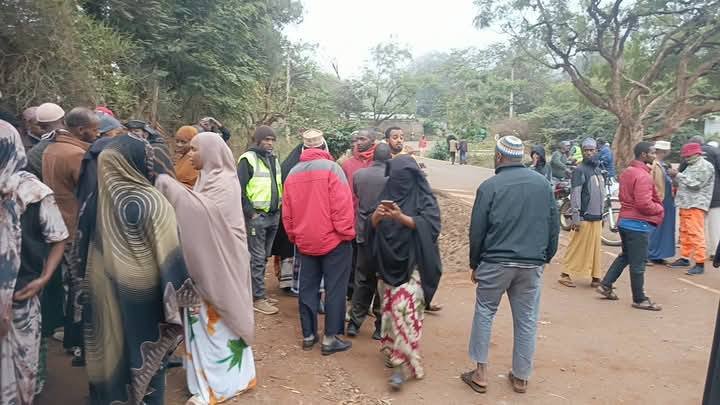
Muslim community leaders in Marsabit County have called for urgent government intervention to address longstanding grievances over the ban on wearing hijabs in several public schools.
The leaders warned that the continued enforcement of the restriction could undermine social cohesion in the county, which is widely regarded as a model of peaceful coexistence among diverse religious communities.
They cautioned that policies which restrict religious expression or fail to accommodate diversity risk fueling tension and eroding the harmony that has defined the region for years.
Despite repeated engagements with the County Commissioner, County Education Officers, and security agencies, community members say their concerns remain unresolved, with no clear response from the relevant authorities.
In a letter addressed to education and security officials, Marsabit Interfaith Council Secretary Bashir Somo condemned the ban, terming it a violation of students’ constitutional right to freedom of worship. He warned that failure to address the issue could have far-reaching consequences.
“We call upon the relevant authorities, education stakeholders, religious sponsors, and community leaders to urgently review these concerns and work towards solutions that uphold the rights, dignity, and religious freedoms of all learners while maintaining peaceful coexistence in our schools,” he said.
Somo also criticized the Inter-Religious Council of Kenya (IRCK) for what he described as its lack of intervention, despite its mandate to promote harmony among religious groups.
He further decried what he termed as systemic discrimination in public schools, noting that institutions funded by the government through the Teachers Service Commission and the National Government Constituencies Development Fund (NG-CDF) continue to deny Muslim students their rights. In some cases, he said, learners are compelled to participate in religious practices that conflict with their beliefs.
Reports indicate that Muslim girls in some schools have been punished for wearing hijabs, forced to remove them, or had them confiscated or destroyed.
Several schools in Marsabit Central Sub-County have been cited in the complaints, including include St Teresa Girls Primary School, SKM Primary School, St Peters Primary School, St John Primary School, Kiwanja Ndege Primary School and Manyatta Jillo Primary School.
Others are Goro Rukesa Primary School, Mwangaza Primary School, Hekima Primary School, Boru Haro Primary School, Dirib Gombo Primary School, GarQarsa primary school and St Peter's Sagante Primary School.
Similar concerns have also been raised in various schools in North Horr and Laisamis sub-counties.
Although many of the affected schools were originally established by Christian sponsors, they are now fully public institutions funded by the government. Leaders argue that such institutions are obligated to uphold constitutional protections on religious freedom.
The leaders also raised concerns over the lack of Islamic Religious Education (IRE) in some schools with Muslim enrolment, saying this denies learners access to faith-based instruction.
Somo emphasized that inclusivity and respect for diversity in schools are critical to safeguarding unity and long-term stability in the region.
Earlier this month, tensions over the issue spilled into public demonstrations, with Muslim parents staging a peaceful protest at St Theresa’s Girls Primary and Junior School, demanding that their daughters be allowed to wear hijabs as part of the school uniform. Muslim students comprise an overwhelming majority at the school.
The Basic Education Principal Secretary, Julius Bitok, recently issued a statement cautioning schools against discriminating against students on the basis of their religious beliefs and practices.