
Gov’t calls for public Input on proposed Religious Organizations Law
The state invited the public to share their input on the draft legislation, which seeks to reform the legal framework governing religious institutions
The government has called on Kenyans to submit their views on the proposed Religious Organizations Policy, 2024, and the Religious Organizations Bill, 2024.
In a notice issued yesterday by the Executive Office of the President, the state invited the public to share their input on the draft legislation, which seeks to reform the legal framework governing religious institutions.
A series of public forums will be held from December 15 to 19, 2025, across 12 regional centres nationwide to gather citizens’ views.
The proposed policy and bill follow the Cabinet’s adoption of recommendations from the Taskforce on the Review of the Legal and Regulatory Framework Governing Religious Organizations. The reforms aim to establish a clear regulatory structure for religious bodies, curb religious extremism, prevent abuses of the freedom of worship, and strengthen governance within the sector.
“The overall objective of these instruments is to provide a framework for regulating religious organizations to combat religious extremism and the abuse of the freedom of religion,” said Ahmed Ibrahim, Principal Secretary at the State Department for National Government Coordination.
“The State Department invites the public and all persons likely to be affected by the provisions of the draft Policy and Bill to attend these forums and give their views,” he added.
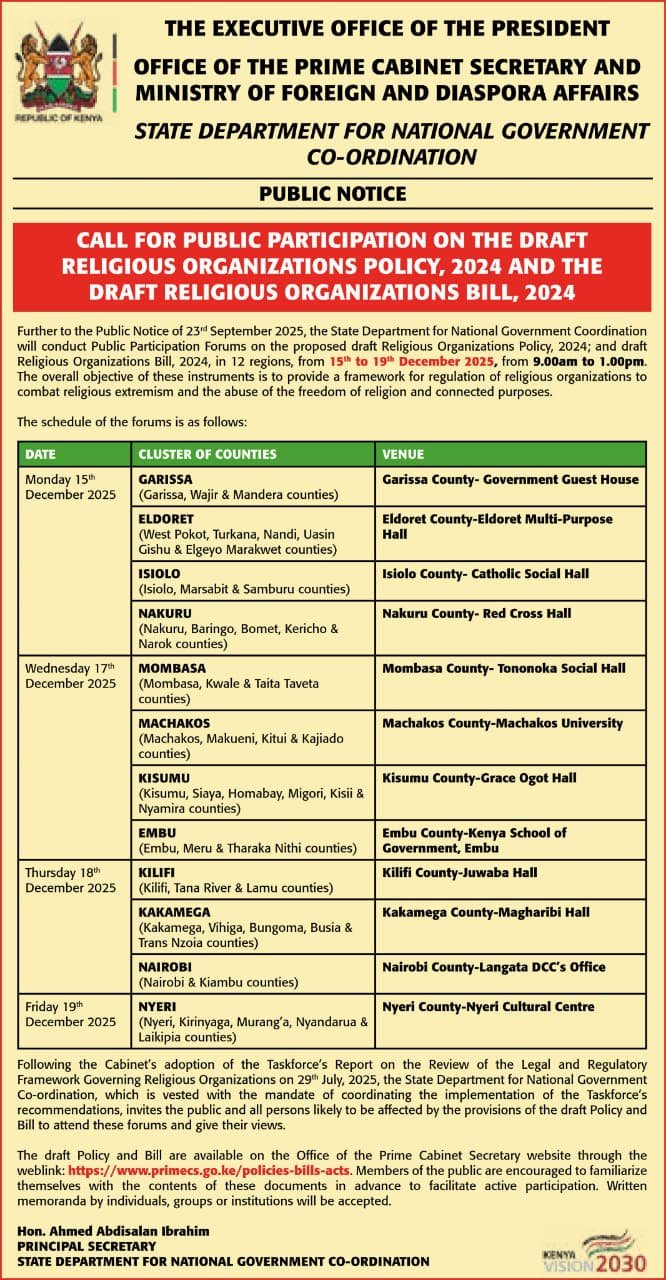
The draft documents are available for download through the Office of the Prime Cabinet Secretary portal under the “Policies, Bills and Acts” section.
Kenyans have been advised to review the documents beforehand to ensure meaningful participation in the upcoming engagements.
The proposals have drawn varied reactions from religious groups.
Sheikh Ibrahim Lethome, who heads a Jamia Mosque–led technical team formed by Muslim organisations to examine the proposed laws said while there is a need to put a semblance of order in the activities of religious organisations, the law also raises serious concerns in some areas that could have negative ramifications for the operations of Muslim institutions.
The Supreme Council of Kenya Muslims (SUPKEM) on its part has called for the outright rejection of the law. Chairman Hassan ole Naado argued that existing legislation is sufficient to regulate religious institutions and cautioned that creating a new framework could undermine their independence and operational freedom.
“Our position has been to caution all on the threat of this Bill once it is legislated. This will affect all religious groups that will be targeted for the wrong reasons. In such situations Muslims will be the perfect choice for the early trial runs,” said the National Muslim Leaders Forum (NAMLEF) chairman Abdullahi Abdi.
In its submissions, the Inter Religious Council of Kenya (IRCK) expressed concerns that some sections of the proposed law limit the enjoyment of fundamental freedoms guaranteed under the constitution and called for the Bill to be refined through a broad-based stakeholder consultation to ensure that it upholds constitutional guidelines.
Among its proposals, the Religious Organisations Bill seeks to appoint a Registrar of Religious Organisations who shall have the powers to suspend or revoke certificates of registration of religious organisations.
The taskforce also proposed the creation of a Religious Affairs Commission that would be responsible for registering religious organisations, receiving and reviewing their annual returns, as well as monitoring compliance with regulations.
The push to regulate religious organizations gained momentum following the Shakahola massacre, in which more than 500 people died after being starved and buried in shallow graves in Shakahola Forest, Kilifi County. Pastor Paul Mackenzie, leader of the Good News International Church and the prime suspect in the shocking killings, is currently facing murder charges for instructing followers to starve themselves to death in the belief that it was the path to heaven.