
From Periphery to Promise: Ruto’s High-Stakes Bet on North Eastern Kenya
Hate him or love him, Kenya’s fifth Head of State has shown a level of sustained interest in the North that none of his predecessors ever did.
By Adow Mohammed
Shifta. Terrorism. Extrajudicial killings. Collective punishment. Perpetual state neglect. Poor infrastructure. For decades, these words have clung stubbornly to the identity of North Eastern Kenya, long after the country attained independence in 1963.
Sixty-plus years into self-rule, the region’s story has largely been one of distance, physically, politically and economically from the centre of power in the tables where the national cake is shared. In that period, Kenya has had five Presidents. Four of them demonstrated minimal, if any, sustained interest in Northern Kenya beyond episodic visits or security crackdowns. Development was often promised and never delivered.
Then came the 2022 elections and President William Ruto, a leader whose engagement with the region has, at the very least, disrupted that long-standing pattern.
Hate him or love him, Kenya’s fifth Head of State has shown a level of sustained interest in the North that none of his predecessors ever did. In just over three years in office, he has made three high-stakes visits to Garissa, Wajir, and Mandera counties. In Kenyan politics, presidential presence is never accidental. It signals importance. It sends a message to bureaucracies, investors, and security agencies alike that a region matters, that it can no longer permanently be relegated to the margins of national planning and governance.
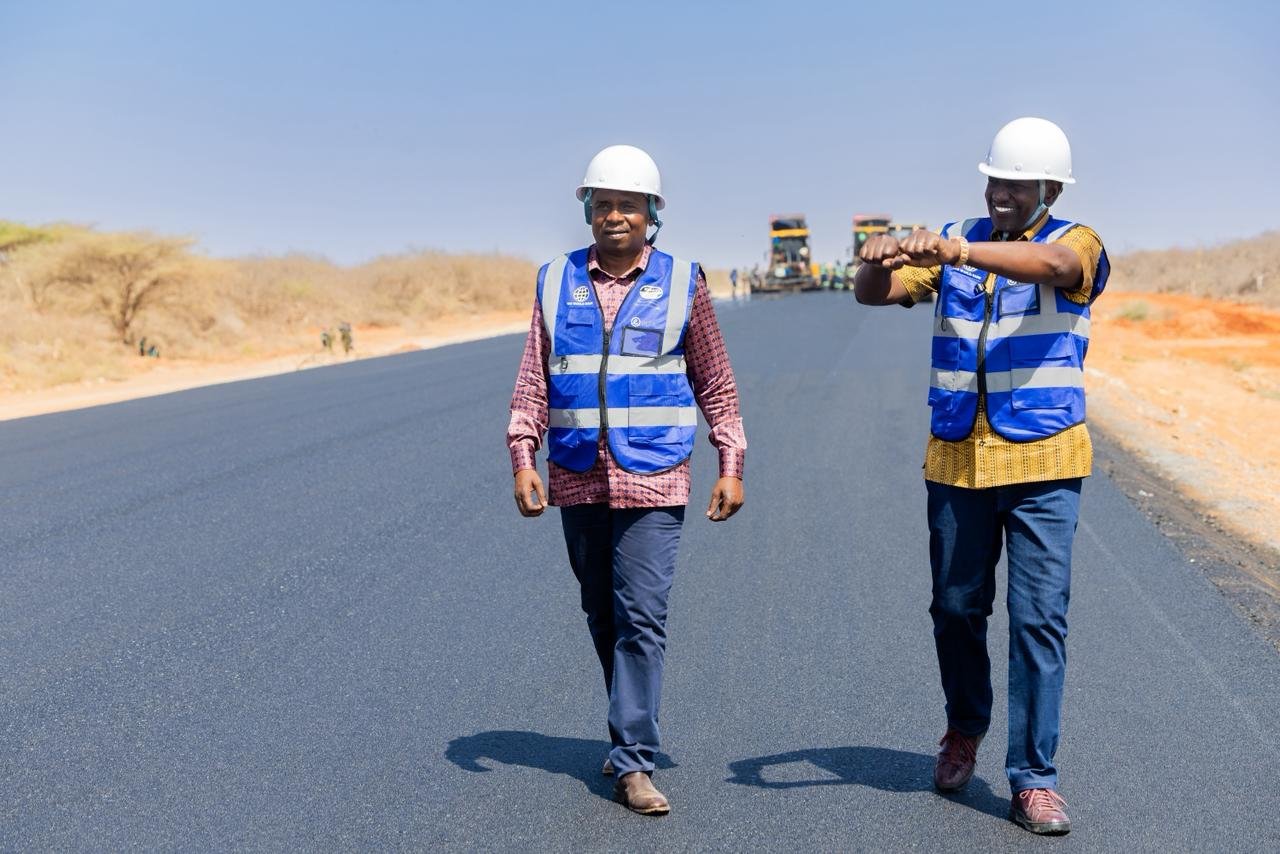
President William Ruto and his Deputy Kithure Kindiki, inspect the Kulamawe–Garbatulla section of the 750 km Isiolo–Mandera road
The contrast with previous administrations is difficult to ignore. President Uhuru Kenyatta, for instance, visited Wajir County only twice — once during his campaign trail and once during his ten years in office. Even then, the optics were telling: speeches delivered behind chain-link fences and coils of barbed wire, heavy security cordons reinforcing the long-held narrative that the region was first and foremost a threat rather than a partner to be embraced.
Further back, little more needs to be said about the gentleman from Baringo, President Daniel Arap Moi. His administration’s relationship with North Eastern Kenya oscillated between indifference and repression. It was during his tenure, 42 years ago when the Wagalla Massacre happened— one of the darkest chapters in the region’s history — in which an estimated 5,000 men were killed under his brutal rule. Decades later, widows, orphans, and entire communities continue to carry the psychological and generational scars of that tragedy. Trust in the state was not merely eroded; it was shattered.
For decades, North Eastern Kenya existed more on the map than in meaningful national development frameworks, despite occupying the largest chunk of the country’s landmass. Basic infrastructure lagged far behind the national average. Roads remained impassable for months during rainy seasons. Access to water, healthcare, and higher education was near zero. The region was treated largely as a security buffer — a frontier shielding “the other Kenya” from marauding shiftas and cross-border instability.
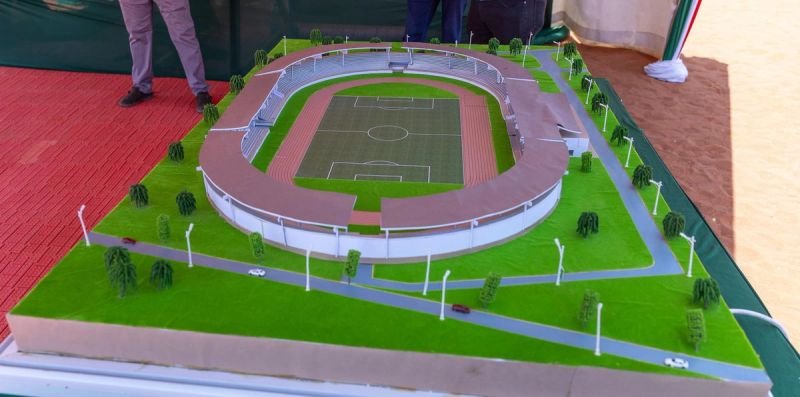
An artist impression of the 10,000-seater modern stadium in Wajir town, costing KSh900 million and set to host the 2026 Madaraka Day celebrations on June 1
But beneath its vast, open landscapes lies something successive regimes underestimated: enormous economic potential. The region holds immense livestock wealth, forming a critical backbone of Kenya’s meat and pastoral economy. It sits strategically along cross-border trade routes linking Kenya to Somalia and Ethiopia. It has renewable energy prospects, solar and wind that could power not just counties but national grids. Its land, if connected through proper infrastructure, could unlock trade corridors stretching from Isiolo to Mandera and beyond.
Now, under President Ruto, something appears to be taking shape, at least in intent and visibility. His repeated visits, public pledges, and emphasis on infrastructure suggest an attempt to reframe the region not as a liability but as an opportunity. Whether driven by political calculus, economic foresight, or genuine conviction, the shift in tone matters because tone shapes government policy and that shapes budgets.
Still, symbolism alone cannot transform livelihoods. For the region’s fortunes to truly change, rhetoric must translate into sustained investment, reliable security reforms, functioning institutions, and inclusive economic planning that empowers local communities rather than by-passing them.
That is why the famous Isiolo–Kula Mawe–Modogashe–Samatar–Wajir–Tarbaj–Kotulo–Kobo–Elwak–Rhamu–Mandera road looms large in the public imagination. This road represents hope. More than asphalt and gravel, that corridor represents integration. It represents markets connecting to producers, pastoralists accessing fair prices and counties plugging into national and regional supply chains. If completed to modern standards, it could fundamentally alter the economic, political and social trajectory of Northern Kenya and neighbouring countries.
The question now is not whether North Eastern Kenya has potential. It does. The real question is whether this renewed national attention will outlast political cycles, whether it will become embedded in institutional commitment and planning.For the first time in decades, the region is being spoken of not only in the language of security briefings but also in the language of investment, opportunity, and integration.
If that narrative shift holds, and if it is backed by consistent action, North Eastern Kenya may finally move from the periphery of the republic to the centre of its economic imagination.
And with that, North Eastern Kenya will have President Ruto to thank for.
The author is Communication and Media Relations Practitioner and a resident of Wajir County