
Eid al-Adh’ha: The Deeper Meaning Behind Ibrahim's Greatest Test
The true message of Eid al-Adha runs far deeper than the sacrifice of an animal.
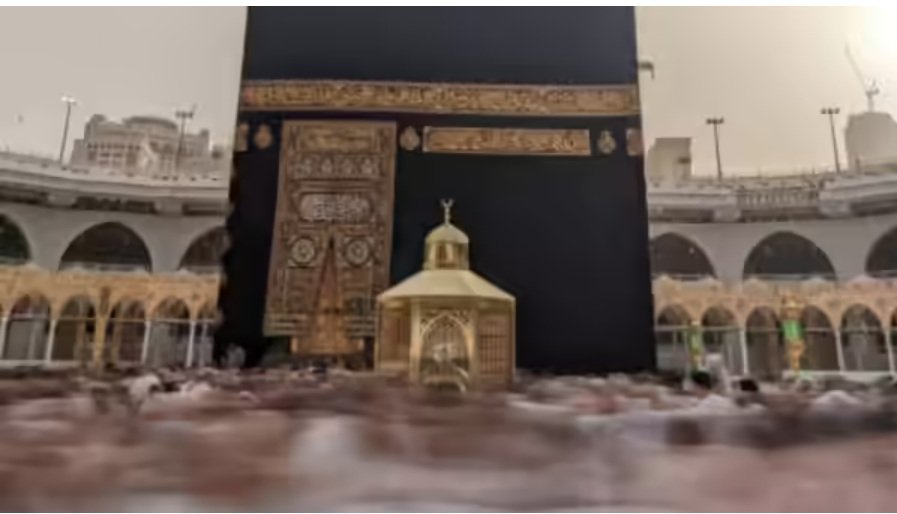
Every year, Muslims around the world celebrate Eid al-Adha by offering a sacrifice, sharing meat with family and the needy, and commemorating one of the greatest stories of faith ever known.
For many, Eid al-Adha is simply associated with sacrifice. We remember Prophet Ibrahim (AS), his son Prophet Isma'il (AS), and the ram that Allah provided in place of a child.
Yet the true message of Eid al-Adha runs far deeper than the sacrifice of an animal.
At its heart, Eid al-Adha is a lesson about complete submission to Allah, unwavering trust in His wisdom, and the willingness to place Him above everything we love in this world.
The story teaches us a profound reality: sometimes the greatest test Allah gives us comes through the very blessing we spent years praying for.
The story begins with Prophet Ibrahim (alayhi sallam), a man who longed for a child for many years.
Despite advancing age and seemingly impossible circumstances, he never lost hope in Allah's mercy. He continued to make du'a, placing his trust entirely in his Lord.
Allah records his supplication in the Qur'an:
"My Lord, grant me [a child] from among the righteous." (Surah As-Saffat 37:100)
In response, Allah gave him glad tidings: "So We gave him good tidings of a forbearing boy." (Surah As-Saffat 37:101)
After decades of waiting, Allah blessed him with Isma'il (Alayhi salaam).
Imagine yearning for something for years—perhaps a child, a spouse, a career opportunity, financial stability, or a dream you believed might never come true. Then imagine finally receiving it after a lifetime of patience and prayer.
That was Isma'il for Ibrahim (Alayhi salaam). He was more than a son.
He was the answer to years of tears, hope, and unwavering faith in Allah.
When the Blessing Becomes the Test
Then came a test unlike any other.
Allah showed Ibrahim (Alayhi salaam) a dream in which he was sacrificing his beloved son.
For ordinary people, dreams can be uncertain. But the dreams of the Prophets are revelation from Allah.
The command was clear. Allah says: "And when he reached with him [the age of] exertion, he said, 'O my son, indeed I have seen in a dream that I must sacrifice you, so see what you think.'" (Surah As-Saffat 37:102)
Consider the magnitude of this test.
Allah gave Ibrahim (Alyhi salaam) the very thing he loved most in this world and then tested whether he loved the Creator more than the creation.
What makes this story especially powerful is that the trial did not come through poverty, illness, or enemies.
It came through love. Because sometimes the hardest tests are not about enduring what we dislike.They are about surrendering what we cherish most.
The Extraordinary Response of Isma'il
When Ibrahim (AS) shared the command with his son, Isma'il's response demonstrated a level of faith that continues to inspire believers until today.
He replied: "O my father, do as you are commanded. You will find me, if Allah wills, among the steadfast." (Surah As-Saffat 37:102)
There was no resistance. No complaint. No attempt to escape. Only trust in Allah.
A young boy was prepared to surrender his life because he believed in the wisdom of his Lord.
This response embodies the very essence of Islam.
The word "Islam" means submission—not only when circumstances are easy or understandable, but especially when they are difficult and beyond our comprehension.
Allah reminds us: "Perhaps you dislike a thing and it is good for you, and perhaps you love a thing and it is bad for you. Allah knows, while you know not." (Surah Al-Baqarah 2:216)
True faith means trusting Allah even when we cannot see the full picture.
The Moment That Changed History
Father and son then journeyed together toward the place of sacrifice.
Every step reflected complete obedience.
Every moment demonstrated trust in Allah's command.
As the decisive moment approached, Allah describes the scene: "And when they had both submitted and he put him down upon his forehead..." (Surah As-Saffat 37:103)
This verse captures the essence of the entire story. Allah does not focus on the knife. He does not focus on the sacrifice itself. Instead, He highlights their submission.
Both father and son had surrendered completely to His will. At that moment, Allah intervened:
"We called to him, 'O Ibrahim, You have fulfilled the vision.'" (Surah As-Saffat 37:104-105)
Then Allah declared: "Indeed, this was the clear trial." (Surah As-Saffat 37:106)
And finally: "And We ransomed him with a great sacrifice." (Surah As-Saffat 37:107)
Allah never intended for Isma'il to die. The purpose of the test was never the loss of a child. The purpose was to reveal the depth of Ibrahim's obedience and trust.
The Real Sacrifice
This is where many people misunderstand the message of Eid al-Adha. The sacrifice was never merely about an animal. The real sacrifice was the attachment in Ibrahim's heart.
Allah was teaching humanity that nothing should be loved more than Him. This lesson is reinforced in another verse connected to the sacrifice: "Their meat will not reach Allah, nor will their blood, but what reaches Him is piety from you." (Surah Al-Hajj 22:37)
The meat does not reach Allah. The blood does not reach Allah. What reaches Allah is taqwa—sincerity, reverence, obedience, and consciousness of Him. The external act is important, but its value lies in the state of the heart behind it.
What Is Your "Isma'il"?
The story of Eid al-Adha is not merely a historical event. It is a question directed at every believer.
What is your "Isma'il"? What occupies your heart more than it should? What would be most difficult for you to surrender if Allah asked you to?
For some, it may be wealth. For others, it may be status, relationships, careers, ambitions, comfort, or recognition from people.
These blessings are not inherently wrong. Every one of us has attachments that Allah may test.
Not because He wants to punish us. But because He wants to purify our hearts and draw us closer to Him.
The Promise Behind Surrender
One of the most beautiful lessons from this story is that Ibrahim (Alayhi salaam) did not lose what he loved. Instead, Allah honored him beyond imagination.
His legacy continues to inspire billions of people centuries later. His name is mentioned in daily prayers around the world. His story became a symbol of faith, obedience, and trust.
Allah reminds us: "And whoever fears Allah—He will make for him a way out and provide for him from where he does not expect." (Surah At-Talaq 65:2-3)
When we choose Allah over our desires, we never truly lose. We gain something far greater: His pleasure, His guidance, and His blessings.
The True Message of Eid al-Adha
As Muslims celebrate Eid al-Adha each year, it is important to remember that the holiday is not simply about slaughtering an animal or sharing a meal.
It is about surrender. It is about trust.
It is about placing Allah above every attachment and every desire.
The story of Ibrahim (Alayhi salaam) teaches us that faith is proven not only in times of hardship but also in our relationship with the blessings Allah has given us.
This Eid, let us reflect on the attachments that may be holding our hearts back.
Let us sacrifice our pride, our sins, our unhealthy desires, and anything that stands between us and Allah.For when we truly surrender our "Isma'il" to Allah, we do not lose it.
We finally learn how to love it correctly—as a blessing from Allah, not as a rival to Him in our hearts. That is the essence of Eid al-Adh’ha.
That is the lesson of Ibrahim (Alayhi salaam).
And that is the path of true submission. May Allah accept our sacrifices, increase us in taqwa, forgive our shortcomings, and make us among those who submit to Him wholeheartedly.
Aameen.