EAC denounces Israel move to recognize Somaliland, says threatens regional stability
The move to recognize the self-declared breakaway region of Somaliland risks undermining stability in the Horn of Africa, the regional block said
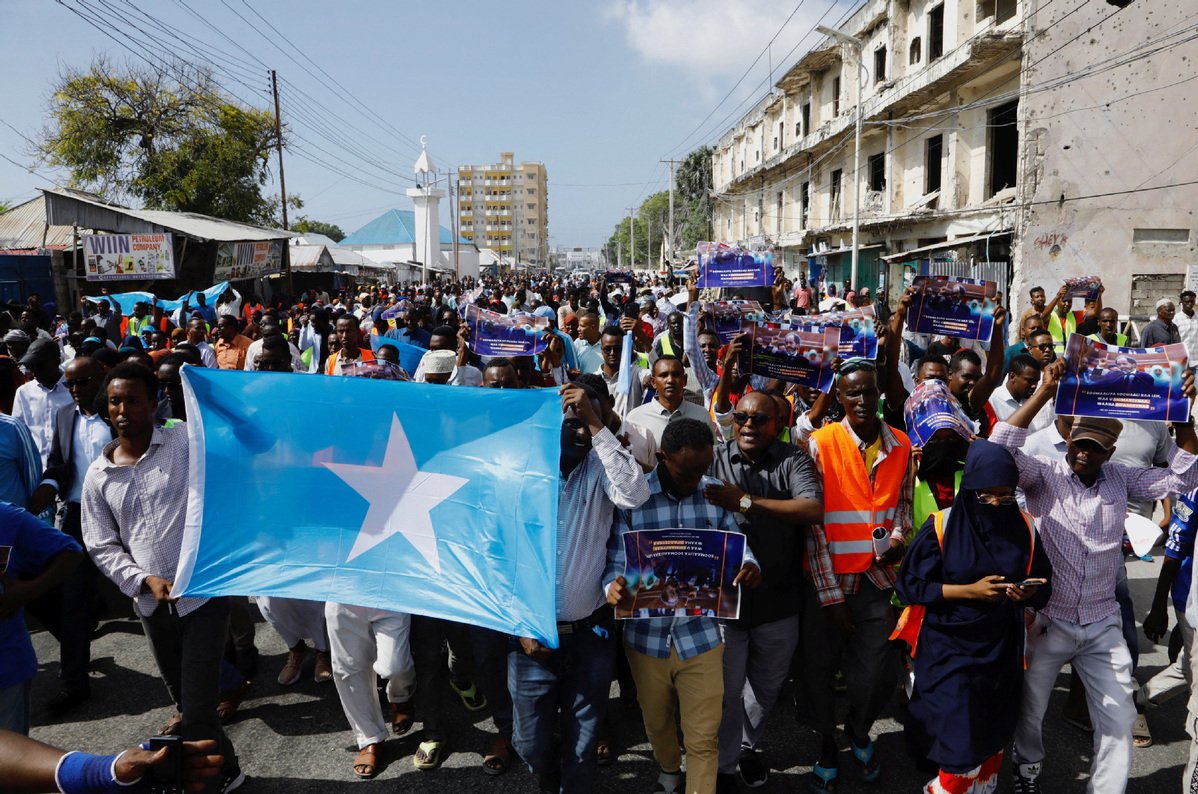
The East African Community (EAC) has voiced its rejection of Israel's recognition of Somaliland, reaffirming its recognition of the sovereignty, and territorial integrity of the Federal Republic of Somalia.
The move to recognize the self-declared breakaway region of Somaliland risks undermining stability in the Horn of Africa, the regional block said, warning that unilateral recognition moves could further complicate the political landscape and security dynamics of the region.
In a strongly worded statement released from its Arusha headquarters on Sunday, December 28, the regional bloc demanded that Israel respect the "unity and territorial integrity" of the Federal Republic of Somalia, while strongly rejecting any attempts to redraw colonial-era borders.
"The East African Community recognises the Federal Republic of Somalia as a single sovereign state under the authority of its government," the EAC said, urging all stakeholders to respect established regional and international legal frameworks governing sovereignty and territorial integrity.
The regional body, which includes Rwanda, Kenya, Tanzania, Uganda, South Sudan, Burundi and the Democratic Republic of Congo, reiterated that it recognizes Somalia as a single sovereign state under its internationally recognised borders.
Echoing sentiments from the African Union (AU), the EAC firmly rejected any recognition of Somaliland as a sovereign state, and reaffirmed its unwavering commitment to Somalia's unity and territorial integrity.
In a statement issued on Friday, African Union Commission chairperson Mahmoud Ali Youssouf said the continental body "unequivocally" opposes any initiative aimed at recognising Somaliland, stressing that the region remains an integral part of the Federal Republic of Somalia.
The AU Commission chair warned that recognizing Somaliland “sets a dangerous precedent” with far-reaching implications for peace and stability across the continent.
The EAC and AU statements followed an announcement by Israel on Dec 26 that it had formally recognized Somaliland as an independent and sovereign state.
Somalia’s federal government condemned the recognition in the strongest terms. Officials denounced Israel’s move as a direct assault on Somali sovereignty and a “deliberate attack” on the nation’s unity. Somalia’s leaders vowed to pursue all diplomatic avenues to reverse or mitigate the decision.
Similarly, Somalia’s allies in the Horn of Africa reiterated their support for Somalia’s territorial integrity. The governments of Egypt, Turkey, Saudi Arabia, and Djibouti issued statements backing Somalia and rejecting the Israeli-Somaliland agreement.
The Arab League and the Organization of Islamic Cooperation also expressed strong opposition, characterizing the recognition as a provocative assault on an African and Muslim state.
The Intergovernmental Authority on Development (IGAD), East Africa’s regional bloc of which Somalia is a member, also rejected unilateral recognition. IGAD recalled its own charter and the UN Charter’s emphasis on sovereign equality, effectively warning that any deviation could undermine cooperation in the Horn.
The EU also issued a statement emphasizing its disapproval of Israel’s recognition of Somaliland, saying that it threatens peace and security in the African region.
The United States publicly distanced itself. U.S. officials signaled that Washington had no intention of recognizing Somaliland and would continue to uphold Somalia’s sovereignty.
Somaliland, which has lacked official recognition since declaring independence from Somalia in 1991, operates as a de facto independent administrative, political and security entity, with the central government struggling to assert control over the region and its leadership unable to secure international recognition of independence.
Israel’s recognition of Somaliland, signed by Prime Minister Benjamin Netanyahu and Somaliland President Abdirahman Mohamed Abdullahi, is seen by analysts as a strategic bid to secure allies in the Red Sea following its isolation after its genocidal campaign in Gaza. For Hargeisa, however, it is a moment of triumph after three decades of functioning as a de facto state with its own currency, army, and government.