
Call for Development of a Blueprint to Guide Muslim Leadership
There is a need for a structured framework guided by Shariah to serve as a reference point for those in leadership roles across different sectors
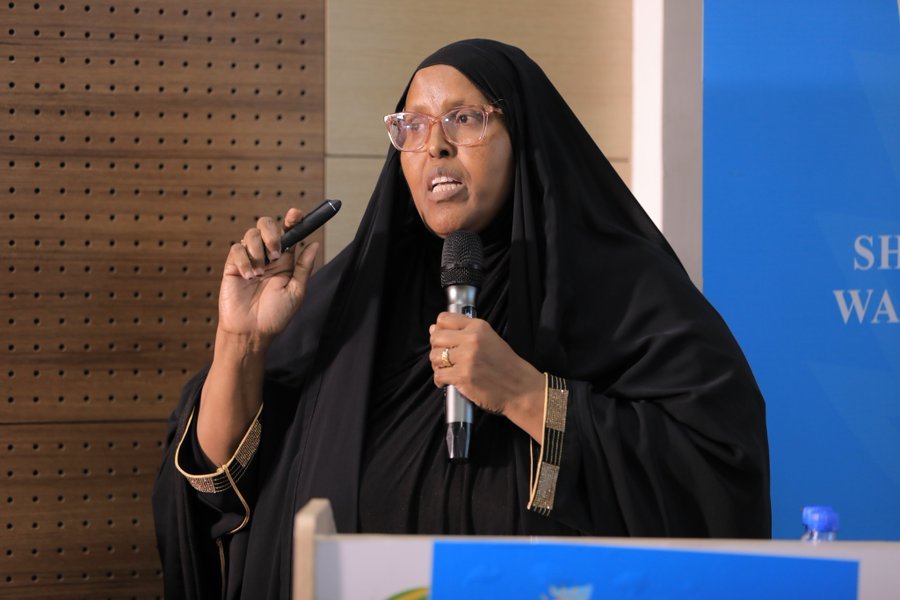
A call has been made to develop a comprehensive blueprint to guide Muslim leadership across various strata of society.
The call was made by Fatuma Saman, a Nairobi-based educationist and human rights advocate who emphasized that now more than ever, there is a need for a structured framework guided by Shariah to serve as a reference point for those in leadership roles across different sectors, including ethics, governance, business, and politics.
“There is a need for Muslims to have a clear position on issues such as anti-corruption, unethical governance, and negative ethnicity. What do we, as Muslims in this country, expect from each other? What do we expect from our leaders—our scholars and preachers, as well as those in business and political leadership?” she posed.
She noted that without a documented Islamic guide grounded in Shariah, the community risks fragmentation and a lack of direction.
“As long as we do not have a documented Islamic guide based on the foundations of our Shariah, we will continue pulling in different directions. It is high time we develop a Kenyan Islamic blueprint that can guide us across all sectors of society,” she said in comments posted in an online discussion forum on Muslim leadership
Fatuma, who previously served on the selection panel of the Independent Electoral and Boundaries Commission (IEBC), made these remarks at a time when the country is facing numerous social and political challenges. She urged Muslim leaders to take the initiative in developing a framework whose core principles would include enhancing the understanding of Islam, promoting justice and civil rights, and encouraging civic and political engagement.
She further observed that such a blueprint could draw inspiration from international models such as that developed by the Council on American-Islamic Relations (CAIR), in collaboration with the International Institute of Islamic Thought (IIIT).
The framework developed by CAIR focuses on empowering Muslims to actively participate in society and outlines key leadership principles, including justice and advocacy, civic engagement and political participation, community empowerment, interfaith and social cooperation, as well as ethical and faith-based leadership.