
An Open Letter to President Ruto: Northern Kenya’s Moment on the National Stage
Northern Kenya carries profound meaning for generations across the wider Northern Frontier region who, for decades, yearned to feel genuinely included in the national story
Mr President,
For the first time since Kenya attained internal self-rule in 1963, a national celebration of this magnitude is being held in the Northern Kenya county of Wajir.
This is not merely an administrative or ceremonial decision. It is historic, symbolic and deeply transformative for the people of the region and for the broader story of the Kenyan nation.
For generations, many in the region have longed to feel fully seen, heard and embraced within the national fabric of Kenya, making this moment one of immense emotional and historical significance.
That this honour has come to Northern Kenya in general, Wajir County in particular, carries profound meaning not only for the people of the county, but also for generations across the wider Northern Frontier region who, for decades, yearned to feel genuinely included in the national story and development journey of post-independence Kenya.
Madaraka Day commemorates the moment Kenya attained internal self-rule, a defining milestone in the struggle for freedom, dignity and self-determination.
Holding this celebration in Wajir, therefore, carries enormous symbolic weight. It extends the meaning of Madaraka beyond history books and into the lived realities of citizens who, for many years, waited to fully experience the promises of independence, equality and equal citizenship.
Mr President, history records that Northern Kenya entered the independence era under extraordinarily difficult circumstances.
At the dawn of Kenya’s independence, the region faced political uncertainty, marginalisation, underdevelopment and deep questions surrounding identity and belonging.
The painful memories and scars left by the Shifta war, the Wagalla, Garissa Gubaay and Malkamari massacres, prolonged emergency rule, restrictions on movement and decades of limited state investment all contributed to a deep and enduring sense of exclusion from the national mainstream.
For decades after independence, Northern Kenya, despite comprising nearly half of the country’s physical territory, remained geographically distant from the centres of political and economic power and psychologically distant from the national imagination.
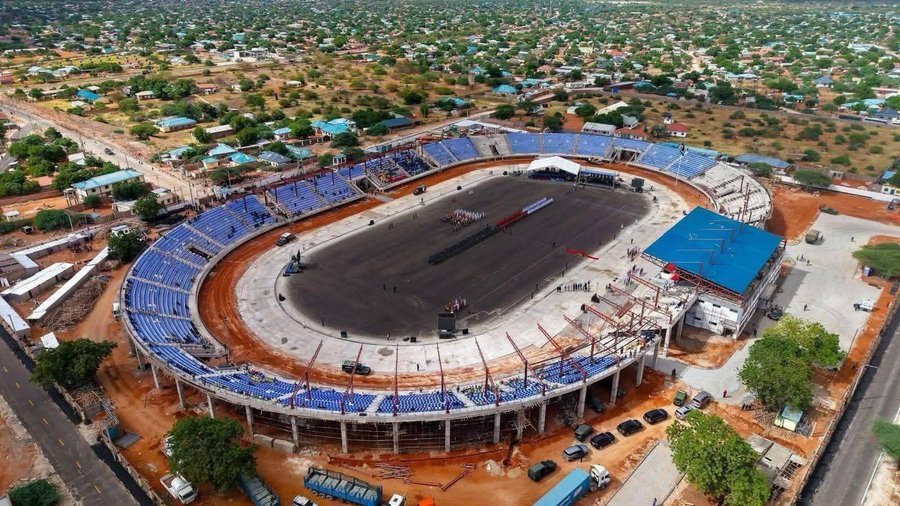
The Wajir Stadium in its final phase of construction ahead of the Madaraka Day event on June 1
Basic infrastructure lagged far behind. Roads, schools, healthcare facilities, water systems, and economic opportunities remained limited compared to many other parts of the country.
Entire generations, therefore, grew up feeling that national events, national investments and national conversations rarely reached their doorsteps, reinforcing a painful sense of isolation and neglect.
Mr President, this is not an exaggeration. For many years, national celebrations felt distant from our reality. We watched them on television screens from afar, while many others followed them through crackling radio broadcasts, only if they were fortunate enough to own a television or radio.
These celebrations belonged to the nation, yet for many people in Northern Kenya, they often felt geographically and emotionally removed from everyday life in our region.
Despite those hardships, the people of Wajir and the wider Northern Kenya region remained resilient, patriotic and hopeful.
They continued to contribute to the unity, stability, security, culture and diversity of Kenya.
They preserved values of coexistence, hospitality, faith, and community even in the face of adversity. The region has produced leaders, professionals, entrepreneurs, scholars, security officers and peacebuilders whose contributions to the nation remain immeasurable.
Economically, Mr President, Northern Kenya possesses enormous economic potential rooted in its geography, natural resources, strategic location and resilient pastoral economy. Increasingly, the region is being seen as one of Kenya’s emerging economic frontiers with immense opportunities for national growth and regional integration.
One of the region’s greatest strengths lies in the livestock sector. Counties such as Wajir, Garissa, Mandera, Marsabit and Isiolo remain central to Kenya’s pastoral economy, producing millions of cattle, camels, sheep, and goats annually.
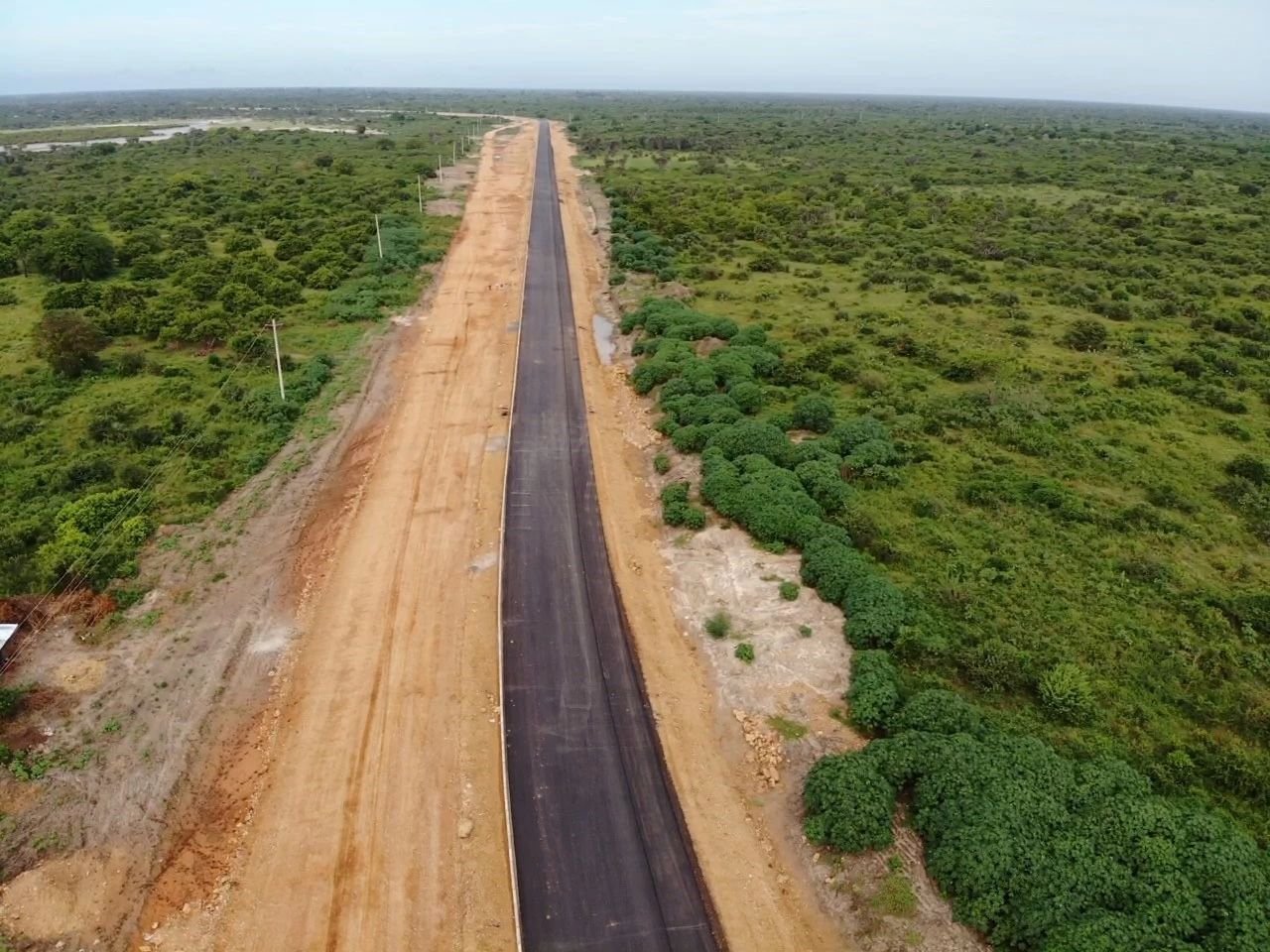
The 750 kilometre Isiolo-Mandera highway project
The camel economy in particular has experienced remarkable growth, driven by rising demand for camel milk and meat both locally and internationally.
Livestock trade continues to connect Northern Kenya to major markets in Nairobi and across the wider Horn of Africa, making the region a vital pillar of Kenya’s agricultural and commercial landscape.
With this vast livestock population, the region also has vast potential for leather processing, value addition and export-oriented industries.
Further, Northern Kenya holds significant potential in renewable energy. The Lake Turkana Wind Power Project, arguably Africa’s largest wind farm, has already demonstrated the region’s vast wind energy potential.
Equally, Northern Kenya’s abundant sunshine presents enormous opportunities for large-scale solar energy investment capable of contributing substantially to Kenya’s future energy security and green economy ambitions.
Its strategic location bordering Ethiopia and Somalia also positions the region as an important trade and logistics corridor connecting Kenya to the wider Horn of Africa.
Major infrastructure initiatives such as the LAPSSET Corridor Project and the Horn of Africa Gateway Development Project (HoAGDP) are expected to significantly improve roads, transport networks, trade and regional connectivity, thereby opening new economic opportunities for local communities, investors, and businesses across Northern Kenya.
Wajir County, in particular, is home to one of Kenya’s international airports, strategically and conveniently positioning the county as a potential gateway for regional trade, logistics and cross-border commerce within the Horn of Africa.
With its proximity to regional markets and growing connectivity, Wajir is well placed to emerge as an important commercial and transport hub serving both Kenya and the wider region.
Mr President, it is against this backdrop that hosting one of Kenya’s most important national celebrations attracts such profound attention, meaning, and national and regional significance.
It is an affirmation that Kenya does not belong only to its traditional political and economic centres, but equally to its frontier regions, pastoralist communities and historically marginalised populations.
Through this decision, you have demonstrated that every Kenyan county carries equal dignity, recognition and belonging within the Republic, regardless of geography, history, or circumstance.
For the people of Wajir, this occasion is emotional and deeply personal. It is a moment of recognition. A moment of national embrace.
A moment that tells the child, mother and father in Wajir, Mandera, Garissa, Isiolo, Marsabit and across the wider northern frontier that they too are central to the Kenyan story, that their region matters, their future matters and their identity is inseparable from the destiny of Kenya.
Mr President, your administration’s move will also leave behind practical and lasting benefits.
Historically, national celebrations have often accelerated infrastructure development, urban renewal, connectivity and public investment in host regions.
Already, tangible progress is being witnessed. Roads are being improved, public facilities upgraded and investment opportunities highlighted.
For instance, the venue prepared for this historic celebration stands as a powerful symbol of this transformation.
What was once a dusty, rugged and largely neglected field has now been transformed into a modern and imposing stadium worthy of hosting one of the nation’s most important celebrations.
Beyond its physical transformation, the venue represents renewal, hope and a changing national attitude toward Northern Kenya.
For many residents, it is more than just a stadium. It is visible proof that regions once overlooked can also become centres of national pride.
More importantly, the event is helping reshape perceptions about Northern Kenya by showcasing its beauty, resilience, rich culture and strategic importance to the nation, representing an important step toward healing historical wounds and strengthening trust between the people and the state.
Nations are strengthened not only through economic development, but also through symbolic acts of inclusion, recognition and national embrace.
Finally, Mr President, leadership is remembered not merely for policy decisions, but for moments that redefine the relationship between citizens and their country.
Indeed, future generations will remember that under your leadership, Kenya deliberately expanded the geography of national belonging.
They will remember that you chose to carry one of the Republic’s most important national celebrations to a region that for decades stood at the margins of state attention.
They will remember that, in doing so, you affirmed the principle that no part of Kenya should ever again feel forgotten or excluded from the national journey, that every inch of Kenya matters equally in our country’s shared journey.
As the nation gathers in Wajir on June 1, Kenyans from every background, ethnicity and region will celebrate not only the country’s democratic progress, but also the deeper ideals of unity, equality, dignity and shared destiny.
The image of the Kenyan flag flying proudly over Wajir during the Madaraka Day celebrations will remain etched in the national memory for generations to come.
On behalf of all those who see this moment as a turning point in the story of Northern Kenya, I extend sincere appreciation for your vision, leadership and commitment to inclusive nationhood.
May this historic celebration strengthen national cohesion, inspire greater development in marginalized regions and deepen the bonds that unite all Kenyans as one people under one nation.
Adow Mohamed is a Communications and Media Relations Practitioner